
Every case study below is a real 4Sure Mold Removal job performed by our own IICRC-certified crew in Spanish Fork or an adjacent Utah County city. We document each job for the carrier and store photos, dated moisture readings and invoices. Customer names and street addresses are kept private.
Case Studies — Documented Restoration Projects Across Utah County With Scope, Timeline, and Outcomes
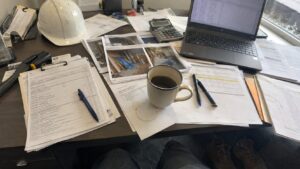
Restoration project documentation matters for several reasons. For homeowners considering restoration work, case studies show what to expect — actual project scope, timeline, decisions, and outcomes rather than abstract service descriptions. For insurance professionals evaluating contractor capability, case studies demonstrate standards-based scope and documentation practice. For other restoration contractors and industry professionals, case studies show how specific scenarios (ice damming events, sewage cleanup, custom home restoration, specialty drying) get handled in practice. The case studies below document actual restoration projects across our service area in Utah County — Spanish Fork, Springville, Salem, Payson, and Mapleton. Property addresses and homeowner identifying information are anonymized for privacy; technical scope, timeline, and outcomes reflect actual project documentation. Each case study includes the initial situation, scope development, technical approach, timeline progression, insurance coordination, and final outcomes. Some case studies include details that homeowners might find unflattering (initial DIY attempts that worsened the situation, decisions about scope that homeowners later questioned, sometimes communication challenges during the project) — we include these because honest documentation supports learning rather than marketing-style success-story-only narratives.
Case Studies by City
Spanish Fork, UT — Headquartered Service Area
Spanish Fork case studies span the city’s diverse housing stock from foothill subdivisions to older neighborhoods to newer subdivisions. The headquarters location at 1330 S 1400 E supports 45-minute arrival guarantee inside city limits for most central Spanish Fork properties.
- Basement Flooding Recovery — Foundation drainage event in older Spanish Fork neighborhood with finished basement scope
- Black Mold Removal in Family Home — Concealed Stachybotrys colonization discovered during routine renovation
- Toilet Overflow Cleanup — Category 3 sewage event with vertical migration through floor assembly
Springville, UT — East Bench and Commercial Corridor
Springville case studies cover the city’s commercial corridor along I-15 and the east bench custom home concentration. Response time 12–22 minutes from Spanish Fork headquarters depending on neighborhood.
- Springville case studies — to be published as projects complete documentation review
Salem, UT — Older Home and Crawlspace Specialty
Salem case studies cover the city’s older home concentration with plaster walls, galvanized plumbing past end-of-service-life, and crawlspace-conducive construction. Response time 10–20 minutes from Spanish Fork headquarters.
- Salem case studies — to be published as projects complete documentation review
Payson, UT — Mountain Proximity Specialty
Payson case studies cover the city’s mountain proximity scenarios including ice damming events, snow load damage, and wildfire smoke exposure. Response time 18–28 minutes from Spanish Fork headquarters with four-wheel drive equipment for winter weather access.
- Payson case studies — to be published as projects complete documentation review
Mapleton, UT — Custom Home Reconstruction Specialty
Mapleton case studies cover the city’s custom home concentration with specialty trade coordination, hardwood preservation, and HOA-governed subdivision considerations. Response time 12–22 minutes from Spanish Fork headquarters.
- Mapleton case studies — to be published as projects complete documentation review
Case Studies by Service Category
Water Damage Restoration
- Spanish Fork Basement Flooding Recovery — Foundation drainage event with submersible pump deployment, finished basement scope, and foundation contractor coordination
Mold Remediation
- Spanish Fork Black Mold Removal — Concealed Stachybotrys colonization with full ANSI/IICRC S520 protocols, containment, HEPA filtration, and post-remediation verification
Sewage Cleanup
- Spanish Fork Toilet Overflow Cleanup — Category 3 event with vertical migration, full PPE protocol, ATP testing verification, and reconstruction
Fire and Smoke Damage
- Fire and smoke damage case studies — to be published as projects complete documentation review
Commercial Restoration
- Commercial restoration case studies — to be published as projects complete documentation review
What Each Case Study Includes
Each case study follows consistent documentation structure supporting comparison across projects:
- Initial Situation: What the homeowner found, when, and what initial steps they took (sometimes including DIY attempts before calling us)
- Initial Response: Dispatch timing, arrival, walk-through findings, immediate stabilization
- Scope Development: How comprehensive scope mapping evolved understanding of the situation, sometimes revealing concealed scope beyond initial visible damage
- Technical Approach: Specific equipment, protocols, and standards-based decisions including any specialty considerations
- Timeline: Day-by-day or week-by-week progression through restoration phases
- Insurance Coordination: Carrier involvement, scope discussions, allocation decisions, claim outcomes
- Specialty Trade Coordination: When applicable, coordination with plumbers, foundation contractors, custom millworkers, hardwood specialists, structural engineers, asbestos abatement specialists
- Final Outcomes: Restoration completion, any concerns identified during final walkthrough, post-project follow-up
- Lessons and Reflections: What worked well, what could have been handled differently, sometimes specific advice for similar future situations
Privacy and Documentation Practice
All case studies anonymize homeowner identifying information and specific property addresses. Property neighborhood and general characteristics are identified to provide context (older Spanish Fork neighborhood, foothill subdivision custom home, Salem older property with plaster construction, etc.) but specific addresses and names are not included. Photographs in case studies show technical conditions and equipment rather than identifying property exteriors or interiors in ways that would compromise privacy. Case studies represent actual projects completed by 4Sure Mold Removal under Utah Contractor License #961339-4102 and IICRC Firm Certification #923321-2371; technical scope and outcomes reflect actual documentation rather than constructed examples. Homeowners whose projects appear in case studies have consented to the anonymized documentation; we don’t publish case studies without homeowner consent.
Why We Publish Case Studies
Most restoration websites either don’t publish case studies at all or publish marketing-style success stories with sanitized narratives that don’t reflect actual project complexity. Both approaches fail homeowners considering restoration services. No case studies leaves homeowners wondering whether the contractor has actually performed work matching their situation. Sanitized success stories create unrealistic expectations about restoration project experience — restoration projects are inherently disruptive, often involve scope discovery beyond initial expectations, sometimes involve communication challenges during stressful periods, and almost always involve decisions homeowners would have preferred not to make under time pressure. Honest case studies acknowledge these realities while still demonstrating capability and outcomes. The case studies below aim for the honest documentation approach: real projects, real complications, real outcomes, with technical scope and decisions documented in detail. Sometimes the documentation includes things that don’t make the project look perfect — early DIY attempts that complicated subsequent restoration, scope decisions homeowners later questioned, communication gaps that affected the experience even when technical outcomes were good. We include these because they reflect reality and support learning.
Frequently Asked Questions About 4Sure Case Studies
- How does 4Sure select projects to feature as case studies?
- Project selection criteria balance several considerations. Documentation completeness: projects with comprehensive documentation throughout (initial assessment, scope development, technical approach, daily monitoring, insurance coordination, final outcomes) support meaningful case studies; projects with limited documentation aren’t suitable for the in-depth treatment case studies require. Homeowner consent: we don’t publish case studies without explicit homeowner consent for the anonymized documentation; some projects involving sensitive circumstances (commercial litigation, complex insurance disputes, sometimes specific privacy concerns) aren’t suitable for case study publication regardless of documentation completeness. Scenario diversity: we aim for case studies covering diverse scenarios across our service area and service categories rather than concentration in single types of events; this affects selection toward projects representing different scenarios our service area routinely involves. Educational value: projects that include lessons applicable to other situations (specific decision points, protocol applications, complications encountered and addressed) make stronger case studies than projects that simply documented straightforward execution of standard scope. The combined criteria mean published case studies represent a small fraction of projects we complete; many strong projects don’t appear as case studies due to documentation, consent, privacy, or other considerations.
- Do 4Sure case studies represent typical projects or exceptional projects?
- Case studies represent a range of project complexity rather than concentration in either typical or exceptional categories. Some case studies document straightforward standard-scope projects showing how typical scenarios get handled (limited Category 1 events, standard residential scope, predictable timelines and outcomes); these case studies help homeowners understand what typical projects look like. Other case studies document more complex projects showing how unusual scenarios get handled (significant scope discovery during scope mapping, multi-factor complexity, specialty trade coordination requirements, sometimes Category 3 events with extended scope); these case studies help homeowners understand what to expect when initial circumstances suggest more complex restoration. The diversity in case study selection reflects our actual project mix; we don’t only feature exceptional projects to demonstrate capability or only feature typical projects to set realistic expectations. Both project types appear in case studies because both represent actual work we perform.
- What documentation do 4Sure case studies include that’s not typically available from restoration contractors?
- Standards-based scope justification, daily monitoring data, and outcome documentation typically distinguish our case studies from industry-standard contractor case studies. Standards-based scope justification: explicit citation of ANSI/IICRC sections supporting specific scope decisions (Section 12.2.4, 12.2.5, 12.2.7 for water damage; S520 sections for mold remediation; S700 sections for fire and smoke damage); this documentation supports both technical clarity and insurance allocation justification. Daily monitoring data: actual moisture readings, equipment configurations, and progress tracking from project documentation rather than narrative descriptions of “drying went well”; this data shows the actual technical work that occurred and supports verification of standards-based execution. Outcome documentation: post-project verification, sometimes including ATP testing for Category 3 events, Air-O-Cell or BioCassette spore trap cassettes for events with concurrent mold remediation, daily monitoring documentation showing target achievement; this documentation supports both case study credibility and homeowner understanding of project completion criteria. The documentation depth distinguishes our case studies from sanitized success stories that don’t include verifiable technical detail.
- How can I find a case study that matches my specific situation?
- Browse case studies organized by city and service category. The city organization helps if your priority is local familiarity — case studies from your specific city or similar city neighborhoods show how scenarios typical of your area get handled. The service category organization helps if your priority is technical scenario match — case studies covering your specific scenario type (basement flooding, mold remediation, sewage cleanup, fire damage, etc.) show how scenarios similar to your situation get handled. For situations not yet represented in published case studies, contact us directly at (385) 247-9387; we can discuss similar projects we’ve completed even when documentation isn’t yet published as case studies. The published case studies represent a fraction of our project work; many additional projects across diverse scenarios are available for discussion during initial scoping conversations even when not formally documented as case studies on the website. We continually add new case studies as projects complete documentation review and homeowner consent processes.
- How current are the case studies — do they represent recent work or older projects?
- Case studies represent projects from the past 1–3 years typically, with newer case studies added as projects complete documentation review and homeowner consent processes. The 1–3 year window reflects two considerations. Recent projects show current capability — restoration practices, equipment, standards, and approaches evolve over time; case studies from many years ago sometimes don’t reflect current practice even when they document successful projects. Documentation review timeline — projects need time to complete documentation review, finalize verification, and complete homeowner consent processes before case study publication; very recent projects (within last few months) typically aren’t yet ready for case study publication. The combined considerations produce the 1–3 year typical window. For situations where you want documentation of current work specifically, we can discuss recent projects during initial scoping conversations even when those projects haven’t yet completed case study publication processes. The published case studies represent a curated subset of recent work rather than comprehensive recent project documentation.
Contact 4Sure Mold Removal
For questions about case studies or to discuss how similar projects might apply to your situation, call (385) 247-9387. Operating from 1330 S 1400 E in Spanish Fork.
- Emergency Line (24/7): (385) 247-9387
- Address: 1330 S 1400 E, Spanish Fork, UT 84660
- Email: info@4suremoldremoval.xyz
- Owner: Sean Jacques
- Utah Contractor License: #961339-4102
- IICRC Firm Certification: #923321-2371
Office Hours
- Emergency Service: 24 hours a day, 7 days a week
- Office Staff: Monday–Saturday, 8:00 AM–5:00 PM (emergency line answered 24/7)
- Closed: Sundays and State/Federal Holidays (emergency line always active)
Real jobs across Utah County
- Spanish Fork case studies
- Springville case studies
- Mapleton case studies
- Payson case studies
- Salem case studies
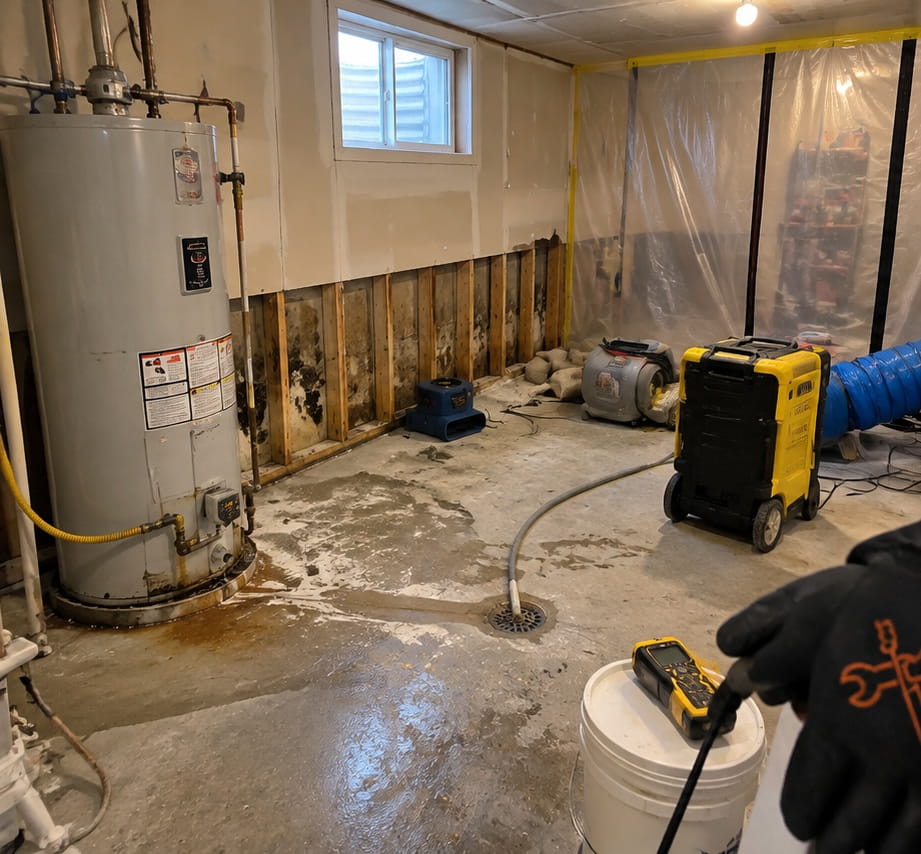
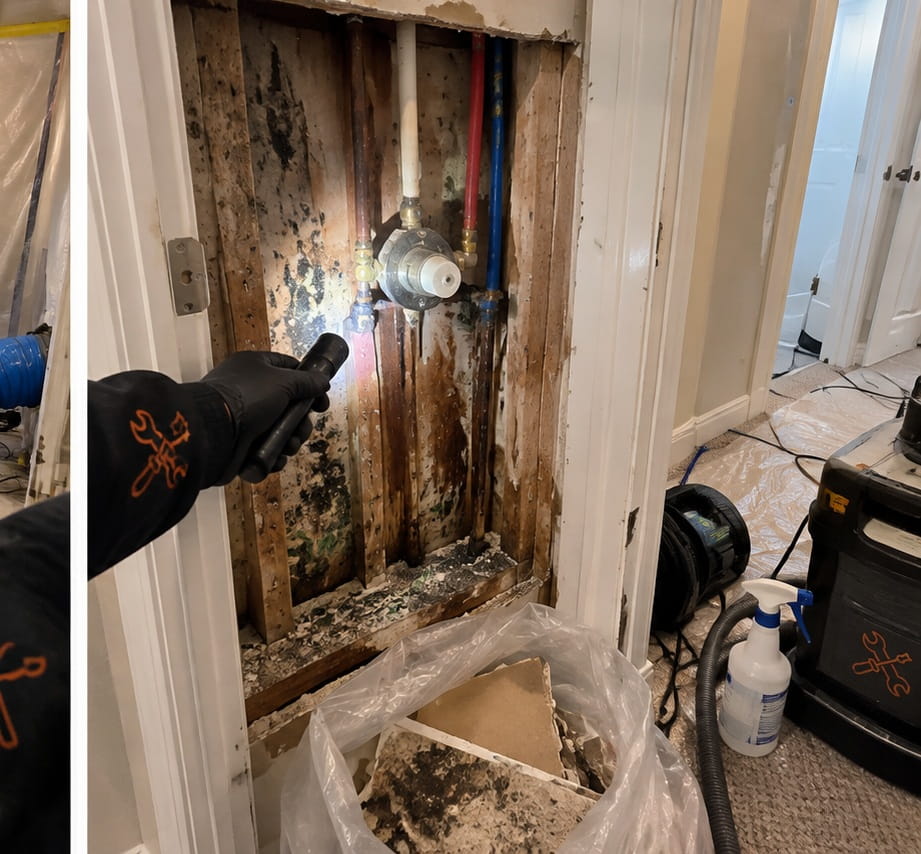
- Saratoga Springs jobs — Harvest Hills basement (Aug 2026), Redwood Road bathroom mold (Jun 2026)
Every case study is a real 4Sure Mold Removal job. See all case studies.
Recent Saratoga Springs jobs
Verify our credentials yourself
- Utah Contractor License#961339-4102 – verify at Utah DOPL
- IICRC Certified Firm#923321-2371 – verify at IICRC Global Locator
- Liability + workers’ compCarrier: The Hartford – GL $1M/$2M, WC EL $1M/$1M/$1M
- BondedYes – Utah-licensed, bonded and insured LLC
Written warranty on every job
Transferable once to a new homeowner within 24 months with a signed transfer. Read the full warranty terms →