
Reviewed by: Tyler Bennett, Restoration Project Manager – IICRC WRT/ASD #291438 – 4Sure Mold Removal, 1330 S 1400 E, Spanish Fork, UT. Last reviewed: October 2026.
Case Study — Toilet Overflow Cleanup in Spanish Fork Two-Story Home With Category 3 Sewage Migration Through Floor Assembly to Lower Level
Initial Situation
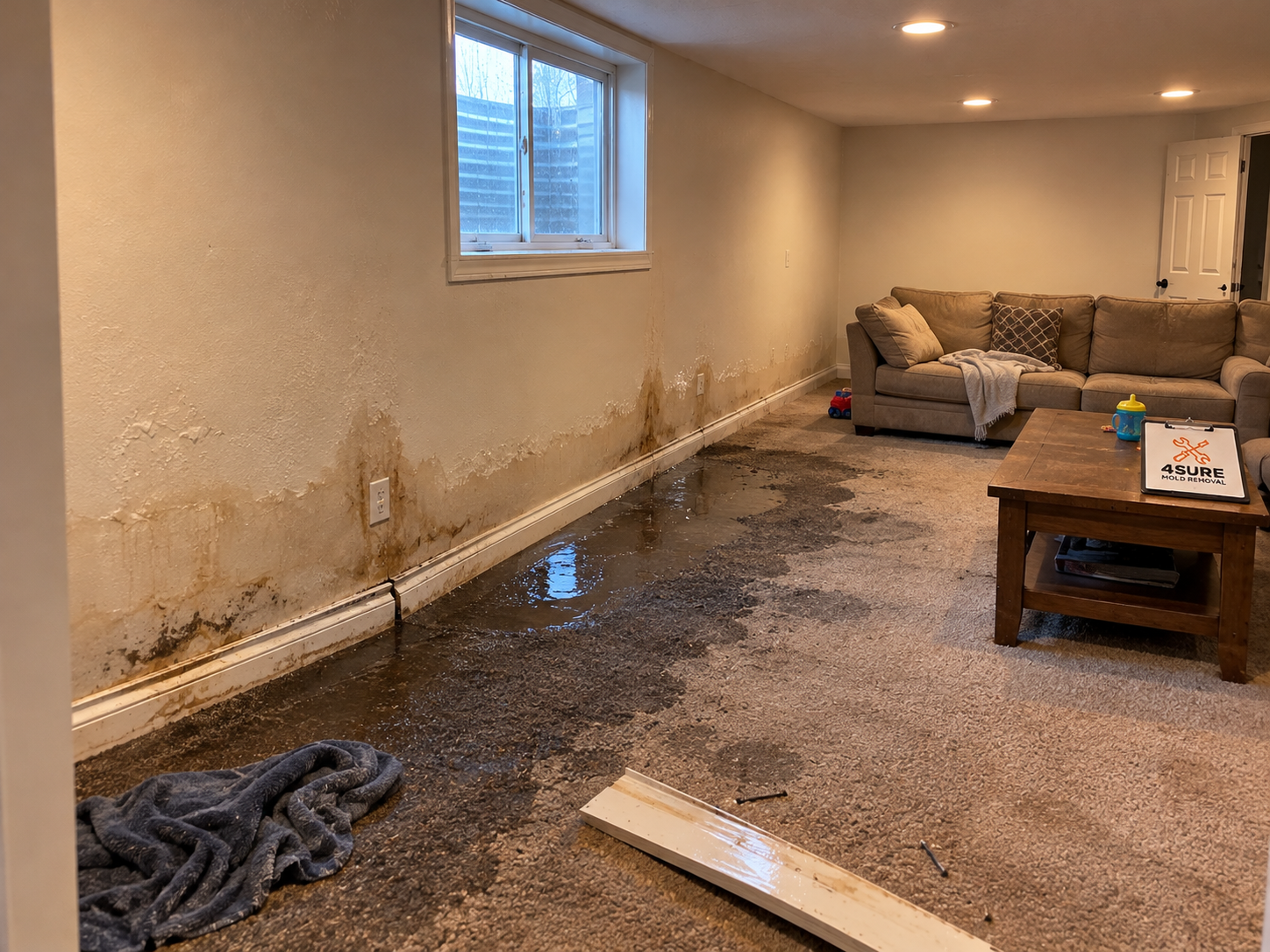
December 19, 2024, 4:23 AM. Homeowner woke to sounds of running water and discovered second-floor master bathroom toilet supply line had failed at the connection point producing continuous water and sewage release. Estimated leak duration before discovery: 4–7 hours based on water volume and migration extent. Water and sewage had migrated through bathroom floor; through bedroom flooring adjacent to bathroom; through floor assembly into family room ceiling below; family room ceiling had failed at one location producing direct water release into family room; sewage migration produced Category 3 contamination throughout affected zones. Homeowner shut off water supply at master bathroom; called 4Sure at 4:31 AM.Property Characteristics
- Neighborhood: Centennial subdivision (newer Spanish Fork, home built 2008)
- Construction: Standard residential construction with builder-grade finishes; modernized infrastructure
- Affected upper level: Master bathroom (approximately 100 sq ft); master bedroom carpet adjacent to bathroom (approximately 200 sq ft affected); upper hallway (approximately 50 sq ft)
- Affected lower level: Family room ceiling (approximately 200 sq ft affected with one area of ceiling failure); family room carpet below ceiling damage (approximately 150 sq ft); some adjacent kitchen flooring near family room transition
- Suspected source: Toilet supply line connection failure — typical residential plumbing failure with Category 3 contamination through toilet bowl water release
Initial Response and First 24 Hours
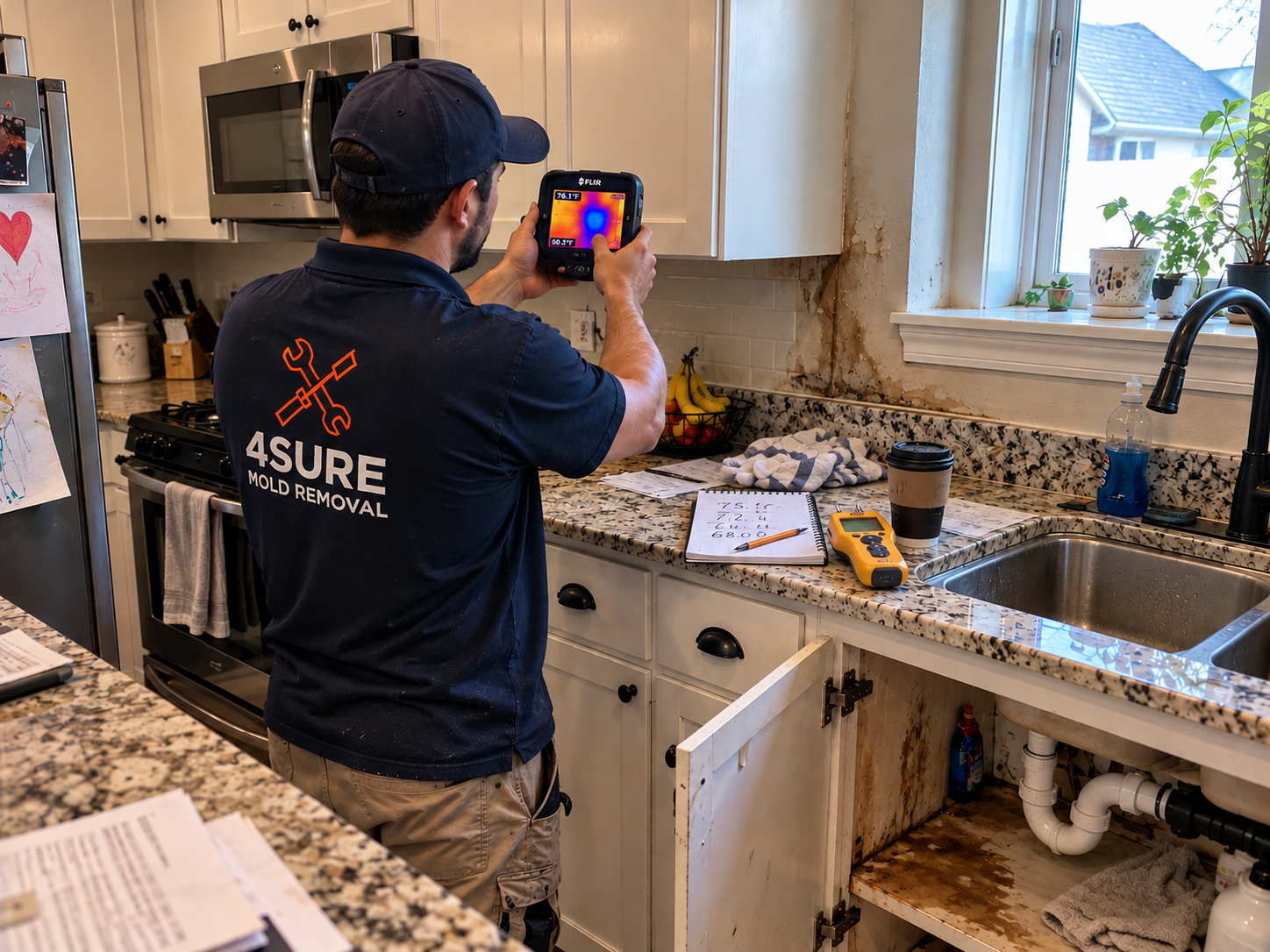
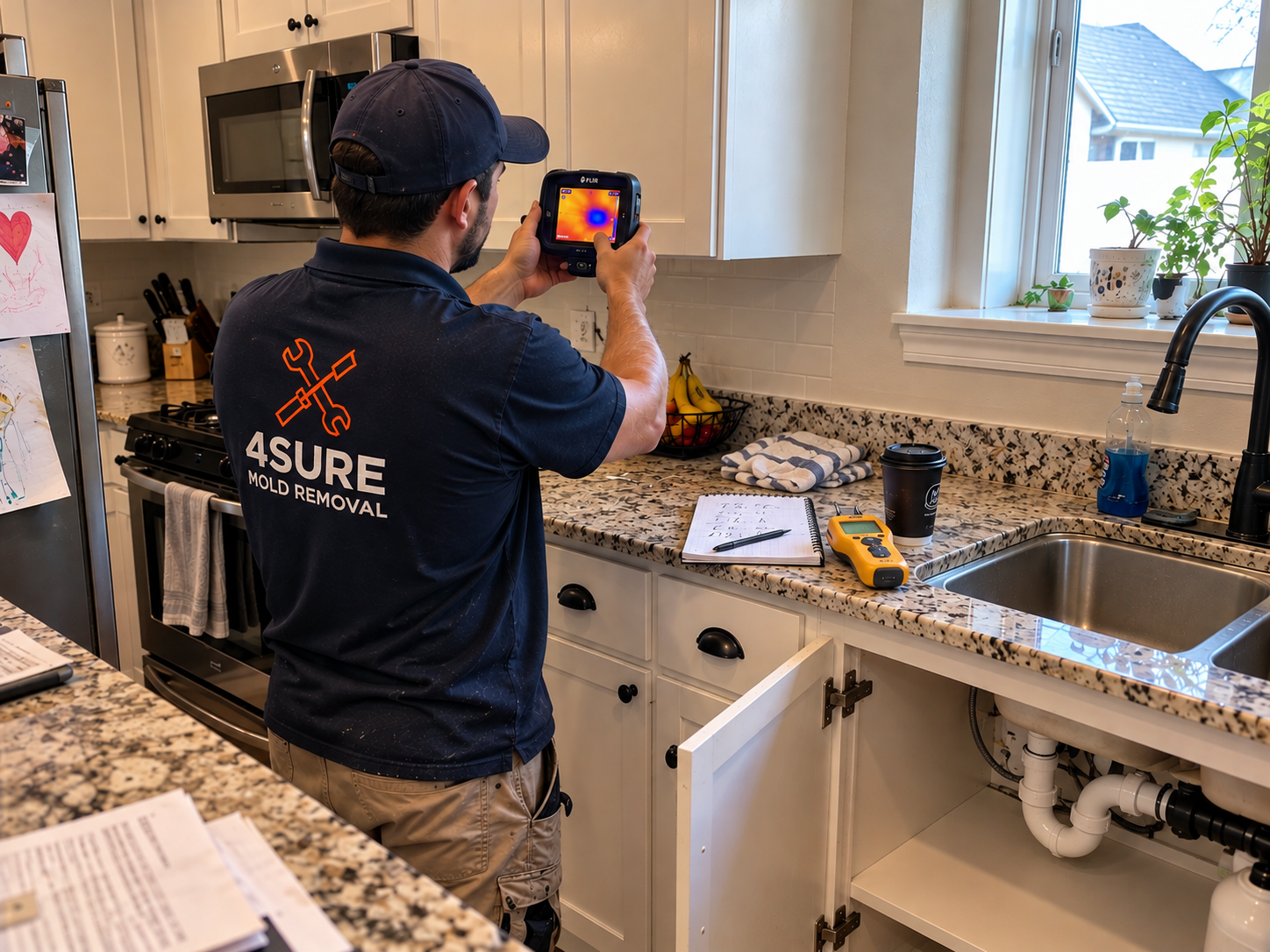
Dispatch at 4:36 AM; arrival at 4:51 AM (15 minutes from dispatch — slightly extended response due to early morning hour and standard dispatch logistics during off-hours). Crew of three technicians arrived with truck-mounted extraction equipment, full PPE for Category 3 work (Tyvek suits, P100 respirators, nitrile gloves, eye protection), containment supplies, HEPA filtration units, regulated medical waste disposal supplies, FLIR thermal imaging, Protimeter capacitance scanning, ATP testing kits, antimicrobial disinfectants.Initial Walk-Through and Category 3 Designation (First 30 Minutes)
Walk-through with homeowner identified Category 3 sewage event with vertical migration from upper level through floor assembly into lower level. Category 3 protocols activated immediately on arrival per ANSI/IICRC S500 Section 12.2.7. Full PPE deployment before any work in contamination zones; homeowner advised to evacuate the affected zones during cleanup phase; alternative housing coordination discussion (homeowner and family relocated to neighboring family member’s home for cleanup phase).Source Isolation and Initial Stabilization (Hours 1–2)
Toilet supply line confirmed as failed source; water shutoff at bathroom already addressed by homeowner before our arrival; plumber called for source repair scheduling later that day. Initial extraction began in upper-level affected zones to limit ongoing migration; ceiling tarping in family room to prevent additional water release through compromised ceiling area; standing water removal across affected zones.Containment Establishment (Hours 2–4)
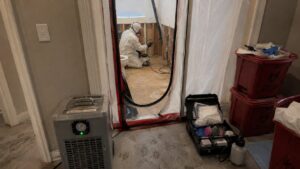
Plastic barrier containment isolated affected zones from unaffected property areas. Upper level containment isolated master bathroom, master bedroom, and upper hallway from rest of upper level; lower level containment isolated family room and adjacent kitchen transition area from rest of lower level; HEPA filtration with 4 Predator 750 units (99.97% at 0.3 microns) running negative pressure inside containment zones. Poly zipper door access to each containment zone supporting controlled entry and exit during cleanup phase.Initial Insurance Coordination (Hours 4–24)
Homeowner’s insurance carrier (State Farm) notified; sewer backup endorsement on policy confirmed (modest annual premium add-on supporting Category 3 sewage event coverage that wouldn’t apply under standard policy without endorsement). Initial claim filing supported with documentation including photographs of standing water and sewage migration; thermal imagery of saturation extent; preliminary scope assessment supporting claim discussion. Adjuster scheduled for site visit within 48 hours.Source Repair and Additional Stabilization (Day 1)
Plumber arrived afternoon Day 1 for source repair. Toilet supply line replacement completed including new shutoff valve installation; pressure testing confirmed repair; documentation provided for insurance records. Plumber scope ($425) included in restoration claim under sudden discharge from concealed source coverage per State Farm policy. Additional inspection of upper-level plumbing identified one other supply line connection showing early corrosion; preventive replacement recommended (approximately $150 additional plumber scope) to address concern before similar future failure.Adjuster Site Visit and Scope Confirmation (Day 2)
State Farm adjuster site visit Day 2 with our project team for joint walk-through. Sewer backup endorsement confirmed coverage including: Category 3 cleanup with full PPE, containment, regulated medical waste disposal, and ATP testing verification; demolition scope appropriate to Category 3 standards (more extensive than Category 1 demolition would be); structural drying scope; reconstruction scope; restoration to pre-loss condition. Insurance allocation: $20,200 for full restoration scope; homeowner responsibility limited to optional upgrade selections during reconstruction phase ($2,200 for upgraded carpet selection in master bedroom and family room beyond pre-loss specifications). The sewer backup endorsement made the difference between full coverage and significant out-of-pocket exposure; without endorsement, homeowner would have faced approximately $15,000+ in out-of-pocket cost.Demolition Phase (Days 2–6)
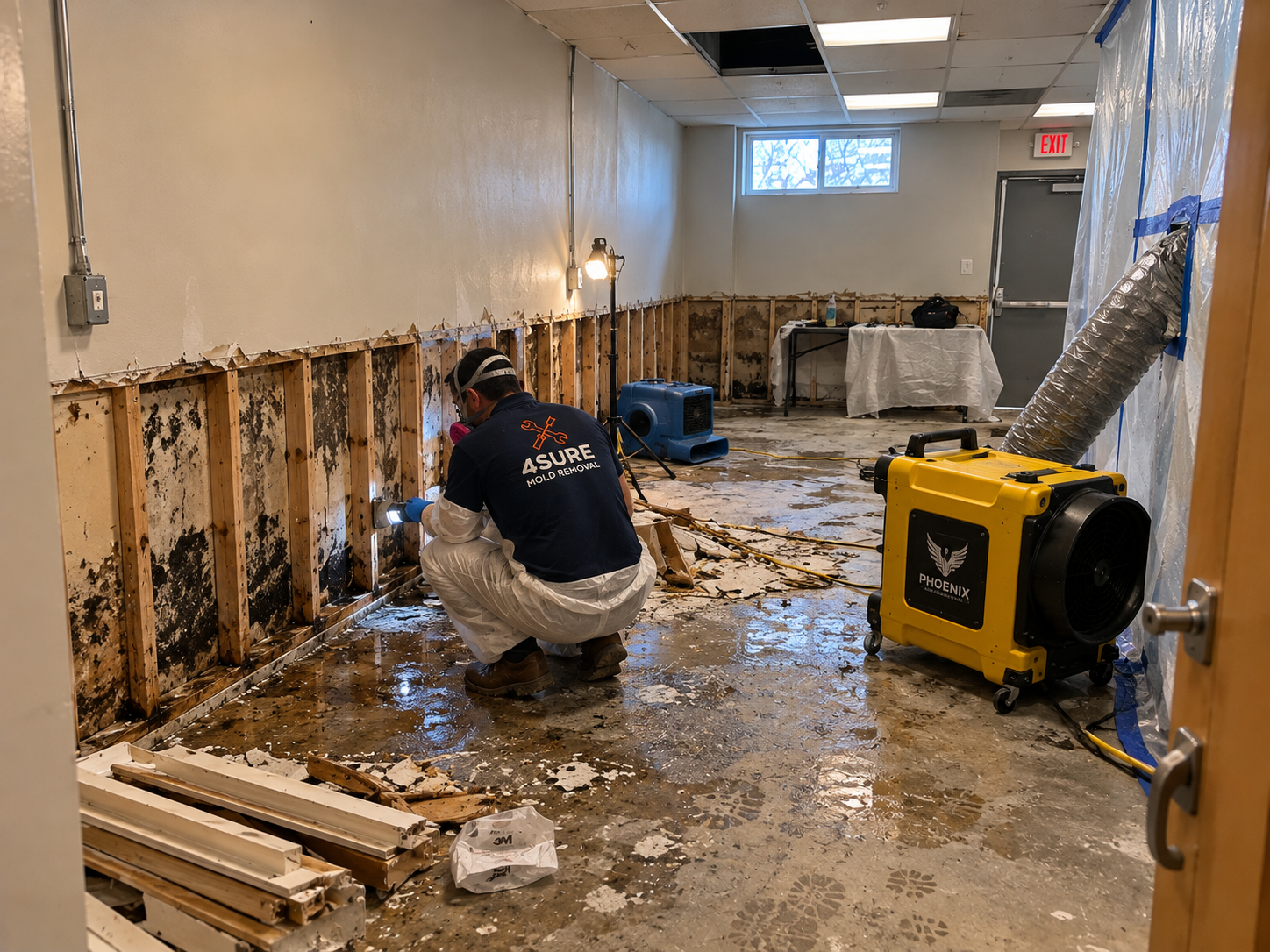
Category 3 demolition more extensive than Category 1 demolition would be due to contamination concerns affecting porous materials. Demolition scope across affected zones:Upper Level Demolition
- Master bathroom: vinyl floor, baseboards, lower drywall to 24-inch flood-cut, vanity bottom, sometimes additional scope based on conditions
- Master bedroom: carpet and pad (Category 3 carpet always replaced rather than cleaned), baseboards, lower drywall to 24-inch flood-cut where contamination extended
- Upper hallway: carpet and pad, baseboards, lower drywall to 24-inch flood-cut where contamination extended
Floor Assembly Demolition
- Subfloor between master bathroom and family room ceiling — saturated and contaminated; full removal across affected area (approximately 200 sq ft)
- Floor framing inspection through subfloor opening; framing sometimes warrants treatment versus replacement based on contamination extent and structural condition
- Insulation in floor assembly — saturated and contaminated; full removal
- Some HVAC ductwork in floor assembly — sometimes contaminated based on routing; investigated and addressed where applicable
Lower Level Demolition
- Family room ceiling — failed area completely removed; adjacent ceiling area to extent of contamination (approximately 200 sq ft total ceiling demolition)
- Family room carpet and pad below ceiling damage area (Category 3 always replaced)
- Family room baseboards in affected area
- Family room drywall — lower areas where contamination from above had migrated down walls (affected by ceiling failure water release)
- Kitchen flooring at transition adjacent to family room — affected vinyl flooring removed
Disinfection Phase (Days 6–9)
Sporicidin antimicrobial disinfectant applied throughout retained substrates following demolition. Treatment scope: retained framing in affected zones; subfloor in adjacent areas (where contamination wasn’t visible but proximity warranted treatment); retained drywall edges where flood-cut demolition occurred; HVAC supply and return registers in affected rooms; some ductwork accessible through register removal where investigation showed contamination concerns. Treatment per Sporicidin specifications including appropriate dwell time for Category 3 disinfection.ATP Testing Verification After Disinfection (Days 9–10)
ATP (Adenosine Triphosphate) testing verification of surface cleanup effectiveness across affected zones. ATP testing measures organic contamination on surfaces providing quantitative verification beyond visual inspection. Initial ATP testing Day 9 showed acceptable results across most surfaces but some samples warranted additional cleaning; supplemental cleaning Day 10 with re-testing showing all samples within acceptable thresholds. Documentation of ATP results supported transition to drying phase.Structural Drying Phase (Days 10–22)
Drying configuration: 4 Phoenix 200 MAX dehumidifiers (130 PPD AHAM each); 12 high-velocity air movers; daily monitoring with Protimeter Hygromaster 2 capacitance scanning. Drying phase ran 12 days for substrate moisture targets achievement; daily monitoring documentation supported insurance allocation throughout.Drying Phase Considerations Specific to Category 3 Events
Category 3 drying calibrates differently than Category 1 drying: containment maintained throughout drying phase preventing potential cross-contamination during equipment operation; HEPA filtration runs continuously inside containment for any potential residual airborne contamination; full PPE maintained for technicians during all monitoring visits in contamination zones; documentation supports both drying progress and Category 3 protocol compliance throughout.Final Verification and Reconstruction Planning (Days 22–24)
Final ATP testing across affected zones confirmed cleanup completion; visual inspection verified all contaminated materials addressed; documentation supported insurance closeout and reconstruction phase initiation. Reconstruction planning included: subfloor replacement; floor assembly insulation replacement; ceiling drywall replacement in family room; bathroom vinyl flooring replacement; bathroom vanity replacement; carpet selection through homeowner conversation (homeowner selected upgraded carpet for master bedroom and family room beyond pre-loss specifications — upgrade scope homeowner responsibility); paint scope across affected areas.Reconstruction Phase (Days 24–32)
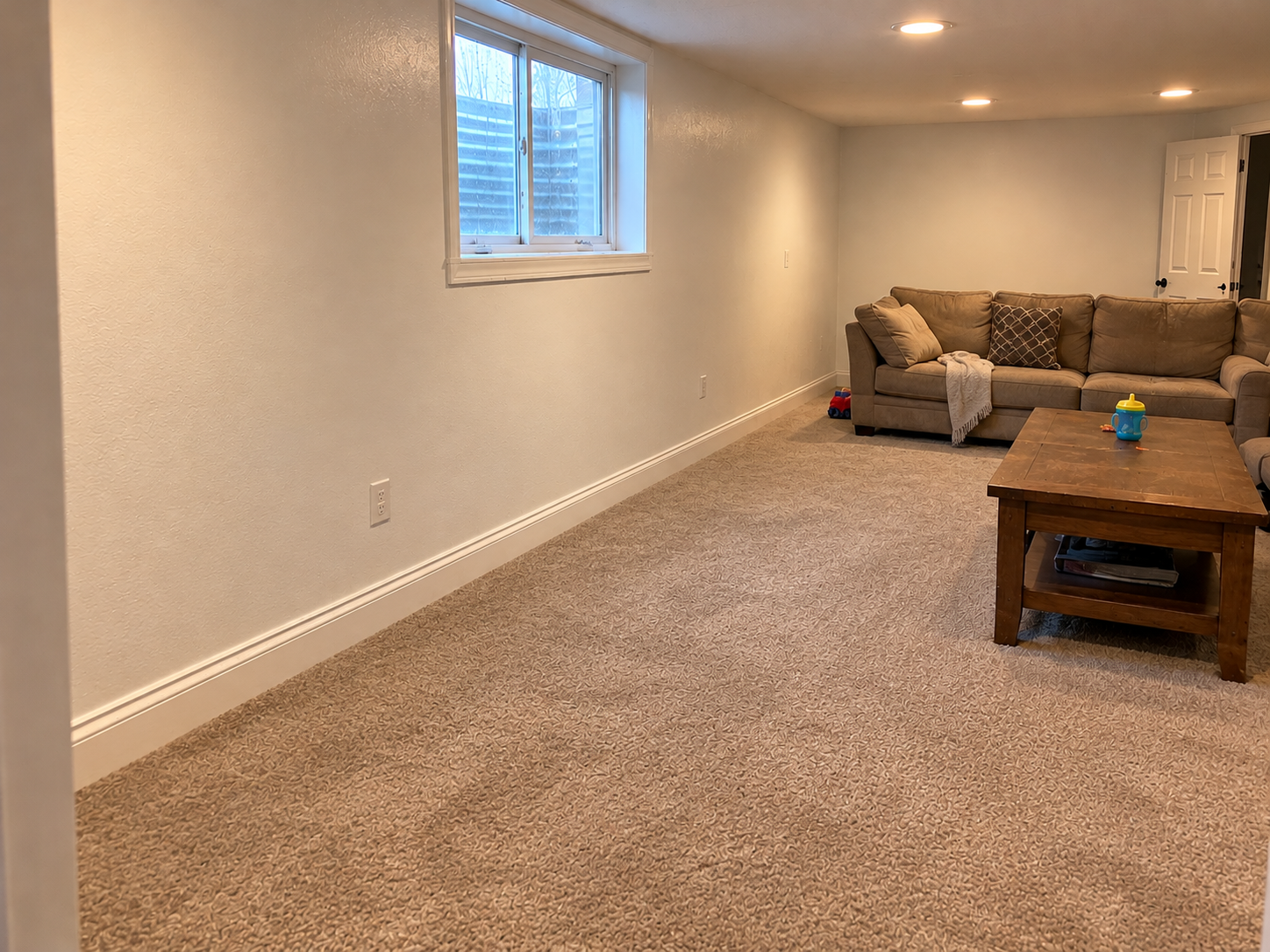
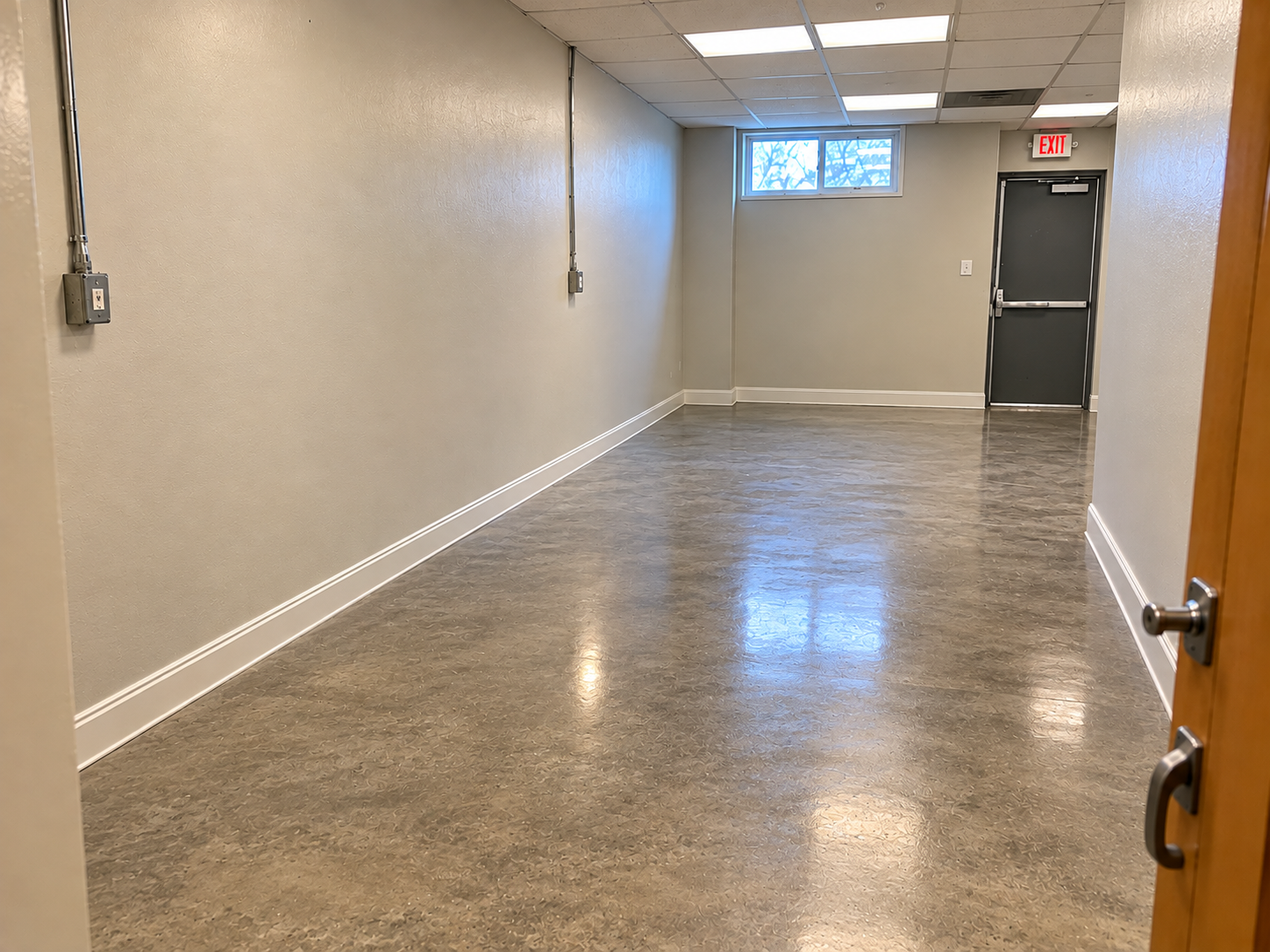
Reconstruction proceeded across all affected zones: subfloor replacement; floor assembly insulation replacement; ceiling drywall replacement in family room (texture matching existing); bathroom vinyl flooring replacement; bathroom vanity replacement; bathroom drywall replacement and finishing; master bedroom drywall finishing; baseboard replacement throughout affected zones; carpet installation through carpet specialist subcontractor for master bedroom and family room; kitchen flooring repair at transition area; paint and finish work throughout affected zones; final cleaning. Final walkthrough Day 32 with homeowner; minor punch list (paint touch-up at one ceiling-wall transition; baseboard caulk touch-up) addressed Day 33. Project completion documentation provided to homeowner including warranty information, ATP testing verification documentation, and Category 3 cleanup documentation supporting future property records.Final Outcomes
- Total project timeline: 32 days from emergency dispatch through final walkthrough
- Total project cost: $22,400
- Insurance coverage: $20,200 (State Farm through sewer backup endorsement on homeowner property coverage)
- Homeowner responsibility: $2,200 for upgrade selections during reconstruction beyond pre-loss specifications
- Verification outcome: ATP testing confirmed successful Category 3 cleanup; documentation supports future property records
- Reconstruction outcome: Property returned to pre-loss condition with homeowner-selected carpet upgrades; no homeowner concerns at final walkthrough
- Source correction outcome: Toilet supply line replacement plus preventive replacement of one additional supply line addressed both immediate cause and one early-warning concern
Lessons and Reflections
What Worked Well
- Sewer backup endorsement on State Farm policy made the difference between full coverage and significant out-of-pocket exposure; the modest annual premium for the endorsement was significant relative to the $20,200 coverage scope it supported
- Fast emergency response (15 minutes from dispatch including early morning hour) supported prompt Category 3 protocol activation before any homeowner exposure or cross-contamination spread
- Vertical migration through floor assembly was identified early and addressed with comprehensive scope rather than treating as upper-level-only event; comprehensive scope mapping during early phase prevented scope expansion discovery during reconstruction
- Plumber preventive recommendation (additional supply line replacement beyond just the failed line) addressed early-warning concern preventing similar future failure
- ATP testing verification provided quantitative evidence of cleanup completion beyond visual inspection; documentation supports both immediate confidence and future property records
- Insurance allocation discussions were resolved efficiently through sewer backup endorsement coverage and standards-based scope documentation; Tyler Bennett project-managed insurance coordination throughout supporting homeowner experience without complex adjuster discussions
What Could Have Been Handled Differently
- Initial source identification could have been faster — the toilet supply line failure was identified quickly but specific location of failure took 30+ minutes of investigation; clearer initial homeowner description of symptoms would have supported faster source identification
- Alternative housing coordination during cleanup phase could have been established earlier — initial discussions about alternative housing happened during Hour 4 when family was still adjusting to early morning emergency; clearer initial communication about Category 3 cleanup phase requirements would have supported earlier alternative housing planning
- Some carpet selection decisions during reconstruction phase took longer than necessary; clearer material selection process during Phase 7 (verification and reconstruction planning) could have compressed reconstruction timeline by 2–4 days
Specific Advice for Similar Future Situations
- Verify that your homeowner insurance includes sewer backup endorsement — the modest annual premium addition is significant relative to potential exposure for sewage events; sewage events without endorsement coverage often involve $10,000–$30,000+ in out-of-pocket cost depending on scope
- For two-story homes, periodic inspection of bathroom plumbing including supply line connections is worth consideration — sometimes early signs of corrosion or wear at supply line connections can be addressed before failure
- If you discover sewage in your home, evacuate the affected zones immediately and call specialty cleanup; don’t attempt DIY cleanup of sewage contamination (the protective equipment and disinfection requirements are beyond DIY capacity)
- For events with vertical migration through floor assemblies, expect comprehensive scope including both upper and lower levels; the migration produces broader scope than upper-level-only events even when initial visible damage is concentrated in upper level
- Document Category 3 cleanup thoroughly including ATP testing verification — the documentation supports future property records, real estate transactions, and any subsequent concerns about residual contamination; verification documentation is significantly more valuable than narrative descriptions
Frequently Asked Questions About This Case Study
- Why does sewer backup endorsement matter so much for sewage events versus standard homeowner property coverage?
- Standard homeowner property coverage typically excludes sewer backup events through specific exclusion language in the policy; the exclusion exists because sewage events often involve different risk characteristics (sometimes municipal infrastructure failures rather than sudden discharge from accidental sources, sometimes overflow during heavy precipitation that’s broader event rather than property-specific incident, sometimes contamination from external sources). The exclusion means standard policy provides no coverage for sewer-related events even when the event is sudden and accidental from the property owner perspective. Sewer backup endorsement is typically inexpensive add-on (often $50–$200 annually) but provides significant coverage for sewage events. For this specific case, the endorsement supported full coverage of $20,200 scope; without endorsement, homeowner would have faced approximately $15,000+ in out-of-pocket cost for the Category 3 cleanup, demolition, drying, and reconstruction. The recommendation: verify sewer backup endorsement on your homeowner policy at next renewal; the modest annual premium addition is significant relative to potential exposure. Some carriers include sewer backup coverage automatically without explicit endorsement; verify your specific policy provisions to confirm coverage availability.
- How was the project scope different from a Category 1 (clean water) event of similar initial water volume?
- Category 3 sewage events involve substantially different protocol than Category 1 events through several scope additions. Specifically: full PPE for technicians throughout (Tyvek suits, P100 respirators, nitrile gloves, eye protection — required from arrival through completion); containment of work zones using plastic barriers and HEPA filtration to prevent contamination spread; removal of porous materials that can’t be effectively decontaminated (carpet, carpet pad, drywall, insulation, sometimes structural materials — Category 3 always replaces these versus Category 1 sometimes drying these in place); regulated medical waste disposal stream for contaminated materials rather than standard construction debris; ATP testing verification confirming surface cleanup effectiveness through quantitative measurement; sometimes alternative housing coordination for occupants during extraction and disinfection phase. The protocol differences add scope and timeline compared to Category 1 events but produce safe and compliant outcomes for Category 3 conditions. Cost comparison: Category 1 event of similar initial water volume might run $8,000–$15,000 total scope; Category 3 event for similar initial water volume runs $20,000–$45,000+ total scope due to expanded protocols. The Category designation differential affects insurance allocation significantly; standards-based scope documentation supports appropriate allocation discussions.
- How did the vertical migration through floor assembly affect project complexity beyond a single-floor event?
- Vertical migration substantially increases project complexity through several factors. Multi-level scope: cleanup proceeds simultaneously across two levels rather than single level; equipment configuration scales for multi-level scope including additional containment zones, additional HEPA filtration, additional crew deployment; communication coordinates across multi-level work zones. Floor assembly scope: subfloor and floor framing demolition in addition to upper-level and lower-level demolition; floor assembly insulation replacement; sometimes HVAC ductwork in floor assembly affected; structural integrity verification during demolition phase. Reconstruction complexity: reconstruction across two levels with floor assembly rebuild; specialty trade coordination for ceiling repair on lower level; carpet installation across multiple zones; coordination of trades to avoid conflicts during simultaneous multi-level work. Documentation expansion: scope documentation across multiple levels and floor assembly; insurance allocation across affected zones supporting comprehensive coverage. The vertical migration scope typically extends timeline 25–50% beyond single-level event of similar initial volume; the extended scope reflects scope characteristics rather than process inefficiency. For this project, the 32-day timeline reflected the multi-level scope; single-level event of similar initial volume might have completed in 20–25 days.
- What if the homeowner had attempted DIY cleanup of the sewage contamination before professional response?
- DIY sewage cleanup typically produces several adverse outcomes that complicate subsequent professional remediation. Homeowner exposure: sewage contamination contains pathogenic organisms; DIY cleanup without appropriate PPE produces direct exposure through skin contact, inhalation, ingestion pathways; sometimes health effects emerge during or after cleanup. Contamination spread: standard DIY cleanup tools (mops, vacuums, sometimes shop vacuums) often spread contamination rather than addressing it; cross-contamination between affected and unaffected zones expands cleanup scope; sometimes HVAC system contamination through cleanup activities affects whole property. Inadequate cleanup: standard DIY cleanup doesn’t address microbial contamination at S500 Category 3 standards; visible cleanup without containment, HEPA filtration, regulated waste disposal, antimicrobial treatment, and ATP testing typically leaves residual contamination; sometimes secondary mold colonization emerges weeks or months after inadequate cleanup. Insurance complications: insurance coverage typically requires standards-based remediation; DIY cleanup followed by professional remediation often involves coverage disputes when DIY work is documented; sometimes coverage is reduced or denied based on inadequate initial response. Subsequent professional remediation scope: when DIY cleanup is followed by professional remediation, scope typically expands 50–150% beyond what professional response from beginning would have involved due to spread contamination, additional decontamination, sometimes additional verification testing. The recommendation: don’t attempt DIY cleanup of sewage contamination; evacuate affected zones and call specialty cleanup immediately. The protective equipment and disinfection requirements are beyond DIY capacity even for committed and capable homeowners.
- How does the documentation from this Category 3 cleanup support future property records?
- Category 3 cleanup documentation provides several long-term property record benefits. Real estate transactions: Category 3 events sometimes appear in property history documentation during real estate transactions; comprehensive cleanup documentation including ATP testing verification provides evidence of standards-based remediation rather than narrative descriptions of “cleanup completed”; the documentation supports buyer confidence and disclosure compliance during transactions. Future mold concerns: if mold concerns emerge in the future at the affected property, the Category 3 cleanup documentation supports investigation by establishing baseline post-remediation conditions; sometimes future mold issues are unrelated to the original event but documentation distinguishes new issues from incomplete original remediation. Insurance claims: future insurance claims sometimes reference prior property events; the Category 3 cleanup documentation supports establishing that prior events were properly addressed with standards-based remediation. Property maintenance records: comprehensive restoration documentation supports overall property maintenance records for homeowners maintaining detailed property history. The documentation specifically includes: ATP testing verification results; scope documentation with photographs throughout cleanup phases; standards citations supporting protocol decisions; regulated medical waste disposal records; final walkthrough verification. The documentation expansion compared to narrative descriptions takes more time but produces significantly more valuable long-term records; we provide comprehensive documentation as standard practice rather than only when specifically requested. For homeowners interested in maintaining property records, we recommend retaining the documentation in property files alongside other property maintenance records.
Contact 4Sure Mold Removal — Spanish Fork Sewage Cleanup Response
Operating from 1330 S 1400 E in Spanish Fork, our team responds 24/7 to Spanish Fork sewage cleanup emergencies with full Category 3 protocols. For sewage cleanup similar to this case study, call (385) 247-9387.- Emergency Line (24/7): (385) 247-9387
- Address: 1330 S 1400 E, Spanish Fork, UT 84660
- Email: info@4suremoldremoval.xyz
- Owner: Sean Jacques
- Utah Contractor License: #961339-4102
- IICRC Firm Certification: #923321-2371
Office Hours
- Emergency Service: 24 hours a day, 7 days a week
- Office Staff: Monday–Saturday, 8:00 AM–5:00 PM (emergency line answered 24/7)
- Closed: Sundays and State/Federal Holidays (emergency line always active)
Verify our credentials yourself
- Utah Contractor License#961339-4102 – verify at Utah DOPL
- IICRC Certified Firm#923321-2371 – verify at IICRC Global Locator
- Liability + workers’ compCarrier: The Hartford – GL $1M/$2M, WC EL $1M/$1M/$1M
- BondedYes – Utah-licensed, bonded and insured LLC
Written warranty on every job
24-month workmanshipDrying, structural repairs, drywall, flooring, cabinetry, and paint. If our work fails, we come back and redo it at no cost.
90-day mold warrantyIf visible mold returns in an area we remediated from the same moisture source, we reinspect and re-remediate free.
Transferable once to a new homeowner within 24 months with a signed transfer. Read the full warranty terms →
24/7 live-answered emergency line – (385) 247-9387. 45-minute arrival guarantee inside Spanish Fork city limits; typically under 60 minutes in Springville, Mapleton, Payson, Salem and Saratoga Springs. If we’re late in Spanish Fork, your emergency inspection is free.
Dealing with something similar in Spanish Fork? See sewage cleanup in Spanish Fork, or call (385) 247-9387. Answered live 24/7.