
The 4Sure Restoration Process — From First Call to Project Closeout in Spanish Fork & Utah County
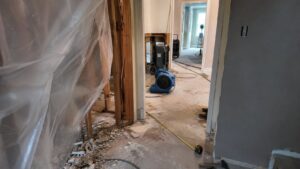
Most water damage projects fail not at any single step, but at the handoffs between steps. Extraction without proper categorization leads to drying with the wrong category protocol. Drying without daily monitoring leads to “trust us, it’s dry” closeouts. Closeout without documentation leads to denied insurance claims six weeks later. Reconstruction without dry-out verification leads to mold inside finished walls in 90 days. The process below exists to make every handoff visible, documented, and accountable — so that on day 18 of a multi-week project, the homeowner, the adjuster, and the crew lead all agree on what’s been done and what’s next.
4Sure Mold Removal performs every restoration project under ANSI/IICRC S500 protocols (water), S520 (mold), and S700 (fire and smoke) across Spanish Fork, Springville, Salem, Payson, and Mapleton. Every project closes with a documented file under Utah Contractor License #961339-4102 and IICRC Firm Certification #923321-2371.
The Eleven Phases of a Restoration Project
Phase 1: Emergency Call and Dispatch (Minutes 0–30)
The phone rings. The on-call technician answers within 30 seconds, takes the address, runs through triage questions (water type, square footage, time elapsed, source status, electrical safety), and dispatches the closest truck during the call itself. The dispatcher walks the homeowner through immediate safety steps if needed — shutting off the water source, cutting electrical power to wet zones, moving dry contents — and gives the actual on-property ETA. From our shop at 1330 S 1400 E, drive times across Spanish Fork, Springville, Salem, Payson, and Mapleton range from 5 to 22 minutes depending on the address. Emergency dispatch protocols are detailed here.
Phase 2: Walk-Through, Categorization, and Source Identification (Hour 1)
The arriving technician walks the affected area with a FLIR E8-XT thermal camera and a Protimeter Hygromaster 2, identifies the water source, traces the migration path, and categorizes the loss under ANSI/IICRC S500. Category 1 (clean water from a sanitary source), Category 2 (grey water with significant contamination), and Category 3 (black water with biohazard contamination) trigger different protocols from the next phase forward. The technician also classifies the loss as Class 1, 2, 3, or 4, which determines drying timeline and equipment load. A moisture map gets drawn on a printed floor plan; baseline moisture content readings are captured on every affected substrate at minimum three points per material per room. Reference readings on unaffected substrates establish the dry-standard target.
Phase 3: Source Stabilization (Hour 1–2)
If the water source is still active, it gets stopped. For most residential losses this means shutting off a fixture valve, capping a failed supply line with a SharkBite fitting, or activating the main shutoff. For complex source-of-loss situations (slab leaks, hidden cavity migration, foundation seepage), source-of-loss repair often requires coordination with a licensed plumber, a licensed roofer, or a foundation specialty contractor. We coordinate with those trades directly without making it the homeowner’s project to manage; the restoration work proceeds in parallel.
Phase 4: Extraction (Hour 2–4)
Standing water comes out first. Truck-mounted extractors at 150 in/Hg vacuum, portable units for upper-floor and tight-access work, weighted wands for carpet save attempts, and HEPA-filtered wet-vacs for Category 3 losses all stage during this phase. Bulk extraction removes 60–80% of the total moisture before any drying equipment is positioned, which dramatically shortens the structural drying window.
Phase 5: Demolition Decisions (Hour 4–6)
Saturated materials destined for demolition (delaminated drywall, saturated insulation, cupped MDF cabinet bases, Category 3 contaminated porous materials) are removed before drying begins. Removing wet materials before the chamber is set reduces the moisture load on dehumidifiers, shortens drying timeline, and eliminates substrates that would otherwise serve as mold colonization sites during the dry-out. The decision about what gets demolished and what gets dried is made on the technician’s first walk-through and documented with photos and moisture readings — both for the project file and so the homeowner understands why a specific section of drywall is coming out.
Phase 6: Chamber Set and Baseline (Hour 6–8)
“Setting the chamber” means staging air movers and LGR dehumidifiers in calculated positions, isolating the affected zone with poly sheeting if needed, logging baseline ambient T/RH on the psychrometric chart, calculating the daily grain depression target, and printing the moisture goals. Equipment typically includes Phoenix 200 MAX class LGR dehumidifiers (130 PPD AHAM), 2,800 CFM low-profile centrifugal air movers, and Predator 750 HEPA scrubbers when air-quality control is needed. Structural drying protocol detail is here; dehumidification sizing logic is here.
Phase 7: Daily Monitoring and Drying (Days 1–6 typical)
Every 24 hours a technician returns to the property to log moisture content readings on every affected substrate, capture a thermal-image timestamp, log the day’s psychrometric snapshot (T, RH, GPP), adjust equipment placement based on which substrates are drying fastest and slowest, and email the day’s progress report to the homeowner. The daily report includes a printed psychrometric chart left visibly on-site so the homeowner can watch grain depression decrease day by day.
Class-based timeline expectations:
- Class 1: 48–72 hours to dry standard
- Class 2: 72–96 hours (most common Utah County residential loss)
- Class 3: 5–9 days
- Class 4 specialty: 10–14 days for hardwood plank, plaster on lath, dense concrete, or thick masonry
Phase 8: Verification — “Dry Standard” Reached (Day 5–8 typical)
Under ANSI/IICRC S500 §12.2.7, “dry standard” means moisture content readings on every affected substrate match the documented unaffected reference area in the same building. For drywall, typically below 16% WME. For framing lumber and subfloor, typically below 16% MC and within 2–4 percentage points of the reference reading. For hardwood plank, typically 7–11% MC depending on season. For concrete slab, calcium chloride or RH probe testing per ASTM standards.
When every reading hits target, the on-site lead signs the Drying Goal Met certification. Equipment is removed. Final photographs document the dry condition for the project file.
Phase 9: Post-Remediation Verification — Mold and Sewage Projects Only
For projects involving mold remediation (under ANSI/IICRC S520) or Category 3 sewage cleanup (under S500 §12.2.4 protocols), an additional verification step happens before reconstruction can begin. A third-party AIHA-accredited laboratory performs air sampling in the affected zone, captures spore counts or microbial counts, and compares the results to outdoor reference samples. The PRV (post-remediation verification) report determines clearance — if spore counts in the work area are at or below outdoor reference, the work passed. If they’re elevated, additional cleaning or HEPA filtration runs before retesting.
Air sampling is the only objective measure of remediation success. Visual inspection alone is not a clearance standard. We use AIHA-accredited labs specifically because their reports are accepted by insurance carriers and by future buyers’ inspectors during real estate transactions.
Phase 10: Reconstruction (Days 7–21 typical, depends on scope)
Once dry standard is verified — and PRV clearance is achieved on mold/sewage projects — reconstruction begins under Utah Contractor License #961339-4102. Same crew that handled the dry-out continues into reconstruction; no subcontracting the rebuild to a separate company. Typical reconstruction scope:
- Drywall: Flood-cut sections rebuilt with new drywall, taped, mudded, textured to match existing, and primed
- Insulation: New fiberglass batt or rigid foam in affected wall cavities
- Paint: Color matching against existing finishes, full-room paint where matching isn’t viable, primer over any potential stain bleed-through
- Flooring: Carpet pad replacement (always when wet), carpet replacement when not salvageable, hardwood plank replacement when in-place drying didn’t save the original, LVP and tile replacement as needed
- Baseboards and trim: Solid wood baseboards reinstalled after drying when salvageable; MDF and particle board replaced
- Cabinetry: Cabinet base replacement for saturated MDF or particle board; refinishing for solid-wood cabinets that survived the loss
- Finish carpentry: Door trim, window casings, crown molding repair as needed
For projects involving specialty trades — plumbing source-of-loss repair, electrical re-routing around demolished walls, HVAC condensate line repair, structural repair to compromised framing, foundation waterproofing — we coordinate with licensed specialty contractors and integrate their work into the project timeline.
Phase 11: Project Closeout and Documentation (Day +1 after reconstruction)
The project file gets finalized and submitted to the insurance carrier. The homeowner receives a copy of the same packet — paper or PDF, whichever they prefer. The packet contains:
- Initial loss assessment with source-of-loss documentation
- Moisture map drawn on the property’s floor plan
- Daily psychrometric logs for the entire drying period
- Daily moisture content readings, point-by-point, with reference area comparisons
- Thermal-image timestamps capturing pre-extraction, mid-dry, and final-dry conditions
- Equipment list with run-time tracking for billing accuracy
- Photos of demolition, drying setup, drying progression, and final-dry conditions
- Drying Goal Met certification signed by the on-site lead
- Post-remediation verification air sampling lab reports (mold and sewage projects)
- Xactimate-formatted estimate with line items matching the work performed
- Reconstruction documentation with permits where applicable, inspection sign-offs, materials specifications
- Warranty information for both restoration work (12 months on dry-out, 12 months on drywall and paint, 24 months on finish carpentry) and any subcontracted specialty work
The packet is the project’s evidence — for the carrier, for the homeowner, and for any future buyer’s inspector who pulls the records during a real estate transaction five years from now. Most homeowners file it with their warranty deed; a measurable percentage call us back two or three years later to request a copy when they list the home.
What Daily Communication Looks Like During the Project
Communication patterns we maintain throughout every project:
- Daily progress email — sent each evening during active drying, includes the day’s moisture readings, what changed since yesterday, and what to expect tomorrow
- Daily on-site visit — same technician (project lead) returns for the daily monitoring; you’re not re-explaining the situation to a different crew member each day
- Phone call before next-morning visit when timing matters (you need to be home, you need to leave early, equipment needs to be moved before you wake up)
- Direct line to the project manager (Tyler Bennett handles most insurance coordination) for billing or scope questions outside the daily monitoring rhythm
- Direct line to the owner (Sean Jacques) for project escalation, complex disputes, or anything the project manager can’t resolve at his level — call (385) 247-9387 and ask for Sean
The Project File Is the Product
Restoration looks like a service business — extraction trucks, drying equipment, demolition crews. What’s actually being delivered, though, is documentation: the project file that proves the property was dried to S500 standard, that PRV clearance was achieved on any mold or sewage work, that reconstruction was performed under permit when required, and that the homeowner has the records to back any future claim, sale, or refinance.
The work is what makes the documentation real. The documentation is what makes the work valuable. A restoration project without the file is just renovation that happened to involve water; a restoration project with the file is a documented loss event with verifiable closure. We design every project around producing the file — not as an add-on to the work, but as the actual deliverable.
Frequently Asked Questions About the Restoration Process
- How does 4Sure handle the handoff between phases — do I have to coordinate everything myself?
- No — the handoffs happen internally. The on-call technician who responds to your emergency call documents the initial loss assessment and passes the file to the project lead (Marcus Holloway, Elena Ramirez, or Tyler Bennett depending on loss type) who runs the dry-out. The project lead documents daily monitoring and passes the file to Tyler Bennett, who closes the project, assembles the documentation packet, and coordinates reconstruction. Sophia Nguyen handles contents pack-out and pack-back as a parallel track. Sean Jacques personally reviews any project flagged for escalation. From the homeowner’s perspective, there’s one project file, one phone number, and one point-of-contact (Tyler) for project-management questions throughout — but the actual work involves multiple specialists each handling the phase that fits their training.
- What happens if something is found during the project that wasn’t apparent on day one — does the scope change?
- Yes, and we document it before any additional work proceeds. Common mid-project discoveries include hidden mold inside a wall cavity that wasn’t visible during initial assessment, asbestos-containing materials in pre-1980 homes that need specialty abatement, polybutylene supply lines that need replacement before reconstruction can begin, and undisclosed prior damage that affects the dry-out scope. When something is found, we document the discovery with photos and moisture readings, prepare a scope change request, communicate it to the homeowner and the insurance adjuster (in writing), and wait for both authorizations before proceeding. We don’t perform out-of-scope work and bill for it after the fact — that’s how disputes start and trust ends.
- What if my insurance adjuster wants to inspect the property mid-project — does that delay anything?
- Adjuster inspections are routine and don’t delay the project when scheduled correctly. We coordinate the timing so the adjuster sees the affected area in a state that supports their evaluation — typically after extraction and demolition are complete but while drying equipment is still running, so the adjuster can see the work in progress. Daily monitoring continues during and after the inspection visit. The Xactimate estimate we provide makes the adjuster’s job substantially easier than estimates without our documentation, which is why most inspections are concluded in 30–60 minutes. If the adjuster requests an alternative inspection date that creates project delay, we work through it directly with their office to minimize impact.
- How does 4Sure handle situations where the homeowner wants to deviate from standard protocol — for example, “skip the air sampling” or “don’t replace all the carpet pad”?
- We accommodate reasonable preferences and document the deviation in writing. If a homeowner wants to skip air sampling on a small mold project, we explain the trade-off (no PRV clearance documentation, future buyers’ inspectors may flag the prior remediation as unverified, insurance future claims may face additional scrutiny) and let the homeowner make an informed choice. Same for partial carpet pad replacement, partial demolition, or other scope reductions. What we won’t do is sign a Drying Goal Met certification when readings haven’t actually reached target, or claim PRV clearance that wasn’t actually verified — those are professional liability issues that affect every other customer’s documentation. Within the bounds of accurate documentation, the homeowner’s preferences drive the scope.
- What happens after Phase 11 — is the project actually closed, or will 4Sure call me to upsell other services?
- The project is closed at Phase 11. We don’t run upsell campaigns, don’t share customer information with third-party marketers, and don’t enroll customers in marketing email lists (see our Privacy Policy for the full data-handling description). We do follow up at the 6-month and 12-month marks of every project to verify the warranty period — a brief phone call asking whether the dried zones are still dry, whether reconstruction is holding up, and whether anything related to the original loss has surfaced. If the homeowner has a new water event in 18 months that’s unrelated to the original project, that’s a new call and a new project file; we don’t assume continuity unless asked.
Contact 4Sure Mold Removal — Spanish Fork Emergency Response
Operating from 1330 S 1400 E in Spanish Fork, our team responds 24/7 across Utah County and typically arrives on-site within 60 minutes of dispatch in Spanish Fork, Springville, Salem, Payson, and Mapleton. To begin a project — emergency or non-emergency — call the office line. The same number reaches the on-call technician after-hours and the office staff during business hours.
- Emergency Line (24/7): (385) 247-9387
- Address: 1330 S 1400 E, Spanish Fork, UT 84660
- Email: info@4suremoldremoval.xyz
- Owner: Sean Jacques
- Utah Contractor License: #961339-4102
- IICRC Firm Certification: #923321-2371
Office Hours
- Emergency Service: 24 hours a day, 7 days a week
- Office Staff: Monday – Friday, 8:00 AM – 5:00 PM
- Closed: Weekends and State/Federal Holidays (emergency line always active)