
Mold Removal in Spanish Fork & Utah County — Containment Construction, Mechanical Removal, and HEPA Filtration Under ANSI/IICRC S520
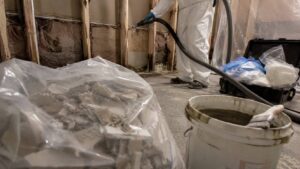
Mold removal is the operational core of mold remediation. Inspection identifies the problem, testing confirms it, prevention addresses what comes after — but removal is where the colony actually leaves the building. Done correctly, it follows a sequence that hasn’t changed materially since the IICRC S520 standard was first published: build containment, establish negative pressure, run HEPA filtration, demolish contaminated porous materials, antimicrobial-treat non-porous surfaces, verify clearance with air sampling, and reconstruct. Done incorrectly, it spreads the colony to parts of the house that weren’t previously affected, which is how a $4,500 remediation project becomes a $35,000 whole-house contamination problem six weeks later.
4Sure Mold Removal performs mold removal under ANSI/IICRC S520 protocols across Spanish Fork, Springville, Salem, Payson, and Mapleton. Every project includes containment construction, HEPA filtration, mechanical removal of porous materials, EPA-registered antimicrobial application, and third-party AIHA-accredited post-remediation verification before reconstruction begins. Work is documented under Utah Contractor License #961339-4102 and IICRC Firm Certification #923321-2371.
What Mold Removal Actually Looks Like, Step by Step
Step 1: Pre-Removal Inspection and Moisture Source Verification
Before containment is built, the technician confirms the moisture source has been corrected. Mold colonies don’t dry out and disappear when removed — they regrow within weeks if the underlying water source is still active. The pre-removal inspection captures moisture content readings on every substrate near the affected area, identifies the source-of-loss (slow shower-pan leak, ice-dam intrusion, condensate overflow, sustained humidity), and confirms that source repair has either been completed or is scheduled to happen during the project. Removing mold without source correction is malpractice; we don’t begin work on projects where the source remains active.
Step 2: Containment Construction
Per ANSI/IICRC S520 §12.2.3, the affected area is physically isolated from non-affected zones using 6-mil polyethylene sheeting. Construction depends on project size:
- Limited containment (typically 10–100 sq ft of visible growth): Single zipper-door entry, sealed perimeter, single negative-air machine maintaining differential pressure. Used for most bathroom, single-room, and localized basement remediations.
- Full containment (100+ sq ft of visible growth, or projects involving HVAC contamination): Multiple entry vestibules with intermediate decontamination zones, multiple negative-air machines staged in series or parallel, dedicated PPE donning and doffing areas. Used for whole-room or multi-room remediations and any project with airborne contamination beyond the localized growth.
- Source isolation (used in addition to containment): Specific assemblies — cabinetry, behind-tile cavities, soffit assemblies — get individual mini-containments inside the larger containment zone to control spore release during demolition of those specific elements.
The containment seal is tested before negative-pressure verification — light leaks at floor-to-wall junctures, corner seams, and entry vestibule edges get sealed with foil tape before the negative-air machine starts. Containment built badly is worse than no containment at all because it gives an illusion of isolation while spores migrate through unsealed gaps.
Step 3: Negative-Pressure Establishment and Verification
HEPA-filtered negative-air machines (Predator 750 class with 99.97% capture at 0.3 microns) draw air out of the containment zone and exhaust through the unit’s HEPA filter to non-affected areas of the property or directly outside. The result is a pressure differential of -5 to -10 Pascals below ambient, which means any leak in the containment seal pulls air into the contained zone rather than allowing spores to escape. The differential is verified with a manometer (digital pressure gauge) at the start of work and monitored daily; if differential drops below -5 Pa, the negative-air machine is upgraded or supplemented before removal continues.
Step 4: PPE Donning at Entry Vestibule
Technicians enter the containment zone through the entry vestibule, where they don the standard Category 3 mold remediation PPE: Tyvek coveralls with integrated hood and boot covers, half-face respirator with P100 cartridges (full-face for projects with elevated Stachybotrys spore counts or specific mycotoxin concerns), nitrile gloves under chemical-resistant outer gloves, eye protection. PPE is donned at entry, removed at exit through the same vestibule. No technician carries contamination outside the containment zone on clothing or boots; cross-contamination prevention is the central operational principle of mold removal work.
Step 5: Mechanical Removal of Contaminated Porous Materials
Per S520 §12.2.4, all porous building materials inside the contamination zone are physically removed and disposed as contaminated waste. The standard explicitly states that surface cleaning of porous materials with bleach or other disinfectants is not adequate — the colony extends into the substrate at depths surface cleaning cannot reach. Materials removed:
- Drywall: Cut back to studs at minimum 12 inches beyond the visible growth boundary. For larger projects, full sheets are removed for cleaner reconstruction.
- Insulation: Fiberglass batt, cellulose loose-fill, rigid foam — anything in the affected wall cavity. Spore-contaminated insulation cannot be cleaned and is replaced.
- Carpet and pad: Both removed; never any save attempt for carpet inside a containment zone with active growth.
- Particleboard and MDF: Cabinet bases, baseboards, trim, subfloor underlayment — all swell with moisture and harbor spores in the swollen fibers.
- Saturated framing lumber: Surface-sandable colonization on framing can sometimes be cleaned and treated; deep-substrate colonization requires partial framing replacement.
- Drop ceiling tiles: Removed; ceiling grid is wiped down with antimicrobial.
- Saturated upholstered furniture, mattresses, soft furnishings inside the containment zone: Documented for replacement under the insurance claim.
Removed materials are double-bagged in 6-mil polyethylene at the work zone, sealed at the bag opening, and removed through the entry vestibule for disposal at a licensed landfill (or biohazard waste facility for projects with elevated contamination concerns).
Step 6: HEPA Vacuuming of All Surfaces
After mechanical removal, every surface inside the containment zone — exposed framing, sub-floor surface, concrete slab, retained tile, retained finished wood — gets vacuumed with HEPA-filtered vacuums. The vacuum captures residual spores, dust, and fragments that the mechanical removal disturbed. Standard shop-vacuums are not adequate; mold remediation requires HEPA-filtered units rated for fungal-spore capture.
Step 7: Antimicrobial Surface Treatment
Non-porous surfaces inside the containment zone receive EPA-registered antimicrobial treatment per S520 §12.2.6. The antimicrobial is applied through fogging, spraying, or contact-time-monitored wiping depending on substrate and product label requirements. Most antimicrobials require 5–10 minutes of wet contact time to achieve full effect; surfaces that dry too quickly are re-treated. Common products in current restoration use include products from EPA List N and related antimicrobial registries: Concrobium Mold Control, Benefect Botanical Disinfectant, Microban Disinfectant Spray Plus, Sporicidin Disinfectant Solution, and similar EPA-registered formulations.
Step 8: Final HEPA Air Scrubbing
HEPA air scrubbers continue running for 24–48 hours after mechanical removal completes, capturing residual airborne spores that settle from the removal disturbance. Spore counts during this window drop progressively from removal-day peaks toward outdoor reference baseline. Without this passive air-scrubbing window, post-remediation verification samples often fail because aerosolized spores from removal haven’t fully settled or been captured.
Step 9: Post-Remediation Verification (PRV) Air Sampling
Before containment is taken down, a third-party air sampling company collects samples inside the containment zone, in adjacent non-affected areas, and outside the property as reference. Samples go to an AIHA-accredited laboratory for spore-count analysis (typically using non-viable spore-trap cassettes — Air-O-Cell or BioCassette — analyzed under microscopy). The PRV report compares contained-zone spore counts against outdoor reference; clearance requires contained-zone counts at or below outdoor reference, with no genus-level outliers indicating residual colonization.
If clearance is achieved, the containment can be taken down and reconstruction can begin. If clearance fails, additional cleaning, additional HEPA runtime, or partial re-demolition follows before retesting. We do not certify clearance based on visual inspection alone — the AIHA lab report is the only objective measure of remediation success.
Step 10: Containment Demobilization
Once PRV clearance is achieved, the containment is dismantled in reverse order from how it was built — negative-air machines run during demobilization, polyethylene barriers are HEPA-vacuumed before removal, and the entry vestibule is the last component to come down. The work zone is left ready for reconstruction.
Step 11: Reconstruction
Reconstruction begins under Utah Contractor License #961339-4102: new drywall, new insulation, new carpet pad and carpet (if applicable), new baseboards and trim, paint matching, finish carpentry. Same crew that handled removal continues into reconstruction; no subcontracting the rebuild to a separate company. Our standard reconstruction protocol applies.
The Three Most Common Mistakes in Mold Removal — and Why They Matter
Mistake 1: No Containment
The single most damaging shortcut. A contractor cuts back drywall on a colonized wall without first building a containment zone. The work releases millions of spores into the air; HVAC pulls them through ductwork; soft furnishings throughout the house collect them; new colonies establish within 30–60 days wherever there’s residual moisture. The original 50 sq ft remediation problem becomes a 2,500 sq ft contamination problem affecting every room. We’ve inspected homes where prior “remediation” by uncertified contractors expanded the problem rather than reducing it; resolving those situations costs 5–10× the original project.
Mistake 2: Containment Without Negative Pressure
The polyethylene barriers go up but no negative-air machine runs, or the machine is undersized, or the barrier seals leak too much for the differential to hold. Spores migrate around the unsealed gaps, often invisibly. The technician thinks containment is working; the homeowner’s adjacent rooms quietly contaminate during the work. Verifying differential pressure with a manometer at the start of work — and re-verifying daily — catches this before it becomes a problem.
Mistake 3: Surface Cleaning Without Mechanical Removal
The contractor sprays bleach or antimicrobial on visible growth, lets it sit, wipes it down. The visible patch disappears; the homeowner is satisfied; the carrier pays. Three months later, the colony has regrown because the substrate-deep colonization was never addressed. S520 explicitly prohibits surface cleaning of porous materials as a substitute for mechanical removal — the standard exists precisely because surface cleaning fails predictably on porous substrates. Contractors who prioritize visible cleanliness over substrate decontamination produce short-term satisfaction and long-term failure.
How HVAC Contamination Changes the Removal Protocol
When mold growth has migrated into the HVAC system — return ducts, supply registers, air handler cabinet, coil pan — removal scope expands significantly:
- HVAC system isolation: Affected supplies and returns are sealed before removal begins, preventing further spore distribution during the work
- Duct cleaning: Mechanical brushing and HEPA vacuuming of accessible ductwork, with rotating-brush systems for longer runs
- Air handler cabinet decontamination: Manual cleaning of the cabinet interior, coil, blower wheel, and condensate pan
- Filter replacement: Existing filters are bagged and disposed; new filters with MERV 11+ rating installed
- Post-cleaning verification: Air sampling specifically inside duct runs and at supply registers to confirm contamination has been controlled
HVAC-involved remediation typically takes 50–100% longer than localized remediation due to the additional system access and cleaning required. Coordination with HVAC service contractors handles the system-restart and filter-installation work; we manage the contamination control and verification.
Equipment Used on Every Mold Removal Project
- HEPA-filtered negative-air machines — Predator 750 class, 99.97% capture at 0.3 microns, multiple units staged for full containment
- HEPA-filtered air scrubbers — Same Predator 750 class units run during and after removal for ambient air quality
- HEPA-filtered vacuums — Used for surface cleaning of all materials retained inside containment
- 6-mil polyethylene sheeting and zipper doors — Containment construction
- Foil tape and seam-sealing supplies — Barrier seal integrity
- Manometers — Digital differential pressure gauges for negative-pressure verification
- Tyvek coveralls, P100 respirators, nitrile gloves — Standard PPE for every project
- EPA-registered antimicrobials — Concrobium, Benefect, Microban, Sporicidin, or similar
- Air sampling equipment — Spore-trap cassettes (Air-O-Cell, BioCassette), tape lifts for surface sampling, swabs for specific identification
- FLIR E8-XT thermal camera and Protimeter Hygromaster 2 — Moisture verification before and after removal
- Borescope — Inspection of wall cavities, behind tile, and other hidden zones for residual colonization
Frequently Asked Questions About Mold Removal
- How long does the actual removal phase of a mold remediation project take?
- For a typical limited-containment project (under 100 sq ft visible growth, single room): 1–2 days for containment construction and negative-pressure verification, 1–2 days for mechanical removal and antimicrobial treatment, 24–48 hours for passive air-scrubbing before PRV sampling, then 24–48 hours for lab turnaround on the air samples. Total mold-removal phase: roughly 4–7 days. Reconstruction follows in a separate 3–7 day phase. For full-containment projects involving HVAC contamination or multiple rooms, the removal phase can extend to 10–14 days. The single longest-running variable is lab turnaround on PRV samples; some labs offer 24-hour turnaround for an additional fee, which we use when project timeline is critical.
- Will I be able to stay in my Spanish Oaks home while mold removal is happening, or do I need alternative housing?
- For most limited-containment projects: yes, with restrictions. The contained area is sealed under negative pressure for the duration; adjacent rooms remain usable, though we typically recommend minimizing time near the containment during active removal phases (the first 1–2 days when mechanical demolition happens). For households with infants, immune-compromised individuals, or pets with respiratory conditions, alternative housing during the active-removal phase is often advisable even for limited containment; the conservative choice is staying elsewhere for the first 48–72 hours. For full-containment or whole-house remediation projects, full-property relocation during the project is usually recommended; we discuss alternative housing logistics during the initial scoping conversation, and most homeowner policies cover “loss of use” expenses including hotel stays during covered restoration work.
- What happens to all the contaminated materials — drywall, insulation, carpet — after they’re removed from my home?
- Materials removed from a mold containment zone are double-bagged in 6-mil polyethylene at the work zone, sealed before transit through the entry vestibule, and disposed at a licensed landfill that accepts contaminated construction waste. For projects with severely elevated contamination (extensive Stachybotrys colonies, mycotoxin concerns, or dual mold-and-sewage contamination), materials are routed to a licensed biohazard waste facility instead. The disposal documentation is part of the project file submitted to your insurance carrier and to you. We don’t reuse, recycle, or dispose of contaminated materials in standard residential waste streams; the EPA and Utah DEQ regulatory requirements for contaminated construction waste apply throughout.
- Can 4Sure remove the mold without removing my custom-built bookshelves and the ceramic tile floor in the affected area?
- Sometimes, depending on what materials are involved and where the colonization is. Tile floor itself is non-porous and can be cleaned and antimicrobial-treated; the underlying grout is semi-porous and can usually be cleaned with sufficient scrubbing and antimicrobial dwell time. Custom bookshelves built from solid hardwood can typically be salvaged with surface cleaning, HEPA vacuuming, and antimicrobial treatment, particularly if the colonization is on accessible exterior surfaces; built-ins involving MDF backers, particle-board shelves, or laminated surfaces are harder to save and often require partial replacement. The decision is made on the initial inspection with the homeowner: which items have sentimental or structural value worth attempting save, which are easier to replace than to clean, and what the cost-benefit math looks like. We document save-vs-replace decisions in writing before work begins.
- Why does the post-remediation verification need to be from a third-party lab — can’t 4Sure do its own air testing?
- Because IICRC S520 §12.2.8 and standard insurance practice both require third-party AIHA-accredited lab analysis for clearance to be defensible. Self-testing creates a conflict of interest — the contractor performing remediation has financial incentive to declare the work complete; an independent lab analyzes samples without knowing which contractor sent them, eliminating that conflict. Additionally, AIHA accreditation requires specific quality control protocols, sample chain-of-custody documentation, and ongoing competency verification that internal contractor labs typically don’t maintain. The third-party requirement isn’t about distrusting the contractor; it’s about producing documentation that holds up against insurance scrutiny, real estate disclosure requirements, and any future buyer’s inspection. We use third-party AIHA-accredited labs for every PRV sample on every project.
Contact 4Sure Mold Removal — Spanish Fork Mold Removal Response
Operating from 1330 S 1400 E in Spanish Fork, our team responds 24/7 across Utah County and typically arrives on-site within 60 minutes of dispatch in Spanish Fork, Springville, Salem, Payson, and Mapleton. For mold removal specifically — whether your situation requires limited or full containment, what HVAC contamination would mean for project scope, what your insurance is likely to cover — call the office line for a free phone consultation.
- Emergency Line (24/7): (385) 247-9387
- Address: 1330 S 1400 E, Spanish Fork, UT 84660
- Email: info@4suremoldremoval.xyz
- Owner: Sean Jacques
- Utah Contractor License: #961339-4102
- IICRC Firm Certification: #923321-2371
Office Hours
- Emergency Service: 24 hours a day, 7 days a week
- Office Staff: Monday – Friday, 8:00 AM – 5:00 PM
- Closed: Weekends and State/Federal Holidays (emergency line always active)