
Water Damage Restoration in the Maple Mountain Estates Neighborhood of Spanish Fork — Foothill Subdivision Custom Home Considerations, Ice Damming Prevention, and Specialty Trade Coordination for Maple Mountain Adjacent Properties
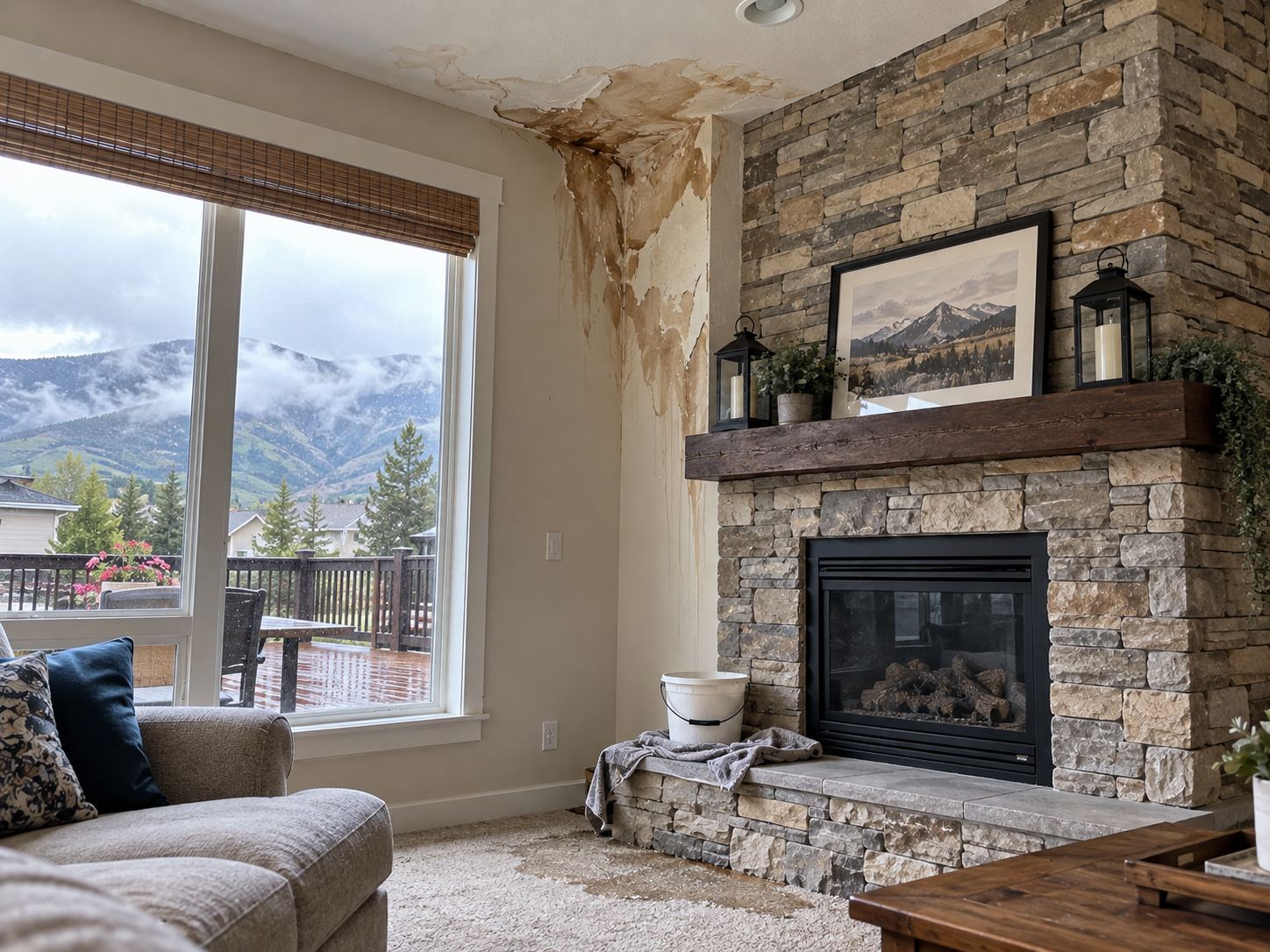
The Maple Mountain Estates neighborhood occupies foothill subdivision terrain on the southeast side of Spanish Fork adjacent to Maple Mountain, characterized by larger lot custom home construction, elevated topography producing pronounced winter conditions, attic-located HVAC equipment typical of foothill subdivision building practices, and exposure to ice damming risks that lower-elevation Spanish Fork neighborhoods experience less frequently. Our water damage restoration approach for Maple Mountain Estates addresses these foothill subdivision and custom home characteristics directly — comprehensive ice damming prevention through R-49 insulation upgrades with integrated ventilation optimization, custom finish preservation through Class 4 specialty drying and specialty trade coordination, and ANSI/IICRC S500 and S520 protocols calibrated to high-end residential construction common throughout the neighborhood. Response time to Maple Mountain Estates from our headquarters at 1330 S 1400 E typically runs 14–24 minutes during normal driving conditions, with four-wheel drive equipment supporting access when foothill subdivision winter conditions warrant.
Maple Mountain Estates Neighborhood Characteristics
Maple Mountain Estates developed as foothill subdivision construction beginning in the early 2000s and continuing through the present, producing a neighborhood characterized by custom homes ranging from approximately 3,500 to 6,500+ square feet on larger lots typical of foothill subdivision configurations. Properties share several common construction patterns reflecting foothill subdivision practices appropriate to elevated Utah County terrain — attic-located HVAC equipment supporting both heating and cooling distribution throughout typically two-story floor plans, elevated insulation specifications appropriate to mountain proximity conditions (though not always meeting current R-49+ code requirements), custom finishes throughout including custom hardwood flooring sometimes with inlays, custom millwork including coffered ceilings and custom trim, custom stone tile work in master bathrooms and entry areas, high-end paint specifications, sometimes custom cabinetry and built-in storage systems.
The neighborhood’s adjacency to Maple Mountain produces distinctive characteristics affecting both property value and water damage scenarios. Mountain proximity supports views and recreational access valued by property owners but produces environmental conditions warranting specific consideration — colder winter temperatures, sustained cold periods, higher snow accumulation patterns, sometimes wildlife considerations affecting property maintenance, occasionally wildfire smoke exposure during regional wildfire events. Larger lot configurations typical of Maple Mountain Estates support custom landscaping and sometimes specialty outdoor features that affect property characteristics during restoration scenarios. Custom home construction with significant variation between properties means each restoration project requires individual assessment rather than standardized approach.
Common Water Damage Scenarios in Maple Mountain Estates
Water damage patterns in Maple Mountain Estates reflect foothill subdivision and custom home construction characteristics rather than standard residential patterns common to mid-section Spanish Fork neighborhoods. Understanding the specific scenarios most common to these properties supports both prevention awareness and restoration scope expectations.
Ice Damming During Winter Periods
Ice damming represents the most significant recurring water damage concern affecting Maple Mountain Estates properties. Foothill subdivision elevation produces ice damming conditions during typical winter periods rather than only during severe weather events characteristic of lower-elevation areas. Properties with original construction-era insulation specifications (typically R-19 or R-30 rather than current R-49+ code) face elevated ice damming risk given heat loss patterns through inadequate attic insulation. Snow accumulation on roof surfaces melts due to heat loss producing meltwater flow toward colder eave areas where it refreezes producing ice dam formation; subsequent meltwater backs up behind ice dam finding entry through roof system into attic and home interior. Without comprehensive prevention, ice damming events recur during typical winter conditions producing predictable water entry events.
Attic-Located HVAC Equipment Failures
Foothill subdivision construction practices common to Maple Mountain Estates frequently include attic-located HVAC equipment supporting both heating and cooling distribution throughout properties. Attic HVAC location produces distinctive water damage scenarios when equipment failures occur including condensate drain failures producing slow seepage in attic spaces; coil leaks producing equipment-area water release; sometimes blower component failures; sometimes refrigerant line failures. Attic HVAC failures often produce delayed discovery patterns since attic spaces don’t receive routine homeowner access; sometimes weeks of seepage before discovery through visible ceiling water staining or cooling performance issues. Recovery scope typically substantial given delayed discovery patterns and complexity of attic-located equipment access during restoration.
Plumbing Failures and Supply Line Issues
Standard plumbing failure scenarios affect Maple Mountain Estates properties similar to other neighborhoods including washing machine supply line failures, dishwasher and refrigerator ice maker supply line failures, water heater failures, and toilet supply line failures. Custom home reconstruction scope reflects high-end finish specifications producing typically larger total project costs than equivalent scope in standard residential properties. Newer Maple Mountain Estates construction (post-2005) typically uses modern plumbing systems including PEX rather than polybutylene; properties from earlier construction periods sometimes have polybutylene systems warranting periodic inspection and consideration of whole-system repipe scope.
Storm Damage Scenarios
Severe summer hail events sometimes affect roof systems in foothill subdivision areas; foothill subdivision elevation sometimes correlates with hail intensity during specific storm cells. Wind events affecting foothill subdivision areas sometimes produce more substantial roof system damage than lower-elevation equivalents. Storm damage scope typically includes emergency roof tarping during initial response, roofing contractor coordination for permanent repair or replacement, attic restoration scope, and indoor restoration scope reflecting storm damage distribution patterns.
Comprehensive Ice Damming Prevention for Maple Mountain Estates
Effective ice damming prevention for Maple Mountain Estates properties requires comprehensive approach addressing multiple contributing factors rather than partial intervention. The combined approach significantly reduces ice damming risk supporting sustainable property protection during winter conditions.
R-49 Insulation Upgrade as Foundation
R-49 insulation upgrade addresses primary heat loss from living space into attic space. Maple Mountain Estates properties built before mid-2000s often have R-19 or R-30 attic insulation that doesn’t meet current R-49+ code requirements; pre-loss specifications produce sufficient heat loss for ice damming pattern in foothill subdivision conditions. R-49 upgrade substantially reduces heat loss producing minimal snow melting during typical winter conditions. The upgrade is the most economical single intervention for ice damming prevention — typical upgrade cost $4,000–$8,000 for Maple Mountain Estates property scales (larger lots and homes than mid-section neighborhoods); energy efficiency benefits include 10–25% heating and cooling cost reduction beyond ice damming prevention benefits.
Ventilation Optimization
Ventilation upgrade integration during insulation upgrade addresses attic air exchange supporting balanced moisture conditions and cooler attic temperatures during winter periods. Standard upgrade scope includes ridge vent expansion or installation along entire roof ridge if not present in original construction; soffit vent verification addressing any blocked vents from displaced insulation; gable vent supplementation supporting attic ventilation; sometimes powered attic ventilation supporting active humidity removal during summer periods. Ventilation upgrade typical cost $1,800–$3,500 for Maple Mountain Estates property scales.
Ice and Water Shield Expansion
Ice and water shield expansion at vulnerable eave areas provides protection when ice damming events do occur. Even with comprehensive insulation and ventilation upgrades, severe cold conditions sometimes produce ice damming events; ice and water shield prevents water entry through roof system during these events. Expansion scope typically integrated during roofing work scope when properties undergo roof repair or replacement; sometimes integrated as standalone scope during proactive maintenance.
Heating Cables at Vulnerable Eave Areas
Heating cables provide supplemental ice damming prevention through localized heat preventing ice formation at specific vulnerable eave zones. Self-regulating heating cables operate automatically during cold conditions producing heat distribution along vulnerable eave areas; modern cables more efficient than older heating tape products. Installation typically $800–$2,000 depending on coverage area and electrical work requirements. The combined approach (R-49 insulation, ventilation optimization, ice and water shield, heating cables) typically supports 90–95% ice damming risk reduction for Maple Mountain Estates properties.
Custom Home Restoration Considerations
Custom home construction characteristic of Maple Mountain Estates properties produces distinctive restoration considerations beyond standard residential approach. Understanding these considerations supports both insurance coordination and restoration scope decisions.
Custom Hardwood Flooring Preservation Through Class 4 Specialty Drying
Custom hardwood flooring including hardwood with custom inlays preserves through Class 4 specialty drying with Mat-Force positive-pressure tented systems per ANSI/IICRC S500. Standard configuration includes continuous tenting over hardwood floor sections affected by saturation; positive air pressure inside tent forcing dry air through hardwood substrate; specialty dehumidification removing moisture from extracted airflow; daily monitoring with hardwood-calibrated capacitance scanning. Typical preservation success rate 80–95% for custom hardwood when specialty drying applied promptly. Cost considerations: specialty drying typically $5,000–$12,000 for affected hardwood scope; replacement of equivalent custom hardwood with matching considerations typically $20,000–$50,000+. Preservation provides significant value when successful given replacement complexity and matching considerations.
Custom Millwork Preservation
Custom millwork including coffered ceilings, custom trim, custom cabinetry, and other custom millwork elements preserves through careful removal supporting later reinstallation. Preservation removal takes 2–4x longer than standard demolition but supports preservation rather than replacement. Typical preservation success rate 60–85% depending on millwork construction and damage extent; high-end custom millwork often preserves more reliably than standard millwork due to material quality. Storage during reconstruction supports later reinstallation; replacement sections through custom millworker subcontractor with matching specifications integrate with preserved sections.
Custom Tile Work Preservation
Custom tile installations including stone work in master bathrooms and entry areas preserve through specialty cleaning and grout replacement where contamination extent allows preservation. Specialty tile cleaning, grout assessment and selective replacement, sealer reapplication, and verification supports preservation outcomes. When tile replacement scope is necessary, custom tile specialist coordination supports matching specifications.
Specialty Trade Coordination
Custom home restoration typically involves multiple specialty trades beyond standard restoration scope including custom millworker subcontractor for custom millwork preservation and matching replacement; hardwood specialist for Class 4 specialty drying and any replacement section integration; stone tile specialist for tile work preservation and replacement; custom paint specialist for paint matching to original color schemes; sometimes specialty roofing contractor for custom roof system characteristics. Tyler Bennett project-manages multi-trade coordination supporting smooth execution through restoration phase.
Insurance Coverage for Maple Mountain Estates Properties
Custom home restoration warrants insurance coverage appropriate to custom home replacement specifications rather than standard residential cost basis. We work with all major insurance carriers serving Utah County properties including Allstate, State Farm, Farmers, USAA, Liberty Mutual, Nationwide, Travelers, Hartford, Chubb, Zurich, CNA, Bear River Mutual (Utah regional carrier), and NFIP. Several carriers demonstrate particular familiarity with custom home restoration scope including USAA, and Chubb (high-value residential property focus).
Custom Home Coverage Considerations
Coverage limits should reflect current custom home replacement costs; sometimes standard residential coverage limits prove inadequate for Maple Mountain Estates custom home scope. Specialty trade coordination scope typically covered through comprehensive interpretation when custom home specifications warrant it. Documentation throughout supports coverage interpretation; sometimes scope discussions involve technical justification supporting custom home protocols including specialty drying approaches, custom millwork preservation, and custom finish matching specifications.
Ice Damming Coverage Characteristics
Insurance coverage interpretation for ice damming events typically distinguishes immediate damage from root cause correction. Immediate damage scope including ceiling repair, attic restoration, and roof system damage from ice damming typically covered as direct consequence of covered storm peril event. Root cause correction including R-49 insulation upgrade, ventilation optimization, ice and water shield expansion, and heating cables typically characterized as preventive maintenance and energy efficiency improvement rather than restoration scope; not typically covered through standard property insurance even though comprehensive scope warrants correction for sustainable outcome.
Standards-Based Restoration Approach
Our Maple Mountain Estates restoration follows ANSI/IICRC S500 protocols for water damage scope and ANSI/IICRC S520 protocols when mold remediation is involved. Standards-based approach supports comprehensive scope appropriate to actual conditions, documentation supporting insurance allocation, and quality outcomes appropriate to custom home specifications.
ANSI/IICRC S500 Water Damage Protocols
S500 protocols address water damage scope including extraction, structural drying, antimicrobial treatment for retained substrates, verification of drying targets, reconstruction scope. Category designation considerations apply based on water source and exposure characteristics; Category 1 designation for clean water sources with prompt response, Category 2 for grey water scenarios or extended exposure, Category 3 for contaminated water scenarios. Class designation (Class 1 through Class 4) addresses scope characteristics affecting equipment selection and timeline expectations; Class 4 specialty drying applies for hardwood preservation common to Maple Mountain Estates custom homes.
ANSI/IICRC S520 Mold Remediation Protocols
S520 protocols apply when mold colonization is present. Section 12.2.4 containment requirements; Section 12.2.5 HEPA vacuuming; Section 12.2.6 antimicrobial treatment of retained substrates; Section 15 post-remediation verification through Air-O-Cell or BioCassette spore trap cassettes confirming successful remediation matching outdoor baseline.
Equipment Configuration for Maple Mountain Estates
Our Maple Mountain Estates restoration equipment scope reflects custom home characteristics and foothill subdivision considerations. Standard equipment includes FLIR E8-XT thermal imaging cameras supporting moisture distribution assessment across custom finishes and attic spaces; Protimeter Hygromaster 2 capacitance scanners calibrated for various substrate conditions including custom hardwood specifications; Phoenix 200 MAX dehumidifiers (130 PPD AHAM) for residential drying scope; Phoenix 270 HTX commercial dehumidifiers (180+ PPD AHAM) for larger scope events common to Maple Mountain Estates property sizes; Predator 750 HEPA scrubbers (99.97% at 0.3 microns) for containment during mold remediation phases; Injectidry positive-pressure manifold systems for cavity drying; Mat-Force tented hardwood drying systems supporting Class 4 specialty drying.
Specialty considerations include four-wheel drive equipment supporting foothill subdivision access during winter conditions; scaffolding and ladder equipment supporting custom home reconstruction phase including coffered ceiling and custom millwork work; specialty cleaning supplies for custom finishes.
Response Logistics for Maple Mountain Estates
Response time to Maple Mountain Estates typically runs 14–24 minutes from our headquarters at 1330 S 1400 E during normal driving conditions. The foothill subdivision location adjacent to Maple Mountain requires modest response time extension compared to mid-section Spanish Fork neighborhoods but supports relatively prompt emergency response. Winter conditions sometimes affect response time slightly when foothill subdivision road conditions warrant four-wheel drive equipment access. Our four-wheel drive capability supports response continuation when standard restoration equipment access would be limited; out-of-area contractors without specialized equipment sometimes can’t reach foothill subdivision properties during winter conditions producing extended response time or service refusal scenarios.
Frequently Asked Questions About Maple Mountain Estates Water Damage Restoration
- What water damage scenarios are most common in the Maple Mountain Estates neighborhood?
- The Maple Mountain Estates neighborhood experiences several distinctive water damage scenarios reflecting foothill subdivision and custom home characteristics. Ice damming during winter periods represents the most significant recurring concern affecting these foothill subdivision properties more substantially than lower-elevation Spanish Fork neighborhoods. Attic-located HVAC equipment failures including condensate drain failures, coil leaks, and equipment failures produce distinctive water damage scenarios common to foothill subdivision construction practices. Standard plumbing failure scenarios affect these properties similar to other neighborhoods but with custom home reconstruction scope reflecting high-end finish specifications. Severe summer hail events sometimes affect roof systems with concentrated damage. Less common but possible scenarios include sometimes wildfire smoke exposure during regional wildfire events affecting indoor air quality and HVAC system contamination. We calibrate restoration approach to these foothill subdivision and custom home characteristics rather than applying standard residential protocols.
- How does comprehensive ice damming prevention work for Maple Mountain Estates properties?
- Effective ice damming prevention combines multiple interventions addressing different aspects of the ice damming mechanism. R-49 insulation upgrade addresses primary heat loss from living space supporting reduced snow melting on roof surfaces — typically the most significant single intervention with cost typically $4,000–$8,000 for Maple Mountain Estates property scales. Ventilation optimization including ridge vent expansion, soffit vent verification, sometimes gable vent supplementation supports attic air exchange maintaining cooler attic temperatures. Ice and water shield expansion at vulnerable eave areas provides protection when ice damming events do occur. Heating cables at vulnerable eave areas provide supplemental prevention through localized heat preventing ice formation. The combined approach typically supports 90–95% ice damming risk reduction. Comprehensive prevention is essential because partial intervention produces predictable recurrence. Insurance coverage typically supports immediate damage scope; root cause correction including insulation upgrade typically homeowner responsibility, but integrated approach during restoration is 30–50% less expensive than separate later interventions.
- How do attic-located HVAC equipment failures differ from utility-room HVAC failures in restoration scope?
- Attic-located HVAC equipment failures produce distinctive water damage characteristics common to foothill subdivision construction. Distribution patterns: attic location supports water migration downward through ceiling assemblies into rooms below; affected scope typically includes attic space plus ceiling damage in master bedroom or other rooms beneath equipment. Discovery patterns: attic failures often produce delayed discovery compared to utility-room failures; sometimes weeks of seepage before discovery through ceiling staining or cooling performance issues. Scope expansion potential: delayed discovery sometimes produces substantially larger scope than equivalent utility-room failures; insulation in affected attic areas often requires replacement. Restoration approach: attic restoration plus ceiling restoration plus sometimes wall scope; HVAC contractor coordination for equipment repair or replacement. Prevention measures: periodic attic inspection identifies conditions warranting attention; smart leak detection systems designed for HVAC equipment areas provide automated alerts; HVAC system maintenance reduces failure likelihood. For Maple Mountain Estates specifically, attic-located HVAC is common foothill subdivision construction characteristic warranting awareness of these specific scenarios.
- What custom finish preservation approaches apply during Maple Mountain Estates water damage restoration?
- Custom finish preservation during Maple Mountain Estates water damage restoration involves several specialty approaches calibrated to specific finish types. Custom hardwood flooring including hardwood with inlays preserves through Class 4 specialty drying with Mat-Force positive-pressure tented systems; typical preservation success rate 80–95% when applied promptly. Custom millwork including coffered ceilings, custom trim, custom cabinetry preserves through careful removal supporting later reinstallation; typical preservation success rate 60–85% depending on millwork construction. Custom tile installations including stone work preserve through specialty cleaning and grout replacement when contamination extent allows. Custom paint finishes match through custom paint specifications during reconstruction. Specialty trade coordination essential including custom millworker, hardwood specialist, stone tile specialist, custom paint specialist; Tyler Bennett project-manages multi-trade coordination. Preservation investment economics: preservation typically reduces total finish replacement cost by 30–60%; preservation supports significant savings when feasible. Quality considerations: preservation maintains design character matching original specifications.
- What is the response time and approach during winter conditions for Maple Mountain Estates foothill subdivision properties?
- Response time to Maple Mountain Estates typically runs 14–24 minutes from our headquarters at 1330 S 1400 E during normal driving conditions. Winter conditions sometimes affect response time slightly when foothill subdivision road conditions warrant four-wheel drive equipment. Our four-wheel drive capability supports response continuation when standard restoration equipment access would be limited. Severe winter weather sometimes extends response further but four-wheel drive capability supports access when out-of-area contractors without specialized equipment can’t reach foothill subdivision properties. Approach considerations during winter conditions include equipment transport requirements appropriate to road conditions; crew preparation including winter weather equipment; sometimes specialized equipment for ice damming addressing including coordination with roofing contractors providing emergency steam ice dam removal; sometimes coordination with snow removal during scope mapping or reconstruction phases. We maintain four-wheel drive equipment as standard capability for Maple Mountain Estates and similar foothill subdivision service rather than as exceptional approach.
Contact 4Sure Mold Removal — Maple Mountain Estates Water Damage Restoration
Operating from 1330 S 1400 E in Spanish Fork, our team responds 24/7 to Maple Mountain Estates water damage emergencies including foothill subdivision considerations and custom home characteristics. For restoration projects similar to Maple Mountain Estates neighborhood scenarios, call (385) 247-9387.
- Emergency Line (24/7): (385) 247-9387
- Address: 1330 S 1400 E, Spanish Fork, UT 84660
- Email: info@4suremoldremoval.xyz
- Owner: Sean Jacques
- Utah Contractor License: #961339-4102
- IICRC Firm Certification: #923321-2371
Office Hours
- Emergency Service: 24 hours a day, 7 days a week
- Office Staff: Monday–Saturday, 8:00 AM–5:00 PM (emergency line answered 24/7)
- Closed: Sundays and State/Federal Holidays (emergency line always active)
Inside Spanish Fork: 45-minute arrival guarantee
Our office is at 1330 S 1400 E in Spanish Fork. For water emergencies inside city limits, a crew arrives within 45 minutes of dispatch — if we’re late, your emergency inspection is free.
Call (385) 247-9387, answered live 24/7. Utah Contractor License #961339-4102 · IICRC Certified Firm #923321-2371 · verify us.
Water emergency in Maple Mountain Estates, Spanish Fork? Call (385) 247-9387, answered 24/7. Inside Spanish Fork city limits we guarantee arrival within 45 minutes. Emergency water damage restoration in Spanish Fork →
Recent 4Sure job in Maple Mountain Estates, Spanish Fork
A spring storm with heavy wind-driven rain pushed water past aged flashing around the chimney and into the attic. The leak showed as a growing stain on the upstairs ceiling below. We used thermal imaging to map the wet area in the attic, removed and bagged saturated insulation around the chimney chase, dried the sheathing and framing to a stable reading, and left a note for the roofer about the flashing before the ceiling was closed up and texture matched.
Reviewed by: Tyler Bennett, Restoration Project Manager · IICRC WRT/ASD #291438 · 4Sure Mold Removal, 1330 S 1400 E, Spanish Fork, UT.
Verify our credentials yourself
- Utah Contractor License#961339-4102 – verify at Utah DOPL
- IICRC Certified Firm#923321-2371 – verify at IICRC Global Locator
- Liability + workers’ compCarrier: The Hartford – GL $1M/$2M, WC EL $1M/$1M/$1M
- BondedYes – Utah-licensed, bonded and insured LLC
Written warranty on every job
Transferable once to a new homeowner within 24 months with a signed transfer. Read the full warranty terms →
A recent job in Maple Mountain Estates
May 2026: Wind-driven rain got past the chimney flashing and leaked into the home, near 3300 S.
With roof and attic leaks, we trace the water from the entry point down, pull wet insulation, check framing and ceiling drywall with meters and a thermal camera, and dry the attic and rooms below before repairs.
Related: ceiling leak drying and repair. Back to our Spanish Fork water damage team, or see 24/7 emergency water damage help.