
Case Study — Kitchen Fire Restoration in Spanish Fork Family Home With Protein Smoke Profile, HVAC Decontamination, and Whole-House Odor Neutralization
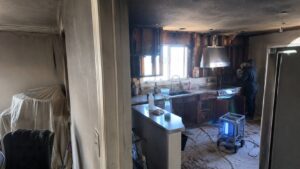
This case study documents a kitchen fire restoration project in a Spanish Fork family home (Reservoir neighborhood, mid-section established Spanish Fork, home built 1996). Total project: 56 days from emergency dispatch through final walkthrough; total cost $47,800 with insurance coverage of $44,200 and $3,600 homeowner responsibility for some upgrade selections during reconstruction. The project illustrates several common scenarios: protein smoke profile from kitchen fire (one of the three smoke damage profiles under ANSI/IICRC S700) requiring specialty cleaning protocols beyond dry smoke or wet smoke approaches; HVAC system decontamination throughout whole house due to smoke distribution through ductwork; hydroxyl generation for residual odor neutralization; concurrent water damage from suppression efforts handled with integrated scope; reconstruction including custom millworker coordination for kitchen cabinetry replacement matching pre-loss specifications. Homeowner identifying information anonymized; technical scope and outcomes reflect actual project documentation.
Initial Situation
September 14, 2024, 6:47 PM. Cooking fire ignited on stovetop when oil overheated during dinner preparation; flames spread to range hood and adjacent upper cabinetry before homeowner extinguished with kitchen fire extinguisher. Spanish Fork Fire Department responded after 911 call confirming fire was contained but verifying no extension; some water damage from extinguisher discharge plus minor suppression water in immediate kitchen area. Total active fire duration approximately 3–4 minutes; extinguishment by homeowner before fire department arrival. Family evacuated and stayed with neighbors; called 4Sure at 7:15 PM after fire department cleared the scene.
Property Characteristics
- Neighborhood: Reservoir (mid-section established Spanish Fork), home built 1996
- Construction: Standard residential construction with mid-1990s building practices; approximately 2,400 sq ft single-story with attached garage
- Active fire damage area: Kitchen — approximately 200 sq ft; localized to stovetop, range hood, upper cabinets immediately above range, adjacent counter section
- Smoke distribution: Whole-house smoke distribution through HVAC system (system was running at time of fire); kitchen, dining room, family room, master bedroom, two additional bedrooms, two bathrooms, hallways, all ceiling areas affected by smoke distribution
- Suppression water: Limited water from kitchen fire extinguisher and minor fire department wetting — concentrated in immediate kitchen area, some adjacent dining room flooring
- Suspected source: Stovetop cooking fire with oil overheating; classic kitchen fire scenario
Initial Response and First 24 Hours
Dispatch at 7:18 PM; arrival at 7:35 PM (17 minutes from dispatch — slight extension due to evening traffic and routing through Reservoir neighborhood). Crew of three technicians arrived with truck-mounted extraction equipment, HEPA filtration units, full PPE for fire damage scope, FLIR thermal imaging, Protimeter capacitance scanning, hydroxyl generators, board-up supplies, photography equipment for documentation.
Initial Walk-Through and Three Damage Profiles Determination (First 30 Minutes)
Walk-through with homeowner identified the situation: localized active fire damage in kitchen; whole-house smoke distribution through HVAC system; minor water damage from suppression. Three damage profiles assessment per ANSI/IICRC S700: protein smoke profile (kitchen fire with cooking oil combustion produces stubborn film deposits with strong odor characteristics; protein smoke is characteristically more difficult to clean than dry or wet smoke profiles); some wet smoke characteristics (cabinetry materials in active fire area produced wet smoke residue alongside protein smoke); minor dry smoke characteristics (synthetic materials in small electrical appliances). Mixed-profile assessment determined protein smoke as primary classification driving cleaning protocol decisions.
Initial Stabilization (Hours 1–4)
Initial stabilization addressed multiple concerns. HVAC system shut off (was off when we arrived, homeowner had shut off; verification confirmed it would remain off during initial decontamination phase preventing additional smoke distribution). Range hood and upper cabinet area assessed; immediate fire-damaged materials staged for documentation and removal during demolition phase. Initial water extraction in immediate kitchen area; thermal imaging scan showed minor suppression water hadn’t migrated significantly beyond kitchen. HEPA filtration units deployed throughout home (4 Predator 750 units providing 99.97% filtration at 0.3 microns) running continuously to address airborne smoke residue and particulates. Initial homeowner consultation about temporary alternative housing — homeowner family decided to stay with neighbors during initial week; we coordinated for return when initial decontamination phase completed.
Insurance Coordination (Hours 4–24)
Homeowner’s insurance carrier (Allstate) notified; initial claim filing supported with documentation including photographs of active fire damage and smoke distribution; thermal imagery; preliminary scope assessment. Allstate adjuster scheduled for site visit within 48 hours given the scope of documentation and homeowner displacement.
Adjuster Site Visit and Scope Confirmation (Day 2)
Allstate adjuster site visit Day 2 with our project team for joint walk-through. Initial coverage discussion addressed several scope categories. Active fire damage scope: kitchen reconstruction including stovetop area cabinet replacement, range hood replacement, drywall replacement in affected wall sections, ceiling replacement above range area, flooring assessment. Whole-house smoke decontamination: HVAC system decontamination including duct cleaning, equipment service, filter replacement; surface cleaning throughout home addressing protein smoke residue on walls, ceilings, fixtures, surfaces; specialty cleaning for areas with stubborn protein smoke deposits; hydroxyl generation for residual odor neutralization. Contents cleaning: clothing, soft goods, sometimes electronics affected by smoke distribution. Reconstruction beyond active fire area: paint throughout home for smoke-affected surfaces; sometimes carpet replacement in heavily affected areas. Insurance allocation: $44,200 for full restoration scope including active fire damage, whole-house decontamination, contents cleaning, hydroxyl generation, and reconstruction; homeowner responsibility limited to optional upgrade selections during reconstruction phase ($3,600 for upgraded kitchen cabinetry beyond pre-loss builder-grade specifications).
Demolition Phase — Active Fire Area (Days 2–6)
Active fire damage demolition addressed materials that couldn’t be cleaned for restoration. Demolition scope:
- Range hood: Complete removal — direct fire damage with charred surfaces and structural compromise
- Upper cabinets above range: Complete removal of two cabinets directly above range and adjacent cabinet showing fire and smoke damage; charred materials with structural compromise
- Drywall behind range: Removal of drywall in affected wall area showing fire damage and char
- Ceiling drywall above range: Removal of ceiling drywall in affected area showing fire damage and significant smoke staining
- Stovetop: Removal of stovetop unit — fire damage with structural compromise; replacement appropriate
- Counter section: Removal of counter section adjacent to range area — heat damage and surface compromise
- Backsplash tile: Removal of backsplash tile in affected area — heat damage and grout compromise
- Adjacent cabinet structures: Some adjacent base cabinets showed minor smoke damage; cleaning rather than replacement for these
Materials removed under standard construction debris stream after documentation. Photography throughout demolition phase including before/after of each affected area.
HVAC System Decontamination (Days 4–10)
HVAC system decontamination addressed smoke distribution throughout the home. Standard sequence:
Equipment Service
HVAC equipment (furnace, A/C unit) service through HVAC contractor specialty subcontractor: filter replacement including new high-efficiency MERV 13 filter; equipment cleaning including blower wheel and motor area; coil cleaning; condensate drain inspection; system performance verification post-cleaning. Equipment service ($385) integrated into restoration scope.
Ductwork Cleaning
Ductwork cleaning through specialty duct cleaning subcontractor with NADCA (National Air Duct Cleaners Association) certified technicians. Standard sequence: physical agitation of duct surfaces with appropriate equipment; HEPA-filtered vacuum extraction; treatment of internal duct surfaces with appropriate antimicrobial; verification through internal inspection cameras. Duct cleaning ($1,250) integrated into restoration scope.
Register and Vent Cleaning
Supply registers, return air grilles, and ventilation components removed for individual cleaning; surfaces treated with appropriate cleaners addressing protein smoke residue specifically; reinstallation after surface verification.
Whole-House Surface Decontamination (Days 6–18)
Surface decontamination throughout home addressed protein smoke residue. Protein smoke specifically requires different cleaning approach than dry smoke or wet smoke; the cleaning sequence:
Pre-Cleaning Assessment
Surface assessment throughout home identifying protein smoke residue distribution and stubbornness levels. Some surfaces showed light residue cleanable with standard surfactant-based cleaners; some surfaces showed heavy residue requiring specialty cleaners (sometimes alkaline cleaners specifically formulated for protein smoke residue); some surfaces showed combination requiring multiple cleaning passes.
Surface Cleaning Sequence
Standard surface cleaning sequence proceeded systematically through home. Specifically: walls and ceilings throughout (drywall surfaces affected by smoke distribution); fixtures and trim including baseboards, door casings, window casings; cabinetry surfaces in unaffected rooms; doors and door frames; light fixtures (fixture cleaning beyond filter replacement, sometimes through specialty fixture cleaner); window treatments where applicable; sometimes specialty cleaning for difficult surfaces.
Specialty Cleaning Considerations
Some surfaces required specialty approaches. Stainless steel surfaces (some appliances, some fixtures): specialty cleaners preventing surface streaking. Wood surfaces (cabinets, trim, sometimes furniture): cleaners formulated to address protein smoke without damaging wood finishes. Stone and tile surfaces: specialty cleaners addressing protein smoke without damaging finish or grout. Sometimes paint surfaces affected by deeper smoke penetration warranted primer-based sealing before final paint application during reconstruction.
Hydroxyl Generation for Residual Odor Neutralization (Days 12–22)
Hydroxyl generation through Odorox MDU/RX 3500 hydroxyl generators addressed residual odor compounds beyond surface cleaning capability. Standard sequence:
Hydroxyl Generation Mechanism
Hydroxyl generators produce hydroxyl radicals (·OH) that neutralize odor compounds at molecular level rather than masking odors with fragrance. The molecular neutralization addresses protein smoke odor specifically — protein smoke produces particularly stubborn odor compounds that surface cleaning sometimes can’t fully address; hydroxyl generation neutralizes the odor compounds in air, on surfaces, and within porous materials (paint, drywall, soft goods) where surface cleaning can’t reach.
Equipment Configuration and Runtime
Equipment configuration: 3 Odorox MDU/RX 3500 units distributed throughout home; runtime sequence with HEPA filtration concurrent with hydroxyl generation supporting both odor neutralization and air quality management. Total runtime: 10 days for whole-house odor neutralization to baseline target. Daily verification through olfactory assessment by trained technicians identifying any areas warranting extended treatment; some areas (closets, sometimes specific furniture, sometimes specific room areas) warranted targeted treatment with portable hydroxyl units after primary whole-house treatment completion.
Contents Cleaning (Days 8–25)
Contents cleaning addressed clothing, soft goods, sometimes electronics affected by smoke distribution.
Clothing and Soft Goods
Clothing and soft goods (curtains, bedding, towels, etc.) packed out for off-site specialty cleaning through dry cleaning subcontractor specializing in fire restoration content cleaning. Sometimes specialty ozone treatment for items with stubborn odor; sometimes hydroxyl chamber treatment as alternative. Items returned in protective packaging for re-establishment in cleaned home.
Electronics
Electronics assessment determined cleaning versus replacement. Specifically: TVs, sound systems, computers, kitchen appliances, sometimes other electronics; specialty cleaning for electronics with light smoke exposure; replacement for electronics with significant smoke penetration affecting internal components (sometimes electronics with heat exposure even without active fire damage warranted replacement due to component stress). Electronics specialist subcontractor handled assessment and cleaning; replacement coordination through homeowner’s preferred sources for replacement items.
Hard Goods and Furniture
Hard goods (furniture, decorations, kitchen items) cleaned in place where feasible; sometimes pack-out for off-site cleaning when items required specialty attention. Wooden furniture sometimes warranted specialty refinishing for items with significant smoke staining; most items cleaned successfully in place.
Verification and Reconstruction Planning (Days 22–28)
Verification across multiple categories before reconstruction phase. Surface verification: visual inspection confirming protein smoke residue addressed; sometimes ATP testing for kitchen surfaces specifically; documentation of surface conditions. Air quality verification: olfactory assessment confirming residual odor neutralization to baseline; sometimes formal air quality testing for properties with continued homeowner concern. HVAC verification: post-cleaning system performance verification; airflow assessment confirming adequate post-cleaning operation. Reconstruction planning included material selections; specialty trade coordination; HOA-relevant considerations for any exterior elements (none in this case — kitchen fire restoration didn’t affect exterior elements warranting HOA review).
Reconstruction Phase (Days 28–56)
Reconstruction across multiple zones. Active fire area kitchen reconstruction: drywall replacement; new ceiling drywall; new wall drywall behind range; new cabinetry installation (custom millworker subcontractor coordination — homeowner selected upgraded cabinetry beyond pre-loss builder-grade specifications adding $3,600 to homeowner cost; cabinetry lead time 4 weeks affecting reconstruction timeline); new range hood installation; new stovetop installation; new counter section; new backsplash tile installation; paint and finish work. Whole-house surfaces reconstruction: paint throughout home addressing surfaces with smoke staining (BIN-type pigmented shellac sealing primer applied to surfaces showing deeper smoke penetration before final paint application); some carpet replacement in heavily affected areas (master bedroom and family room carpets warranted replacement based on combination of smoke exposure and homeowner preference for fresh carpet); some specialty cleaning rather than replacement for items that cleaned successfully. Final walkthrough Day 56 with homeowner; minor punch list (paint touch-up at one cabinet edge; baseboard caulk touch-up; one cabinet door alignment) addressed Day 57. Project completion documentation provided to homeowner including warranty information, restoration documentation, and maintenance recommendations.
Final Outcomes
- Total project timeline: 56 days from emergency dispatch through final walkthrough
- Total project cost: $47,800
- Insurance coverage: $44,200 (Allstate through homeowner property coverage)
- Homeowner responsibility: $3,600 for upgraded cabinetry beyond pre-loss specifications
- Active fire restoration: Kitchen returned to better-than-pre-loss condition with upgraded cabinetry; no homeowner concerns at final walkthrough
- Whole-house decontamination: Successful odor neutralization to baseline; no residual smoke odor concerns
- HVAC system: Successfully decontaminated and verified through equipment service plus duct cleaning
- Contents cleaning: Successful for clothing, soft goods, and most hard goods; some electronics replacement appropriate
Lessons and Reflections
What Worked Well
- Homeowner extinguished fire with kitchen fire extinguisher quickly preventing extension to broader structural fire scope; the prompt extinguishment limited active fire damage to kitchen area rather than potential whole-house structural fire scope
- Three damage profiles assessment correctly identified protein smoke as primary classification driving specialty cleaning protocols; protein smoke specialty cleaning produced significantly better outcomes than generic smoke cleaning would have
- Whole-house decontamination addressed smoke distribution comprehensively rather than only kitchen-area cleaning; the comprehensive approach prevented residual odor concerns that limited cleaning would have produced
- Hydroxyl generation effectively addressed residual odor compounds beyond surface cleaning capability; the molecular neutralization eliminated odor concerns rather than masking with fragrance
- Custom millworker coordination for upgraded cabinetry produced excellent outcome — homeowner experienced kitchen upgrade through restoration project rather than separate renovation timeline
- Insurance coordination supported full restoration scope through documentation of three damage profiles, whole-house distribution, and standards-based scope decisions
What Could Have Been Handled Differently
- HVAC system shutoff timing could have been faster — homeowner shut off HVAC after fire department arrival (approximately 15 minutes after fire start); earlier shutoff during active fire would have somewhat reduced smoke distribution; though kitchen fires of this duration with HVAC running typically produce significant distribution regardless of exact timing
- Contents inventory could have been more systematic earlier — initial homeowner displacement during emergency phase made detailed contents inventory difficult; subsequent contents discussions during pack-out occasionally identified items missed during initial inventory; clearer initial inventory process would have supported smoother contents handling
- Cabinetry selection process took longer than necessary — homeowner reviewed multiple custom millworker quotes and design options during scope development; the selection process extended reconstruction timeline by 1–2 weeks beyond what immediate selection would have produced; clearer expectations about cabinetry decision timeline would have supported faster reconstruction phase initiation
Specific Advice for Similar Future Situations
- If you have a kitchen fire, evacuate immediately and call 911 — even fires that appear small can spread quickly; evacuation is the priority over attempting extinguishment unless fire is genuinely small and contained
- If you successfully extinguish a kitchen fire, shut off HVAC system immediately to limit smoke distribution; running HVAC distributes smoke throughout home producing whole-house decontamination scope rather than localized cleanup
- For protein smoke specifically, expect more extensive cleaning scope than dry smoke or wet smoke would warrant — protein smoke residue is characteristically more stubborn requiring specialty cleaners and sometimes hydroxyl generation for complete odor neutralization
- Consider kitchen fire prevention seriously — most kitchen fires involve cooking oil overheating; never leave cooking unattended, particularly with high-temperature oil-based cooking; keep kitchen fire extinguisher accessible and verify it’s functional periodically
- Review homeowner insurance for fire damage coverage adequacy — kitchen fire restoration scope often exceeds initial expectations; confirm dwelling coverage limits reflect actual replacement values for current home configuration; verify replacement cost coverage on contents
- For homes with HVAC systems, consider periodic HVAC system inspection — clean HVAC systems are easier to decontaminate after fire events; HVAC systems with significant existing buildup sometimes require equipment replacement rather than cleaning during fire restoration
Frequently Asked Questions About This Case Study
- Why did this project take 56 days when the active fire damage was limited to a small kitchen area?
- Several factors extended the timeline beyond what active fire damage alone would have required. Whole-house smoke distribution required comprehensive decontamination scope rather than kitchen-only cleanup; the comprehensive scope addressed surfaces, HVAC system, contents throughout home extending cleaning phase substantially. Protein smoke specialty cleaning protocols are more time-intensive than dry smoke or wet smoke cleaning because protein residue is characteristically more stubborn requiring multiple cleaning passes and specialty cleaners. Hydroxyl generation for residual odor neutralization required 10-day runtime for whole-house treatment; the runtime is necessary for molecular-level odor compound neutralization. HVAC system decontamination including duct cleaning by NADCA-certified subcontractor took 4–5 days for thorough cleaning. Cabinetry lead time for custom millworker work added 4 weeks to reconstruction timeline; standard production cabinetry would have been faster but homeowner selected custom upgrade. Contents pack-out, off-site cleaning, and pack-in took 2–3 weeks parallel to other work. The 56-day timeline reflects the comprehensive scope rather than the limited active fire area; whole-house smoke decontamination from kitchen fires routinely extends timeline 3–8 weeks beyond what limited active fire area alone would suggest.
- What’s the difference between protein smoke, wet smoke, and dry smoke that drove this project’s cleaning protocol decisions?
- The three damage profiles framework under ANSI/IICRC S700 distinguishes smoke types based on fuel source and combustion characteristics; each profile requires different cleaning approaches. Protein smoke profile: results from low-temperature combustion of protein-containing materials (cooking oils, meats, dairy, sometimes other foods); produces stubborn film deposits with strong odor characteristics; requires specialty cleaners (sometimes alkaline-based) and often multiple cleaning passes; protein smoke is characteristically the most difficult of the three profiles to fully address. Wet smoke profile: results from low-temperature smoldering combustion of natural materials (wood, paper, cotton, sometimes other natural materials); produces dense residue that penetrates porous materials extensively; requires aggressive cleaning approaches and sometimes warrants HEPA vacuuming before surface cleaning. Dry smoke profile: results from high-temperature combustion of synthetic materials (plastics, electronics, synthetic fabrics, sometimes other synthetic materials); produces lighter residue that’s easier to clean from surfaces but penetrates more deeply into porous materials; requires HEPA vacuuming and surface cleaning often with simpler cleaners than other profiles. For this project, protein smoke as primary profile (with mixed wet smoke characteristics from cabinetry) drove specialty cleaner selection, multiple cleaning passes, and hydroxyl generation for residual odor neutralization. Without proper profile identification, generic smoke cleaning would have produced inadequate residue removal and persistent odor concerns.
- Why was hydroxyl generation necessary versus just thorough surface cleaning?
- Surface cleaning addresses surface-level residue but doesn’t fully neutralize odor compounds embedded in porous materials. Specifically: protein smoke odor compounds embed in paint, drywall, soft goods, sometimes wood finishes during smoke distribution; surface cleaning addresses the surface residue but doesn’t reach embedded compounds within porous materials; without odor neutralization beyond surface cleaning, residual odor often persists weeks or months after cleanup completion. Hydroxyl generation addresses embedded compounds at molecular level. Specifically: hydroxyl radicals (·OH) produced by hydroxyl generators are highly reactive molecules that neutralize odor compounds through chemical reaction rather than masking; hydroxyl radicals reach embedded compounds within porous materials through diffusion; molecular neutralization eliminates odor compounds rather than temporarily masking them. The combination of surface cleaning and hydroxyl generation produces complete decontamination versus partial decontamination from surface cleaning alone. Alternative approaches (ozone generation, sealing primers, replacement of porous materials) sometimes address embedded odor compounds but each has limitations. Ozone generation effective but produces oxidative damage to some materials; sealing primers can trap odors temporarily but don’t eliminate them; replacement of all porous materials is impractical and expensive. Hydroxyl generation is generally the optimal approach for whole-house odor neutralization after smoke events.
- How did the contents cleaning scope work for items that couldn’t be replaced through insurance?
- Contents cleaning addressed items the homeowner wanted to retain through cleaning rather than replacement. Specifically: clothing, soft goods, sentimental items, sometimes specialty items where replacement wouldn’t restore the same value as cleaning. Pack-out process: items inventoried with documentation including photographs and condition assessment; items packed in protective materials with detailed labeling; transport to off-site cleaning facility; specialty cleaning appropriate to item type (dry cleaning for clothing, ozone or hydroxyl chamber treatment for items with stubborn odor, specialty cleaning for some items). Cleaning verification: items verified clean and odor-free before pack-in to home; sometimes items required additional cleaning passes for satisfactory results; documentation throughout. Items cleaned successfully versus items recommended for replacement: cleaning was appropriate for clothing, most soft goods, most furniture, hard goods like decorations and kitchen items; replacement was appropriate for some electronics with significant smoke penetration, sometimes mattresses with embedded odor, sometimes specific items where cleaning would have produced unsatisfactory outcomes. Insurance allocation supported both cleaning costs and replacement costs for items where replacement was appropriate; the homeowner experience was generally that more items cleaned successfully than initially expected; contents cleaning is often more effective than homeowners assume during initial post-fire emotional period.
- What ongoing concerns should the homeowner watch for after the restoration project completion?
- Several ongoing considerations are worth periodic awareness after fire restoration. Residual odor recurrence: rare but possible if residual odor compounds embedded deeper than hydroxyl generation reached; sometimes appears during specific weather conditions (humid weather sometimes activates trace residual compounds); typically responds to additional hydroxyl treatment if it occurs; we provide one follow-up odor assessment at 3 months post-completion as standard scope addressing any residual concerns. HVAC system performance: system was decontaminated successfully but performance should be monitored over subsequent months; sometimes HVAC issues that pre-dated fire become apparent during post-fire operation; standard HVAC maintenance schedule should be maintained. Smoke odor in stored items: items in closets, attic, garage, or other storage areas sometimes show residual odor after primary whole-house treatment; targeted treatment with portable hydroxyl units addresses identified concerns. Property records: comprehensive restoration documentation supports future property records; if mold concerns arise in the future at the affected property, the documentation establishes baseline post-restoration conditions; documentation also supports real estate transactions if property is sold. Insurance claim closeout: claim documentation should be retained in property records supporting any future questions about restoration scope or coverage. Most fire restoration projects don’t experience post-completion concerns; the awareness recommendations are general property maintenance rather than restoration-specific concerns. We follow up at 30, 60, and 90 days post-completion to identify any concerns warranting additional attention.
Contact 4Sure Mold Removal — Spanish Fork Fire Damage Restoration
Operating from 1330 S 1400 E in Spanish Fork, our team responds 24/7 to Spanish Fork fire damage emergencies with full ANSI/IICRC S700 protocols. For fire damage restoration similar to this case study, call (385) 247-9387.
- Emergency Line (24/7): (385) 247-9387
- Address: 1330 S 1400 E, Spanish Fork, UT 84660
- Email: info@4suremoldremoval.xyz
- Owner: Sean Jacques
- Utah Contractor License: #961339-4102
- IICRC Firm Certification: #923321-2371
Office Hours
- Emergency Service: 24 hours a day, 7 days a week
- Office Staff: Monday – Friday, 8:00 AM – 5:00 PM
- Closed: Weekends and State/Federal Holidays (emergency line always active)