
Case Study — Smoke Damage Restoration in Springville Home Following Regional Wildfire Smoke Infiltration With Dry Smoke Profile and Whole-House Air Quality Restoration
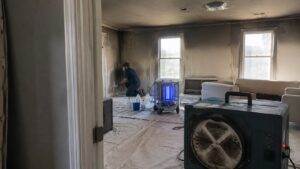
This case study documents a smoke damage restoration project in a Springville home (north Springville near Hobble Creek Canyon) where regional wildfire smoke produced significant indoor air quality deterioration and surface contamination during a severe wildfire event affecting Utah County. Total project: 22 days from initial response through final walkthrough; total cost $24,800 with insurance coverage of $22,400 and $2,400 homeowner responsibility for some upgrade selections during HVAC upgrade integration. The project illustrates several common scenarios specific to wildfire smoke events: regional smoke infiltration affecting multiple Utah County properties simultaneously, dry smoke profile from synthetic and natural material combustion in distant wildfire source, HVAC system contamination through air infiltration during smoke event, content cleaning for soft goods and electronics affected by smoke distribution, hydroxyl generation for residual odor neutralization, and insurance coverage discussions when wildfire smoke affects properties without direct fire damage. Homeowner identifying information anonymized; technical scope and outcomes reflect actual project documentation.
Initial Situation
August 22, 2025. Severe wildfire activity in Utah County mountainous areas produced sustained smoke conditions across Spanish Fork Canyon, Hobble Creek Canyon, and other mountain corridor areas during preceding 5–7 days. Air quality index reached unhealthy and very unhealthy ranges during peak smoke periods. Springville homeowner family experienced significant indoor smoke odor, visible particulate accumulation on horizontal surfaces, and respiratory symptoms (cough, eye irritation, headaches) during sustained smoke event despite keeping windows closed throughout. After smoke conditions cleared August 22, family observed continued indoor smoke odor and surface contamination warranting professional assessment; called 4Sure August 23 morning.
Property Characteristics
- Neighborhood: North Springville near Hobble Creek Canyon entrance, home built 2005
- Construction: Standard residential construction with 2005 building practices including modern HVAC system; approximately 2,800 sq ft single-story with attached garage; HVAC system with central air supply and return throughout home
- Affected area: Whole-house smoke infiltration and contamination; no direct fire damage
- Suspected source: Regional wildfire smoke infiltration through HVAC system air intake, window and door air infiltration during sustained smoke event, sometimes vehicle ingress/egress during family activities
Initial Assessment and Three Damage Profiles Determination (Day 1)
Initial visit August 23 afternoon for assessment. Crew of two technicians arrived with FLIR thermal imaging (limited applicability for smoke assessment), HEPA filtration units, full PPE for smoke damage scope, photography equipment for documentation, sometimes specialty surface sampling for particulate identification.
Initial Assessment Findings
Whole-house assessment confirmed wildfire smoke infiltration scope. Three damage profiles assessment per ANSI/IICRC S700: dry smoke profile predominant (wildfire smoke from combustion of natural and synthetic materials at high temperatures produces lighter residue with deeper porous material penetration); some characteristics of mixed smoke profiles given combustion of varied materials in wildfire scope (natural vegetation produces somewhat different residue characteristics than typical structural fire); odor characteristics significant despite lighter visible residue compared to typical structural fire smoke. Assessment scope: visible particulate accumulation on horizontal surfaces throughout home; visible discoloration on light-colored surfaces in some areas; HVAC filter showing significant particulate accumulation; HVAC duct interior surfaces likely contaminated; soft goods (clothing in closets, bedding, curtains) showing odor characteristics; some electronics potentially affected; whole-house air quality affected.
Initial Stabilization (Day 1)
Initial stabilization addressed multiple concerns. HEPA filtration units deployed throughout home (4 Predator 750 units providing 99.97% filtration at 0.3 microns) running continuously to address airborne smoke residue and particulates; the units running for approximately 48 hours produced noticeable air quality improvement supporting subsequent assessment and cleaning phases. HVAC system shut off temporarily during initial response to prevent additional particulate distribution during cleaning planning; the shutoff was temporary and HVAC operation resumed after duct cleaning addressed system contamination. Initial homeowner consultation about temporary alternative housing — homeowner family remained in home during initial response and subsequent cleaning given limited Category designation issues and adequate alternative living areas available during work in specific zones.
Insurance Coordination (Hours 4–24)
Homeowner’s insurance carrier (Travelers) notified Day 1; wildfire smoke damage has specific coverage characteristics. Travelers had received multiple claims from Utah County area following wildfire event establishing event documentation. Adjuster scheduled for site visit Day 3 given scope visibility and event-related claim volume.
Adjuster Site Visit and Scope Confirmation (Day 3)
Travelers adjuster site visit Day 3 with our project team for joint walk-through. Coverage discussion addressed wildfire smoke damage scope. Wildfire smoke damage characterized as covered storm/peril event under standard homeowner coverage; coverage interpretation: smoke damage from external wildfire constitutes covered peril similar to other storm-related damage; coverage applied even though no direct fire damage to property; coverage typically limited by deductible. Insurance allocation discussion addressed scope categories.
HVAC System Decontamination Coverage
HVAC system decontamination including duct cleaning by NADCA-certified subcontractor and equipment service was covered through homeowner property coverage as direct consequence of wildfire smoke infiltration. Scope: filter replacement; equipment service; duct cleaning; register and vent cleaning. Scope cost approximately $2,400 covered through insurance.
Surface Decontamination Coverage
Whole-house surface decontamination addressing smoke residue on walls, ceilings, fixtures, surfaces throughout home covered as direct consequence of wildfire smoke infiltration. Scope cost approximately $8,500 covered through insurance.
Contents Cleaning Coverage
Contents cleaning for soft goods affected by smoke distribution covered. Scope: clothing, bedding, curtains, sometimes other soft goods through specialty cleaning. Scope cost approximately $3,200 covered through insurance.
Hydroxyl Generation for Residual Odor Coverage
Hydroxyl generation for residual odor neutralization beyond surface cleaning capability covered. Scope cost approximately $2,800 covered through insurance.
HVAC Upgrade Selections (Homeowner Responsibility)
Homeowner elected to upgrade HVAC filtration during decontamination scope: from standard MERV 8 filter to MERV 13 filter providing significantly better particulate filtration; sometimes valuable upgrade for properties in areas susceptible to wildfire smoke or other air quality concerns; upgrade cost differential $400. Homeowner also elected to upgrade air purification with additional in-line HEPA filtration unit installed in HVAC system; additional cost $2,000. Total upgrade cost $2,400 homeowner responsibility beyond insurance-covered scope. Final insurance allocation: $22,400 for full restoration scope; homeowner responsibility $2,400 for HVAC upgrades.
HVAC System Decontamination (Days 3–8)
HVAC system decontamination addressed primary smoke distribution mechanism. Standard sequence:
Equipment Service
HVAC equipment (furnace, A/C unit) service through HVAC contractor specialty subcontractor: filter replacement with new MERV 13 filter (homeowner-selected upgrade from pre-loss MERV 8); equipment cleaning including blower wheel and motor area; coil cleaning; condensate drain inspection; system performance verification post-cleaning. Equipment service ($385) integrated into restoration scope.
Ductwork Cleaning
Ductwork cleaning through specialty duct cleaning subcontractor with NADCA-certified technicians. Standard sequence: physical agitation of duct surfaces; HEPA-filtered vacuum extraction; treatment of internal duct surfaces with appropriate antimicrobial; verification through internal inspection cameras. Duct cleaning ($1,250) integrated into restoration scope.
HVAC Upgrade Installation
Homeowner-selected HVAC upgrades installed during HVAC service phase. Specifically: in-line HEPA filtration unit installation in main HVAC supply trunk providing additional particulate filtration beyond standard furnace filter capability; filter holder modifications supporting MERV 13 filter installation. Upgrade installation ($2,000) homeowner responsibility.
Whole-House Surface Decontamination (Days 5–14)
Surface decontamination throughout home addressed smoke residue. Dry smoke profile with deeper porous material penetration warranted approach calibrated to dry smoke characteristics rather than other profiles.
Surface Cleaning Sequence
Standard surface cleaning sequence proceeded systematically through home. Specifically: HEPA vacuuming throughout home addressing settled particulates on surfaces and embedded particulates in some materials; walls and ceilings throughout (drywall surfaces affected by smoke distribution); fixtures and trim including baseboards, door casings, window casings; cabinetry surfaces in unaffected rooms; doors and door frames; light fixtures (fixture cleaning beyond filter replacement); window treatments where applicable; sometimes specialty cleaning for surfaces with deeper smoke penetration.
Wall and Ceiling Specific Considerations
Dry smoke penetrates porous materials more deeply than other smoke profiles. Specifically: paint surfaces sometimes show particulate embedding requiring more aggressive cleaning than surface wipe-down; sometimes paint surfaces warrant primer-based sealing before final paint application during reconstruction; ceiling surfaces sometimes show similar deeper penetration warranting more aggressive cleaning. Assessment determined: most paint surfaces cleaned successfully through standard cleaning; some ceiling areas in heavily affected rooms warranted primer-based sealing before final paint application during reconstruction.
Specialty Surface Considerations
Some surfaces required specialty approaches. Stainless steel surfaces (some appliances, some fixtures): specialty cleaners preventing surface streaking. Wood surfaces (cabinets, trim, sometimes furniture): cleaners formulated to address smoke without damaging wood finishes. Stone and tile surfaces: specialty cleaners. Sometimes fabric upholstered furniture warranted specialty cleaning beyond general surface cleaning.
Hydroxyl Generation for Residual Odor Neutralization (Days 8–18)
Hydroxyl generation through Odorox MDU/RX 3500 hydroxyl generators addressed residual odor compounds beyond surface cleaning capability.
Hydroxyl Generation for Wildfire Smoke Specifically
Wildfire smoke odor compounds embed in porous materials similar to other smoke profiles; surface cleaning addresses surface-level residue but doesn’t reach embedded compounds within porous materials. Hydroxyl generation neutralizes embedded compounds at molecular level through chemical reaction rather than masking. Wildfire smoke compounds sometimes have particular persistence due to combustion at variable temperatures producing diverse compound mix; hydroxyl generation effective across the diverse compound profile.
Equipment Configuration and Runtime
Equipment configuration: 3 Odorox MDU/RX 3500 units distributed throughout home; runtime sequence with HEPA filtration concurrent with hydroxyl generation supporting both odor neutralization and air quality management. Total runtime: 10 days for whole-house odor neutralization to baseline target.
Contents Cleaning (Days 6–18)
Contents cleaning addressed soft goods affected by smoke distribution.
Clothing and Soft Goods
Clothing and soft goods packed out for off-site specialty cleaning through dry cleaning subcontractor specializing in fire restoration content cleaning. Sometimes specialty ozone treatment for items with stubborn odor; sometimes hydroxyl chamber treatment as alternative. Items returned in protective packaging.
Electronics
Electronics assessment determined cleaning versus retention. Specifically: TVs, sound systems, computers showing some particulate accumulation; specialty electronics cleaning for items with light smoke exposure; verification of internal component condition through specialty subcontractor; most electronics cleaned successfully without replacement scope.
Hard Goods and Furniture
Hard goods cleaned in place where feasible; some upholstered furniture warranted off-site specialty cleaning given fabric absorption of smoke compounds; cleaning successfully addressed most items.
Verification and Reconstruction Planning (Days 18–20)
Verification across multiple categories before reconstruction phase. Surface verification: visual inspection confirming smoke residue addressed; documentation of surface conditions. Air quality verification: olfactory assessment confirming residual odor neutralization to baseline; sometimes air quality testing for properties with continued homeowner concern. HVAC verification: post-cleaning system performance verification including new MERV 13 filter and additional HEPA unit operation. Reconstruction planning included paint scope for areas with deeper smoke penetration.
Reconstruction Phase (Days 20–22)
Reconstruction proceeded with paint scope across affected areas. Specifically: BIN-type pigmented shellac sealing primer applied to ceiling areas in heavily affected rooms showing deeper smoke penetration; final paint application throughout affected areas matching pre-loss color scheme; some paint touch-up in areas where surface cleaning produced color matching considerations; final cleaning throughout. Final walkthrough Day 22 with homeowner; minor punch list (paint touch-up at one location) addressed Day 22 same day. Project completion documentation provided to homeowner.
Final Outcomes
- Total project timeline: 22 days from initial response through final walkthrough
- Total project cost: $24,800
- Insurance coverage: $22,400 (Travelers through homeowner property coverage)
- Homeowner responsibility: $2,400 for HVAC upgrade selections beyond pre-loss specifications
- HVAC system outcome: Successfully decontaminated and upgraded with MERV 13 filtration and additional in-line HEPA unit providing better air quality protection for future events
- Whole-house decontamination outcome: Successful odor neutralization to baseline; no residual smoke odor concerns
- Contents cleaning outcome: Successful for clothing, soft goods, hard goods, and most electronics; minimal replacement scope required
- Reconstruction outcome: Property returned to pre-loss condition with HVAC upgrades providing future protection
Lessons and Reflections
What Worked Well
- Three damage profiles assessment correctly identified dry smoke as predominant classification driving cleaning protocol decisions; dry smoke specialty considerations produced significantly better outcomes than generic smoke cleaning would have
- Whole-house decontamination addressed smoke distribution comprehensively; comprehensive approach prevented residual odor concerns that limited cleaning would have produced
- HVAC upgrade integration during decontamination scope provided significant additional value at modest homeowner cost; upgrade selections during restoration significantly more economical than separate later upgrade project
- Insurance coordination addressed wildfire smoke as covered peril event; documentation of conditions supported coverage interpretation when wildfire smoke affects properties without direct fire damage
- Hydroxyl generation effectively addressed residual odor compounds beyond surface cleaning capability
- Contents cleaning produced excellent recovery outcomes; most items cleaned successfully rather than requiring replacement
What Could Have Been Handled Differently
- HVAC system shutoff during peak smoke event could have prevented some smoke distribution — homeowner kept HVAC operational during event for cooling needs given high outdoor temperatures coinciding with wildfire event; HVAC shutoff during peak smoke event would have reduced indoor smoke concentration but at cost of compromised cooling
- Air sealing during wildfire events could have been more thorough — homeowner closed windows and doors during event but standard residential air sealing isn’t sufficient for high-particulate events; weatherstripping and seal upgrade during routine maintenance could have provided better protection
- Pre-event preparedness for wildfire smoke could have included MERV 13 filter or HEPA upgrade — the upgrades completed during restoration project would have provided better protection during event itself if installed proactively before event
Specific Advice for Similar Future Situations
- For Utah County properties susceptible to wildfire smoke events, consider proactive HVAC upgrades — MERV 13 filtration upgrade is modest cost addition supporting better particulate filtration during smoke events; in-line HEPA filtration provides additional protection
- For severe smoke event forecasts, consider HVAC shutoff during peak smoke periods even at cost of cooling compromise — short-term cooling compromise is typically more manageable than smoke contamination requiring whole-house decontamination
- For wildfire smoke events affecting indoor air quality, professional assessment is appropriate even without visible damage — sometimes smoke effects warrant decontamination that property owners wouldn’t initially recognize as warranting professional response
- Document smoke event conditions including outdoor air quality data, indoor symptoms, and visible indicators — documentation supports insurance coverage discussions when professional assessment confirms decontamination scope
- For homes near canyon or mountain corridor areas with elevated wildfire risk, consider periodic preparation including HVAC filter inspection, weatherstripping verification, and sometimes dedicated air purification capability
Frequently Asked Questions About This Case Study
- How does wildfire smoke damage differ from typical structural fire smoke damage?
- Several characteristics distinguish wildfire smoke from structural fire smoke even though both fall within the three damage profiles framework under ANSI/IICRC S700. Source characteristics: wildfire smoke comes from external source affecting properties through air infiltration; structural fire smoke comes from active fire within or immediately adjacent to property. Damage profile characteristics: wildfire smoke typically dry smoke profile with diverse compound mix from combustion of varied vegetation and sometimes structural materials; structural fires more often produce dominant single profile based on primary combustion materials (kitchen fire usually protein smoke, building fire usually wet smoke, electronics fire usually dry smoke). Distribution mechanisms: wildfire smoke distributes through HVAC infiltration, window/door air infiltration, sometimes vehicle ingress; structural fire smoke distributes through direct interior exposure plus HVAC distribution. Concentration characteristics: wildfire smoke produces lighter concentration over extended period (sometimes days of sustained exposure); structural fire smoke produces heavier concentration over shorter period. Treatment implications: wildfire smoke decontamination similar to dry smoke profile generally; some specific considerations including HVAC system primary contamination pathway warranting comprehensive HVAC decontamination; sometimes deeper porous material penetration despite lighter concentration due to extended exposure period. Insurance coverage: wildfire smoke typically covered as storm peril or wildfire-specific coverage; structural fire smoke covered as direct fire damage; both often covered but through different policy provisions sometimes. The differences affect specific protocol decisions but the general three damage profiles framework applies to both scenarios. We handle both wildfire smoke and structural fire smoke scenarios with appropriate calibration.
- Why was HVAC system decontamination such a significant scope component for wildfire smoke event?
- HVAC system serves as primary air infiltration mechanism for wildfire smoke entering home, then distributes contaminated air throughout property. Specifically: air intake during HVAC operation pulls outdoor air including smoke particulates into HVAC system; particulates accumulate on filter, blower components, ductwork interior surfaces, and supply registers; subsequent HVAC operation distributes embedded particulates and odor compounds throughout home even after outdoor smoke event ends; HVAC system continues acting as contamination distribution mechanism for weeks or months post-event without proper decontamination. Comprehensive HVAC decontamination addresses this distribution mechanism. Filter replacement: standard HVAC filter loaded with smoke particulates needs replacement; sometimes filter housing requires cleaning beyond filter replacement. Equipment cleaning: blower components, motor area, coil surfaces accumulate particulates affecting subsequent system operation. Ductwork cleaning: duct interior surfaces accumulate particulates; subsequent HVAC operation distributes accumulated particulates back into living space; NADCA-certified duct cleaning addresses interior duct contamination. Register and vent cleaning: supply registers and return air grilles directly affected. Without comprehensive HVAC decontamination, smoke distribution from HVAC system continues affecting indoor air quality even after surface cleaning addresses other affected areas. The HVAC decontamination scope is essential rather than optional for whole-house wildfire smoke recovery; sometimes property owners initially question HVAC decontamination cost but recognize necessity once relationship between HVAC system and ongoing smoke distribution becomes clear.
- Why did the project recommend HVAC filtration upgrades, and is this appropriate for all properties?
- HVAC filtration upgrades during wildfire smoke restoration provide significant value for properties susceptible to similar future events, but appropriateness varies by property circumstances. Standard MERV 8 filter (typical residential): captures larger particulates (3–10 microns) with limited capacity for smaller particulates; inadequate for wildfire smoke particulates (0.1–2.5 microns) which pass through MERV 8 filter producing minimal protection during smoke events. MERV 13 filter upgrade: captures particulates down to 0.3–1.0 microns with significantly better wildfire smoke protection; modest cost differential ($25–$50 versus standard filter cost); standard residential HVAC systems generally accommodate MERV 13 without performance issues but verify with HVAC contractor for specific systems. In-line HEPA filtration: provides additional protection beyond standard furnace filter; typical residential HVAC systems can accommodate in-line HEPA installation with modifications; cost typically $1,500–$3,000 for installation; provides 99.97% filtration at 0.3 microns matching specialty restoration HEPA equipment. Appropriateness considerations: properties in canyon corridor or mountain proximity areas (like this Springville property near Hobble Creek Canyon) face elevated wildfire smoke risk warranting upgrade investment; properties in central Utah County areas face lower but still meaningful wildfire smoke risk; HVAC system age and configuration affect upgrade compatibility. Cost-benefit analysis: upgrade cost amortized across multi-year service life with typical wildfire smoke event frequency in Utah County (events 1–3 years apart depending on regional fire activity); upgrades pay back through reduced restoration scope during future events plus general indoor air quality improvement. We recommend HVAC upgrade discussion during any wildfire smoke restoration project; final decisions are homeowner responsibility based on property circumstances and risk tolerance. The upgrades completed during this project were homeowner-selected based on awareness of property location and willingness to invest in future protection.
- How was the wildfire smoke damage covered through insurance when no direct fire damage occurred?
- Standard homeowner property coverage typically addresses smoke damage from external wildfire as covered peril event. Coverage interpretation depends on specific policy provisions but most carriers address wildfire smoke as covered scenario. Policy framework: smoke damage from wildfire generally falls within covered perils similar to other storm-related damage; coverage applies even though no direct fire damage to property; coverage typically subject to standard deductible. Documentation requirements: documentation of regional wildfire event supports event-related claim characterization; multiple claims from area following major wildfire events establish event-related claim pattern; air quality data, news reports, and sometimes municipal advisories support event documentation. Coverage scope: HVAC system decontamination as direct consequence of smoke infiltration; whole-house surface decontamination addressing smoke residue; contents cleaning for smoke-affected items; hydroxyl generation for residual odor neutralization. Sometimes coverage interpretation: some carriers and policies might require demonstration of direct property damage rather than only odor or air quality effects; the case study scope including visible particulate accumulation, surface discoloration, and HVAC system contamination supported direct property damage characterization. Coverage exclusions: some policies exclude or limit smoke damage coverage when wildfire is in same county or specific proximity range; verify specific policy provisions. Documentation support: comprehensive documentation including photographs, scope assessment, standards-based scope justification supports insurance allocation; sometimes scope discussion involves multiple iterations with adjuster. For properties affected by major wildfire events, multiple property owners filing claims establishes event documentation supporting claim review; individual property claims after major events typically process more efficiently than claims for events without broader documentation. We recommend insurance discussion during any wildfire smoke assessment supporting appropriate coverage interpretation.
- What ongoing concerns should homeowners watch for after wildfire smoke restoration?
- Several ongoing considerations are worth periodic awareness after wildfire smoke restoration. Residual odor recurrence: rare but possible if residual odor compounds embedded deeper than hydroxyl generation reached; sometimes appears during specific weather conditions (humid weather sometimes activates trace residual compounds); typically responds to additional hydroxyl treatment if it occurs. HVAC system performance: new filter and any installed upgrades require standard maintenance schedule; sometimes upgraded filters require replacement at slightly different intervals than standard filters. Future wildfire event preparedness: comprehensive restoration provides baseline; ongoing preparedness including filter monitoring, weatherstripping maintenance, sometimes dedicated air purification capability supports better outcomes during future events. Air quality monitoring: post-restoration air quality should match pre-event baseline; sometimes air quality monitoring during high-particulate periods (wildfire seasons, sometimes other events) identifies any indoor air quality concerns warranting attention. Documentation retention: comprehensive restoration documentation including HVAC service, surface decontamination, contents cleaning, and verification testing should be retained in property records supporting future questions. Insurance coverage review: future wildfire seasons may produce additional events; verify continued coverage for wildfire smoke scenarios; consider coverage limit review for properties in elevated risk areas. Most wildfire smoke restoration projects don’t experience post-completion concerns; the awareness recommendations are general property maintenance for properties susceptible to wildfire smoke events. We follow up at 30, 90, and 180 days post-completion to identify any concerns warranting additional attention; sometimes follow-up extends through subsequent wildfire season for properties in elevated risk areas.
Contact 4Sure Mold Removal — Springville Smoke Damage Restoration
Operating from 1330 S 1400 E in Spanish Fork, our team responds to Springville smoke damage restoration including wildfire smoke scenarios. For projects similar to this case study, call (385) 247-9387.
- Emergency Line (24/7): (385) 247-9387
- Address: 1330 S 1400 E, Spanish Fork, UT 84660
- Email: info@4suremoldremoval.xyz
- Owner: Sean Jacques
- Utah Contractor License: #961339-4102
- IICRC Firm Certification: #923321-2371
Office Hours
- Emergency Service: 24 hours a day, 7 days a week
- Office Staff: Monday – Friday, 8:00 AM – 5:00 PM
- Closed: Weekends and State/Federal Holidays (emergency line always active)