
Reviewed by: Tyler Bennett, Restoration Project Manager – IICRC WRT/ASD #291438 – 4Sure Mold Removal, 1330 S 1400 E, Spanish Fork, UT. Last reviewed: October 2026.
Case Study — Black Mold Removal in Spanish Fork Family Home With Concealed Stachybotrys Colonization Discovered During Bathroom Renovation
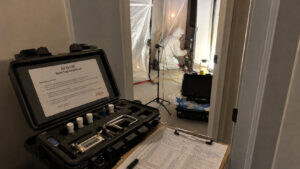 This case study documents a black mold (Stachybotrys chartarum) remediation project in a Spanish Fork family home where concealed colonization was discovered during a planned bathroom renovation. Total project: 24 days from initial call through final post-remediation verification; total cost $19,400 with insurance coverage of $14,800 (concealed water damage triggering claim) and $4,600 homeowner responsibility for source correction (plumbing repair) and reconstruction beyond standard scope. The project illustrates several common scenarios: concealed colonization discovery during renovation rather than acute event response, Stachybotrys-specific protocols within ANSI/IICRC S520 framework, source correction coordination with mold remediation, full ANSI/IICRC S520 protocols including containment and HEPA filtration with post-remediation verification through Air-O-Cell spore trap cassettes, and insurance coverage discussion when concealed damage triggers coverage that wouldn’t have applied to surface-only mold scenarios. Homeowner identifying information anonymized; technical scope and outcomes reflect actual project documentation.
Initial Situation
Property Characteristics
- Neighborhood: Palmyra (mid-section established Spanish Fork), home built 1994
- Construction: Standard residential construction with modernized features through homeowner’s previous renovations
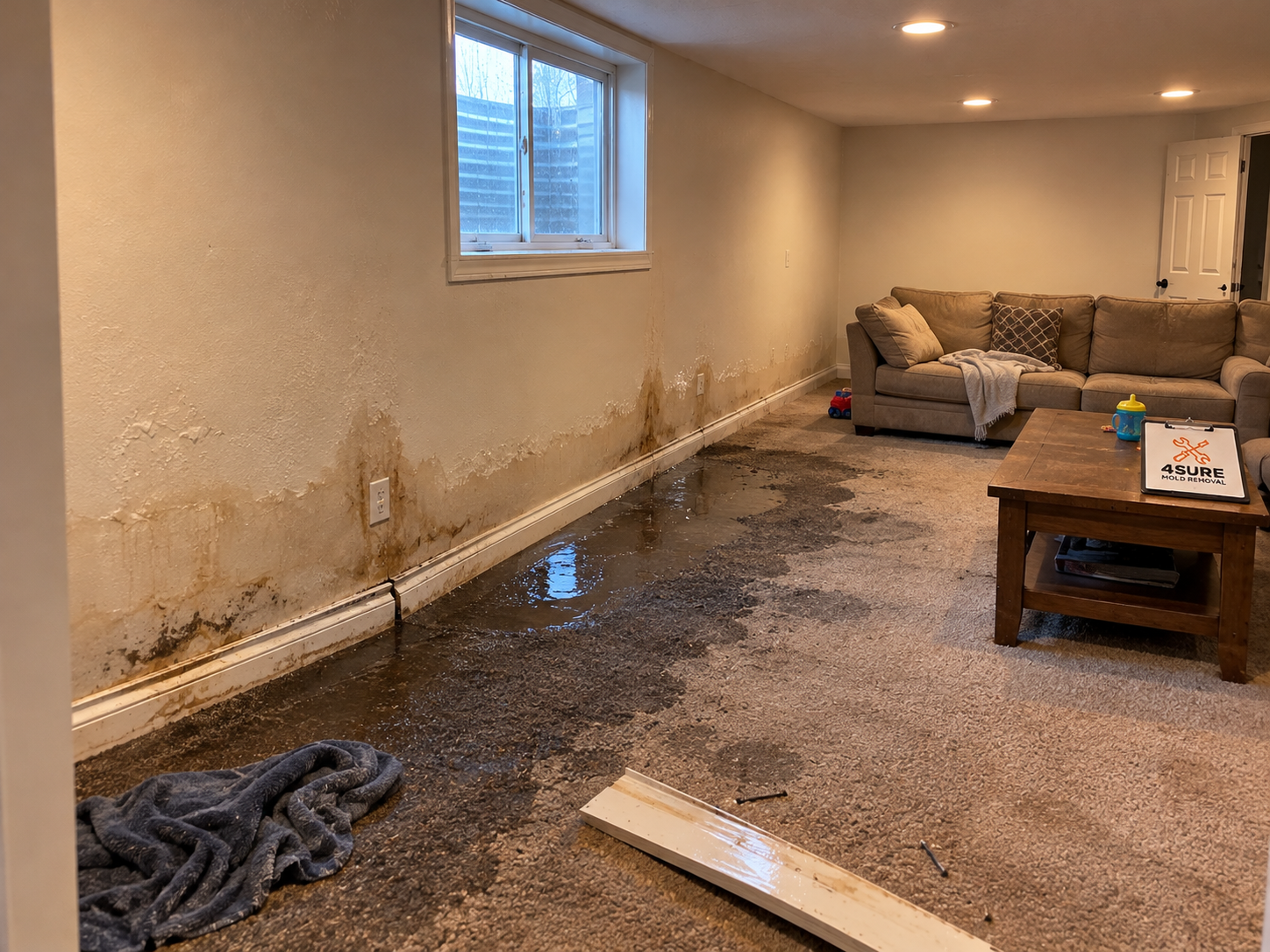
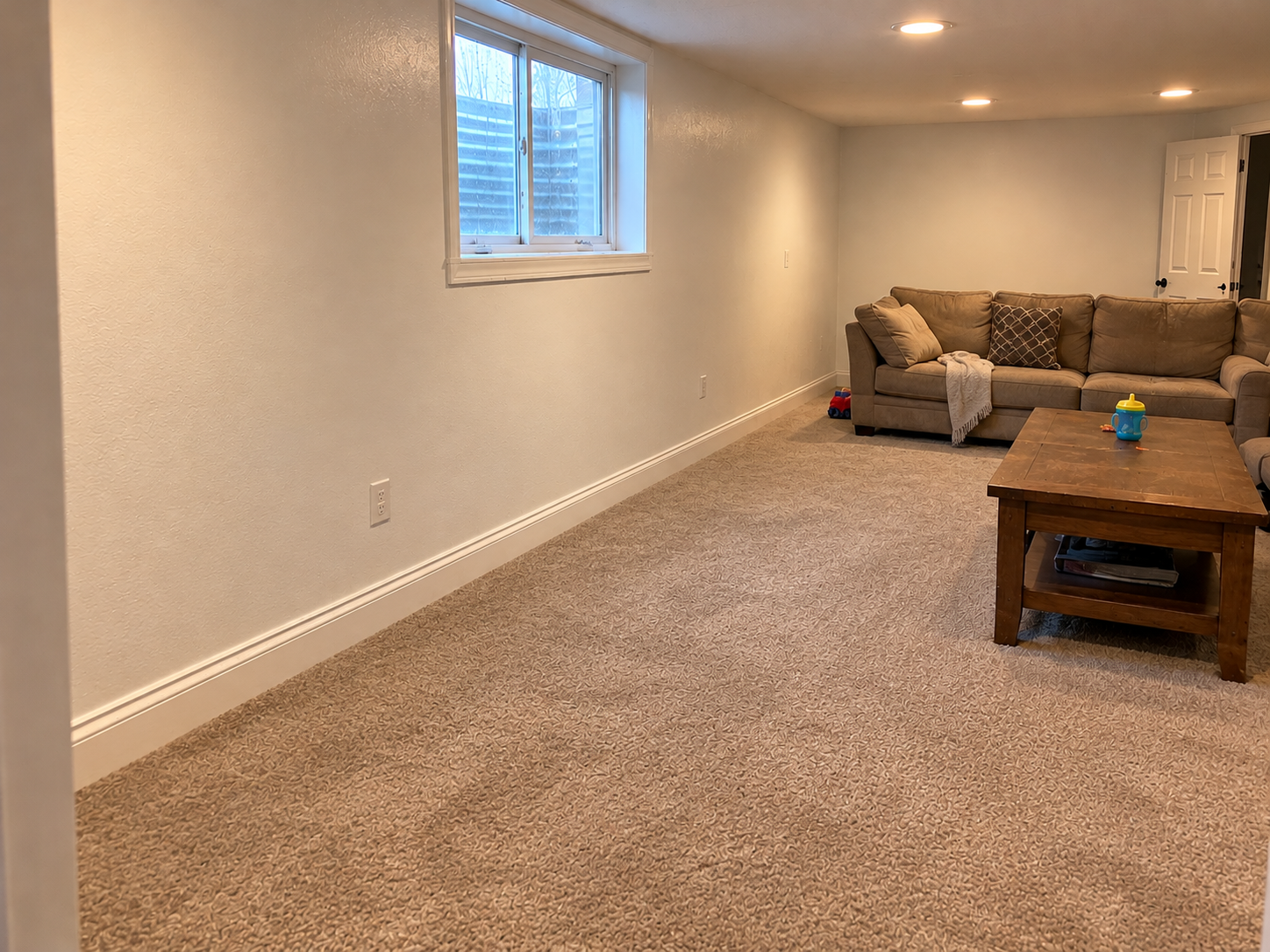
- Affected area: Master bathroom — approximately 100 sq ft total area; concealed colonization behind shower wall framing, on subfloor below shower pan, partial migration into adjacent wall framing
- Suspected source: Slow shower pan leak over extended period (likely several years); concealed leak produced sustained moisture conditions in adjacent framing without visible indicators in finished bathroom
Initial Response and Pre-Remediation Assessment (Day 1)
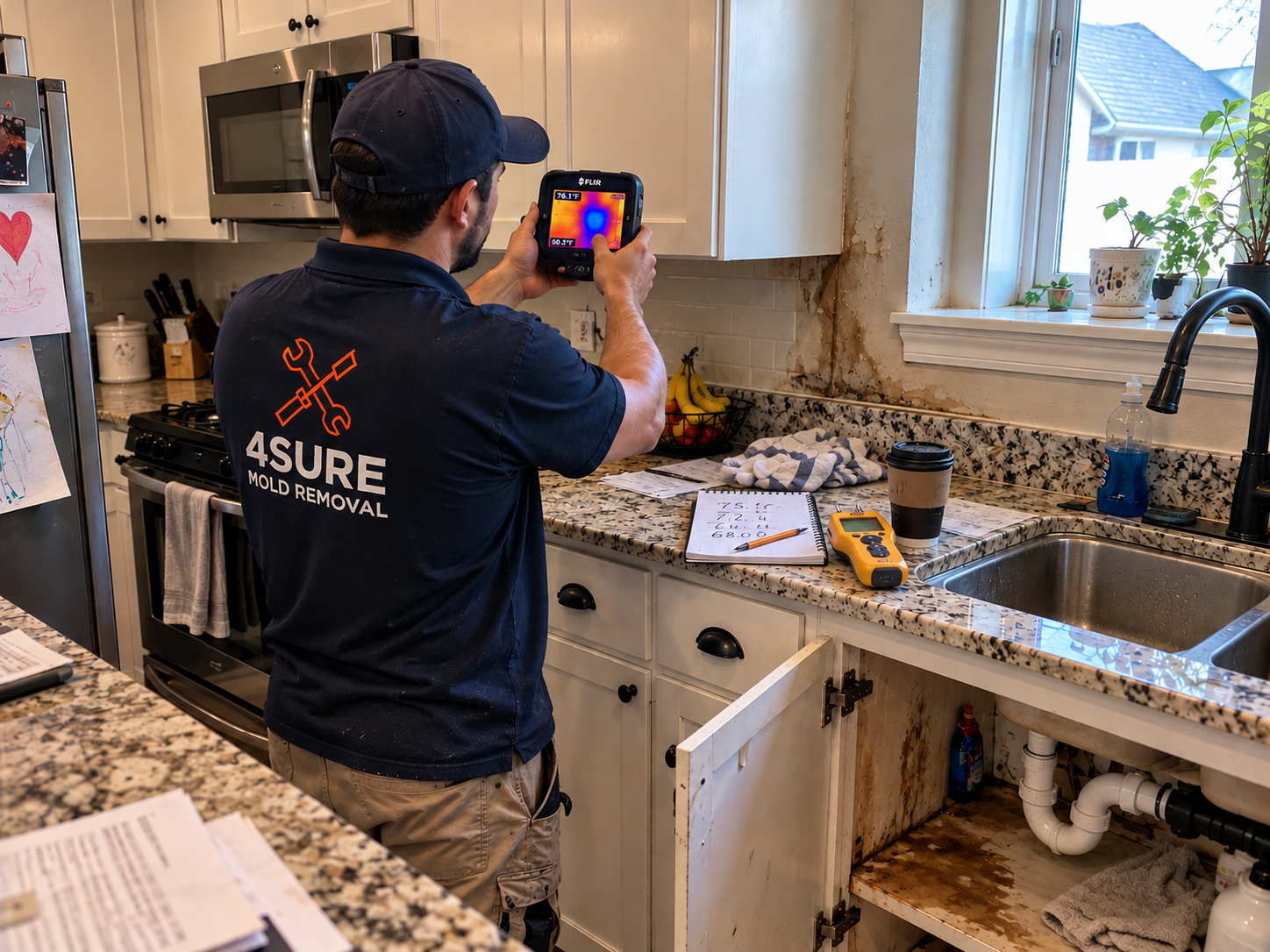
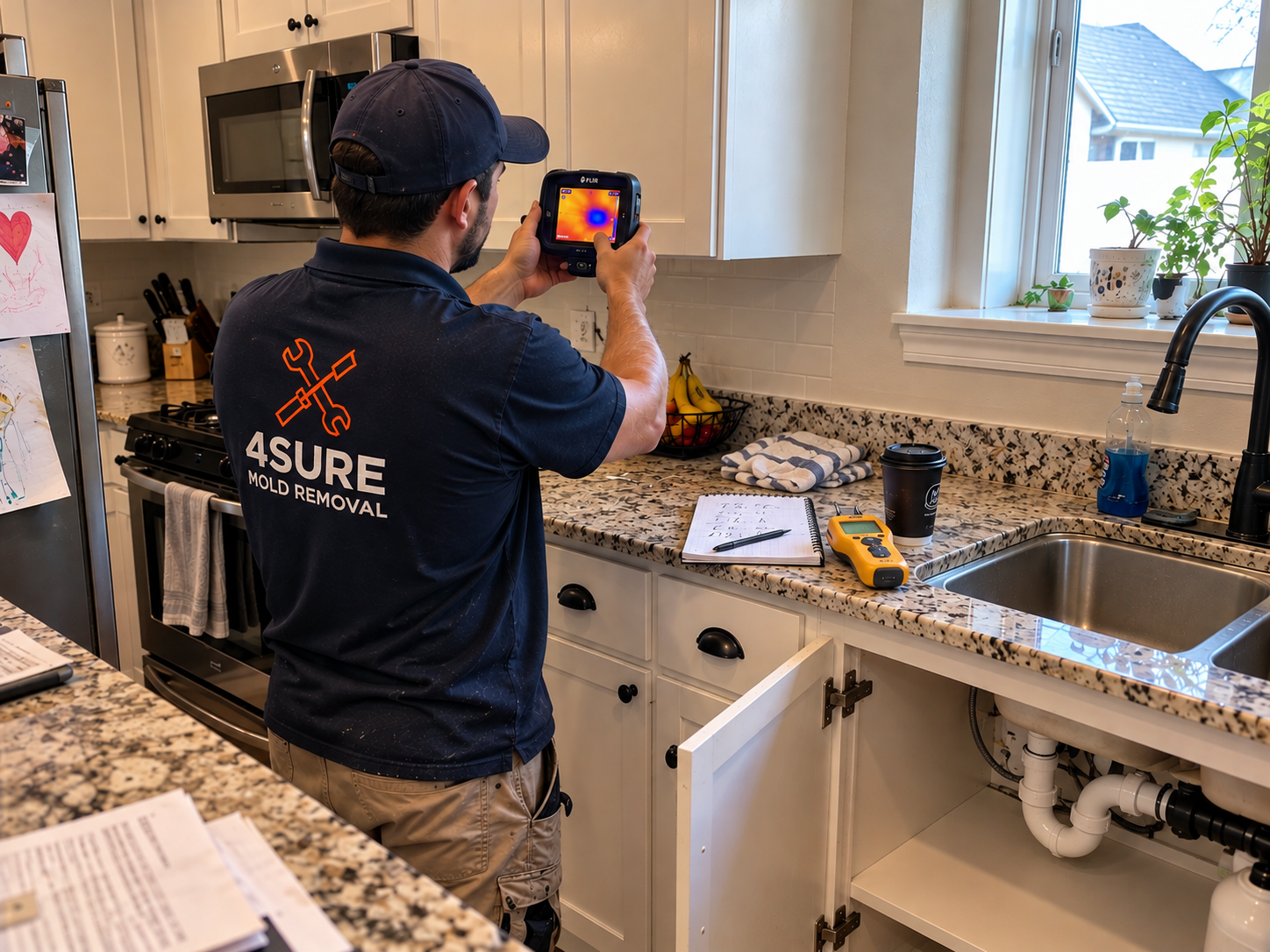
Initial visit February 8 afternoon for pre-remediation assessment. Crew of two technicians arrived with FLIR thermal imaging, Protimeter capacitance scanning, full PPE for assessment of contaminated area, sampling kit for spore trap cassettes, photography equipment for documentation.Initial Assessment Findings
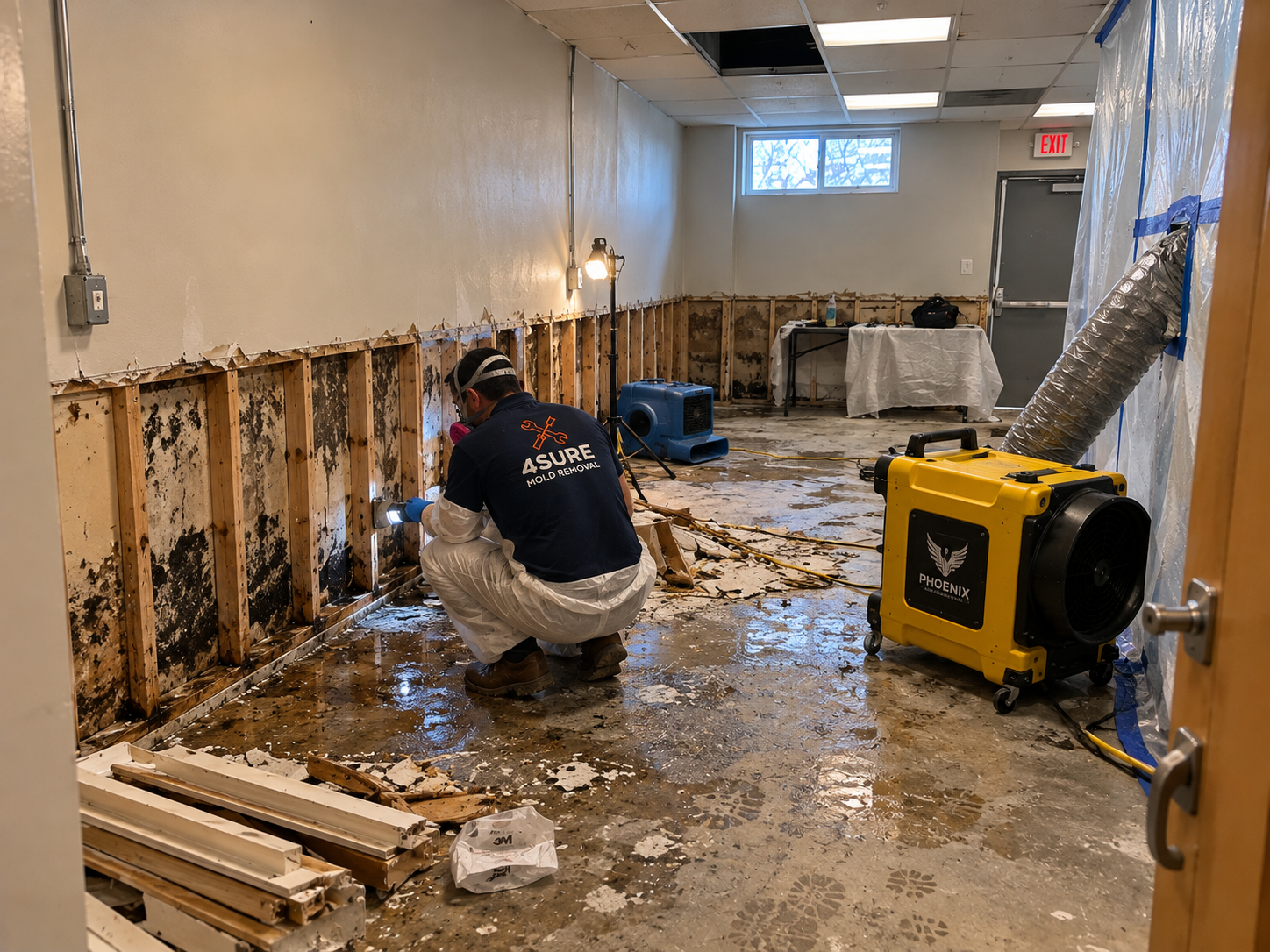
Visual inspection of demolished area showed extensive black mold colonization on framing behind shower wall (approximately 16 sq ft of visible colonization on wall framing surfaces), additional colonization on subfloor below shower pan (approximately 12 sq ft). Suspected colonization extending into adjacent wall framing based on visible patterns. Thermal imaging identified moisture migration extending beyond visible affected area into approximately 4 ft of adjacent wall framing on each side of shower. Capacitance scanning confirmed elevated moisture in extended area indicating active or recent moisture source.Sampling and Source Investigation
Surface sampling of visible colonization through swab samples submitted to certified laboratory for species identification — preliminary visual identification suggested Stachybotrys chartarum but laboratory confirmation supported scope decisions. Plumbing investigation revealed slow shower pan leak with corrosion at drain connection — likely source of sustained moisture over multi-year period. Plumber called for source repair scheduling concurrent with remediation phase; plumber assessment identified shower pan replacement as appropriate scope (not just drain repair).Insurance Coordination
Homeowner’s insurance carrier (State Farm) notified; concealed water damage discovery triggered coverage that wouldn’t apply to surface-level mold scenarios. Initial claim filing with documentation of concealed damage including thermal imagery, photographs of demolition phase findings, plumbing source identification supporting “sudden discharge from concealed source” coverage interpretation. Adjuster scheduled for site visit February 10.Adjuster Site Visit and Scope Confirmation (Day 3)
State Farm adjuster site visit February 10 with our project team for joint walk-through. Adjuster confirmed coverage trigger through concealed water damage from undiscovered slow leak (versus typical mold-only scenarios that often face coverage exclusions). Scope discussion: water damage coverage applied to remediation scope, demolition scope, and reconstruction scope including bathroom completion through finishing; plumbing source repair (shower pan replacement, drain repair) was homeowner responsibility under standard insurance coverage exclusions for plumbing repair; some additional scope (any upgrade to bathroom finishes during reconstruction beyond pre-loss specifications) homeowner responsibility. Final claim allocation: $14,800 for restoration scope including remediation, demolition, antimicrobial treatment, drying, and standard reconstruction; plumbing repair ($1,800) homeowner responsibility; bathroom reconstruction beyond pre-loss specifications ($2,800) homeowner responsibility.Laboratory Results (Day 3)
Laboratory results from initial swab samples confirmed Stachybotrys chartarum colonization. Species identification supported full ANSI/IICRC S520 protocols including extensive containment and PPE for technicians; Stachybotrys is associated with mycotoxin production and warrants conservative protocols even within S520 framework. Documentation of laboratory results provided to homeowner for medical consultation if warranted; we recommended homeowner consult physician about any health concerns related to potential exposure during the period before discovery.Containment Establishment (Day 4)
Containment establishment per ANSI/IICRC S520 Section 12.2.4. Plastic barrier construction isolating bathroom and adjacent hallway area from rest of property; poly zipper door establishing containment access; HEPA filtration with 2 Predator 750 units (99.97% at 0.3 microns) running negative pressure inside containment. Technicians transitioned to full PPE for all work inside containment including Tyvek suits, P100 respirators, nitrile gloves, eye protection.Source Correction Coordination (Days 4–6)
Plumbing source correction proceeded concurrent with remediation work. Plumber accessed shower pan area through containment with appropriate PPE protocols; shower pan replacement and drain repair completed Day 5; verification of repair through pressure testing Day 6. Plumber scope was homeowner responsibility ($1,800) under standard insurance coverage exclusions for plumbing repair; the source correction integrated with remediation timeline for project efficiency.Remediation Phase (Days 4–14)
Remediation work per ANSI/IICRC S520 Sections 12.2 and 12.2.3 throughout. AMRT certified technician (Elena Ramirez) led remediation work supported by Marcus Holloway also AMRT certified.Material Removal (Days 4–8)
Removal of contaminated materials: shower wall framing showing visible colonization (approximately 16 sq ft); subfloor below shower pan showing visible colonization (approximately 12 sq ft); adjacent wall framing showing extended moisture migration and likely concealed colonization (additional 8 sq ft); shower wall drywall and adjacent wall drywall in affected zones; bathroom vanity adjacent to affected wall (water-affected during slow leak period); some baseboard and trim showing water damage. Materials removed under containment with regulated medical waste disposal stream appropriate for Stachybotrys-contaminated materials. Documentation throughout including before/after photographs.Antimicrobial Treatment (Days 8–10)
Sporicidin antimicrobial treatment of retained substrates per S520 Section 12.2.6 cleaning protocols. Treatment included: retained framing in adjacent areas (where colonization wasn’t visible but proximity warranted treatment); subfloor in adjacent areas; remaining drywall edges where flood-cut demolition occurred; HVAC supply and return registers in bathroom (sometimes mold contamination spreads through HVAC system warranting register treatment). BIN-type pigmented shellac sealing primer applied to retained framing surfaces showing staining; the staining indicated historical moisture exposure even where current colonization wasn’t visible; sealing primer addressed any residual surface contamination beyond what antimicrobial treatment alone would address.HEPA Vacuuming (Day 10)
HEPA vacuuming throughout containment area for spore removal per S520 Section 12.2.5. All horizontal surfaces, ceiling, retained framing, and adjacent areas vacuumed. Vacuum waste in regulated medical waste stream.Drying Phase (Days 10–14)
Standard residential drying configuration for bathroom-scale scope: 1 Phoenix 200 MAX dehumidifier (130 PPD AHAM); 4 high-velocity air movers; FLIR thermal imaging and Protimeter capacitance scanning daily. Drying phase short due to limited scope (single bathroom, framing already exposed, source corrected); targets met by Day 14.Post-Remediation Verification (Days 14–17)
Post-remediation verification per ANSI/IICRC S520 Section 15. Visual inspection confirmed colonization removal and substrate condition. Air-O-Cell spore trap cassettes deployed within containment area and at multiple control points outside containment for comparison; samples submitted to certified laboratory; results received Day 17 showing post-remediation conditions matching outdoor baseline (indicating successful remediation). Documentation of verification supported insurance closeout and reconstruction phase initiation.Verification Results
| Sample Location | Spore Count Result | Interpretation |
|---|---|---|
| Outdoor baseline (control) | Normal fungal ecology | Reference for comparison |
| Inside containment area | Normal fungal ecology, matching baseline | Successful remediation; condition matches normal indoor levels |
| Adjacent hallway (transition area) | Normal fungal ecology, matching baseline | No spread beyond containment |
| Master bedroom (control area) | Normal fungal ecology, matching baseline | Comparison reference; baseline normal |
Reconstruction Phase (Days 17–24)
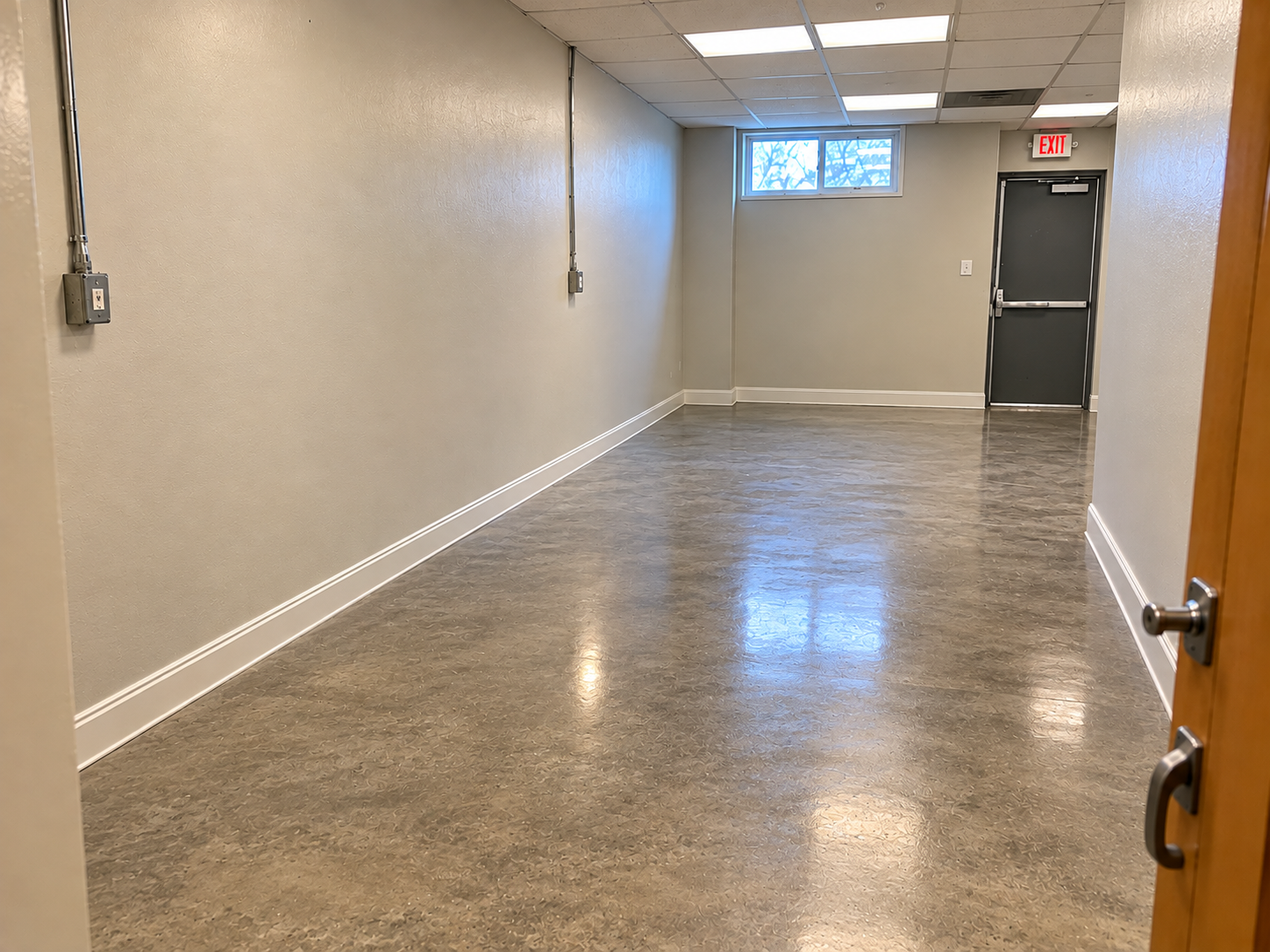
Reconstruction proceeded with bathroom completion: framing replacement; subfloor replacement; new shower pan installation (homeowner-selected upgraded pan beyond standard pre-loss specifications); drywall replacement; tile installation through specialty tile installer subcontractor; bathroom vanity replacement; baseboard installation; paint and finish work. Reconstruction included some upgrades beyond pre-loss specifications (homeowner-selected tile upgrade, upgraded shower pan, upgraded vanity); upgrade scope was homeowner responsibility ($2,800) beyond insurance coverage for pre-loss specification reconstruction. Final walkthrough Day 24 with homeowner; minor punch list (caulk touch-up at one tile transition; paint touch-up at one location) addressed Day 25. Project completion documentation provided to homeowner including warranty information and verification documentation supporting future property records.Final Outcomes
- Total project timeline: 24 days from initial call through final walkthrough
- Total project cost: $19,400
- Insurance coverage: $14,800 (State Farm through homeowner property coverage; concealed water damage triggered coverage)
- Homeowner responsibility: $4,600 ($1,800 plumbing source correction; $2,800 reconstruction upgrades beyond pre-loss specifications)
- Verification outcome: Air-O-Cell post-remediation verification confirmed successful remediation matching outdoor baseline; documentation supports future property records
- Reconstruction outcome: Property returned to pre-loss condition with homeowner-selected upgrades to bathroom finishes; no homeowner concerns at final walkthrough
- Source correction outcome: Shower pan replacement addressed underlying slow leak preventing future similar concealed colonization scenarios
Lessons and Reflections
What Worked Well
- General contractor recognized scope exceeded standard renovation when colonization was discovered and called specialty mold remediation rather than continuing with renovation that would have spread contamination; the appropriate handoff supported optimal remediation outcome
- Concealed water damage discovery triggered insurance coverage that wouldn’t have applied to mold-only scenarios; documentation of concealed damage characteristics supported coverage interpretation
- Source correction coordination with plumber concurrent with remediation phase addressed underlying cause preventing recurrence; integrated approach was more efficient than separate sequential plumbing repair
- Full ANSI/IICRC S520 protocols including containment, HEPA filtration, and AMRT certified technicians produced verification-confirmed successful remediation; documentation supports both insurance closeout and homeowner confidence in remediation effectiveness
- Air-O-Cell post-remediation verification provided quantitative evidence of remediation success beyond visual inspection; the verification documentation supports future property records if mold concerns arise during real estate transactions or other contexts
What Could Have Been Handled Differently
- The slow leak source could have been identified earlier through routine plumbing inspection — sometimes annual or biennial professional plumbing inspections identify slow leaks before they produce significant damage; the homeowner reflected that they hadn’t had professional plumbing inspection during the years of suspected slow leak
- Bathroom renovation planning could have included pre-renovation plumbing assessment — sometimes pre-renovation inspection identifies issues that affect renovation scope; the renovation would have proceeded differently if shower pan failure had been identified before demolition began
- Insurance coverage clarity could have been established earlier — initial homeowner discussion about insurance coverage included some uncertainty about whether mold remediation would be covered; State Farm site visit Day 3 clarified coverage scope but earlier clarity would have supported better homeowner financial planning
Specific Advice for Similar Future Situations
- If you discover mold during renovation, stop renovation work immediately and call specialty mold remediation contractor; continuing renovation work in mold-affected area spreads contamination and complicates subsequent remediation
- If you have any plumbing in walls or under floors that might be aging or showing signs of deterioration, consider professional plumbing inspection — sometimes early detection of slow leaks prevents the multi-year colonization scenario this case study documents
- If you’re planning bathroom renovation, consider pre-renovation moisture detection assessment — sometimes thermal imaging during planning phase identifies concealed conditions that affect renovation scope
- Document any mold remediation thoroughly including verification documentation — the documentation supports future property records, real estate transactions, and any subsequent mold-related concerns; verification documentation is significantly more valuable than narrative descriptions of “remediation completed successfully”
- Verify that your homeowner insurance includes appropriate coverage for water damage and consider sewer backup endorsement separately — the coverage scope discussions often emerge during emergencies when planning options are limited
Frequently Asked Questions About This Case Study
- Why did the concealed water damage discovery trigger insurance coverage that wouldn’t have applied to a surface-only mold scenario?
- Standard homeowner property coverage typically addresses sudden discharge from accidental sources including concealed plumbing failures even when discharge happens slowly over extended periods. The coverage interpretation: slow shower pan leak with corrosion at drain connection produced “sudden discharge” within the policy framework even though the discharge occurred over multi-year period; the discharge was “sudden” in the sense of being unintended and unanticipated rather than instantaneous; concealed nature of the leak (homeowner couldn’t have reasonably identified the issue without professional plumbing inspection) supported “accidental” interpretation. Surface-level mold scenarios (visible mold on bathroom surfaces, basement mold in chronic moisture conditions, attic mold from inadequate ventilation) often don’t trigger this coverage because the conditions are usually visible to homeowner suggesting maintenance responsibility rather than accidental damage. The distinction matters significantly for insurance allocation; concealed water damage discovery during renovation is a common scenario that triggers coverage homeowner might not expect to apply for “mold” remediation. Documentation of concealed nature, plumbing source identification, and water damage versus mold-only characterization supported the coverage interpretation in this case.
- Why was the verification through Air-O-Cell spore trap cassettes important versus just visual inspection?
- Visual inspection alone is insufficient for verification of mold remediation effectiveness, particularly for Stachybotrys colonization. Visual inspection confirms visible colonization removal but doesn’t verify that airborne spore counts have returned to normal levels — sometimes remediation produces visible removal but residual airborne contamination persists from disturbed materials, secondary contamination from work activities, or sometimes incomplete cleanup of small areas. Air-O-Cell spore trap cassettes through certified laboratory provide quantitative verification of airborne spore counts; comparison of indoor counts to outdoor baseline establishes whether indoor conditions match normal fungal ecology. For Stachybotrys remediation specifically, verification documentation is particularly valuable because Stachybotrys is associated with mycotoxin concerns and homeowners often want documentation supporting confidence in remediation success. The Air-O-Cell verification in this case showed indoor spore counts matching outdoor baseline with no Stachybotrys spores detected — successful remediation by S520 Section 15 verification standards. Verification documentation supports both immediate confidence and long-term property records if mold concerns arise during real estate transactions or other contexts; “remediation completed” without verification documentation is significantly less valuable for these long-term records than quantitative verification documentation.
- How does Stachybotrys remediation scope differ from other mold species remediation under S520?
- S520 protocols apply to mold remediation broadly, but Stachybotrys-specific considerations sometimes warrant more conservative approach within the standard framework. Specific considerations: Stachybotrys is associated with mycotoxin production and potential health effects beyond standard mold exposure concerns; conservative PPE protocols including P100 respirators and full Tyvek suits throughout remediation; regulated medical waste disposal stream for contaminated materials rather than standard construction debris; sometimes more extensive containment than other mold species would warrant; sometimes recommendation for occupant relocation during remediation phase even for limited-scope events; verification documentation through Air-O-Cell spore trap cassettes typically warranted versus sometimes optional for less concerning species. The protocol differences add some scope and timeline compared to other mold species remediation but produce appropriate outcomes for Stachybotrys-specific concerns. Insurance allocation typically supports the Stachybotrys-specific protocols when documentation establishes species identification through laboratory results; standards-based scope justification supports the protocol decisions.
- What would have happened if the renovation had continued without mold remediation specialty?
- Continuing renovation in mold-affected area without specialty remediation typically produces several adverse outcomes. Contamination spread: standard renovation activities (cutting drywall, removing fixtures, sometimes power tool use) disturb mold colonies and spread spores throughout property; spread can affect HVAC system, adjacent rooms, sometimes whole property; subsequent remediation scope significantly more extensive than initial-discovery scope. Worker exposure: renovation workers without appropriate PPE experience exposure during contamination spread; sometimes health effects emerge during or after renovation completion. Inadequate cleanup: standard renovation cleanup doesn’t address microbial contamination at S520 standards; visible mold removal without containment, HEPA filtration, antimicrobial treatment, and verification typically leaves residual contamination beyond visible levels. Insurance complications: insurance coverage typically requires standards-based remediation; renovation-style cleanup often doesn’t meet coverage requirements producing claim disputes. The general contractor in this case recognized the scope appropriately and stopped work; we’ve handled subsequent projects where renovation continued in mold-affected areas before specialty remediation engagement, and those projects involved significantly expanded scope, more extensive containment, sometimes occupant displacement, and longer project timelines. The cost differential between proper specialty remediation and renovation-style cleanup followed by remediation typically runs 50–200% higher for the renovation-first approach.
- How long after this remediation should the homeowner be concerned about potential recurrence?
- With successful source correction (shower pan replacement addressing slow leak) and verification-confirmed remediation, recurrence risk is significantly reduced but worth periodic awareness. Specific considerations: the underlying cause (slow shower pan leak) has been corrected; verification documented successful remediation matching outdoor baseline; standard ongoing maintenance addresses any future concerns. Recommended ongoing awareness: periodic visual inspection of bathroom for any moisture indicators (mineral deposits, staining, soft drywall, sometimes musty odors); sometimes professional plumbing inspection at appropriate intervals (every 5–10 years depending on plumbing system age); awareness that older slow leaks sometimes produce conditions that take years to develop into visible colonization, so early signs warrant attention. Future concerns warranting professional consultation: any visible mold growth in any property area, any musty odors that persist, any visible water stains or moisture indicators, any plumbing issues affecting walls or floors. The verification documentation from this remediation supports future property records — if mold concerns arise during real estate transactions, the documented verification provides evidence of completed remediation rather than narrative descriptions; the documentation also supports any subsequent insurance claims if new mold issues emerge by establishing baseline post-remediation conditions. Most successful remediation projects don’t experience recurrence with appropriate source correction; the awareness recommendations are general property maintenance rather than recurrence-specific concerns.
Contact 4Sure Mold Removal — Spanish Fork Mold Remediation Response
Operating from 1330 S 1400 E in Spanish Fork, our team responds to Spanish Fork mold remediation needs with full ANSI/IICRC S520 protocols. For mold remediation similar to this case study, call (385) 247-9387.- Emergency Line (24/7): (385) 247-9387
- Address: 1330 S 1400 E, Spanish Fork, UT 84660
- Email: info@4suremoldremoval.xyz
- Owner: Sean Jacques
- Utah Contractor License: #961339-4102
- IICRC Firm Certification: #923321-2371
Office Hours
- Emergency Service: 24 hours a day, 7 days a week
- Office Staff: Monday–Saturday, 8:00 AM–5:00 PM (emergency line answered 24/7)
- Closed: Sundays and State/Federal Holidays (emergency line always active)
Verify our credentials yourself
- Utah Contractor License#961339-4102 – verify at Utah DOPL
- IICRC Certified Firm#923321-2371 – verify at IICRC Global Locator
- Liability + workers’ compCarrier: The Hartford – GL $1M/$2M, WC EL $1M/$1M/$1M
- BondedYes – Utah-licensed, bonded and insured LLC
Written warranty on every job
24-month workmanshipDrying, structural repairs, drywall, flooring, cabinetry, and paint. If our work fails, we come back and redo it at no cost.
90-day mold warrantyIf visible mold returns in an area we remediated from the same moisture source, we reinspect and re-remediate free.
Transferable once to a new homeowner within 24 months with a signed transfer. Read the full warranty terms →
24/7 live-answered emergency line – (385) 247-9387. 45-minute arrival guarantee inside Spanish Fork city limits; typically under 60 minutes in Springville, Mapleton, Payson, Salem and Saratoga Springs. If we’re late in Spanish Fork, your emergency inspection is free.
Dealing with something similar in Spanish Fork? See mold remediation in Spanish Fork, or call (385) 247-9387. Answered live 24/7.