
Mold Prevention in Spanish Fork & Utah County — Humidity Control, Vapor Management, and Source Elimination
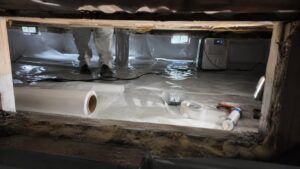
Mold prevention is cheaper than mold remediation by roughly two orders of magnitude. The same Spanish Oaks bathroom that costs $4,500–$12,000 to remediate after Stachybotrys establishes behind the tile would have cost $400–$1,200 to prevent through proper exhaust fan venting, vapor barrier installation, and humidity monitoring. The same Mapleton crawlspace that costs $8,000–$25,000 to remediate after sustained 70% humidity colonizes the rim joists would have cost $1,500–$4,500 to prevent through encapsulation, drainage correction, and dehumidification. Prevention isn’t optional risk transfer; it’s the highest-ROI restoration adjacent service we offer.
4Sure Mold Removal performs mold prevention assessments and remediation under ANSI/IICRC S520 protocols across Spanish Fork, Springville, Salem, Payson, and Mapleton. Every prevention project addresses the actual mold drivers — sustained humidity, hidden moisture sources, ventilation defects, and material vulnerabilities — rather than masking symptoms with spray treatments. Work is documented under Utah Contractor License #961339-4102 and IICRC Firm Certification #923321-2371.
The Three Conditions Every Mold Colony Requires
Mold growth requires three conditions present simultaneously. Eliminate any one of them and growth stops; eliminate two and the substrate is essentially mold-resistant indefinitely. The conditions:
- Spores: Always present in indoor air, brought in through doors, windows, HVAC intakes, and on clothing. Eliminating spores entirely is impossible; the goal is keeping concentrations at or below outdoor reference baseline.
- Nutrients: Cellulose-based materials (drywall paper, wood, paper-faced insulation, MDF, particleboard, fabric, dust). Most modern building interiors have abundant cellulose, so eliminating nutrients usually means substituting non-cellulose materials in high-risk zones (cement board behind tile, fiberglass mat-faced drywall in bathrooms, sealed metal in basement framing).
- Moisture: The variable most accessible to homeowner control. Most indoor mold species require sustained relative humidity above 60–75% on substrate surfaces; some genera (Stachybotrys) require sustained moisture saturation above 90% RH. Controlling humidity below the critical threshold for the substrate stops colonization.
Of the three, moisture control is where prevention efforts produce the most return. Spores can’t be eliminated; nutrient-substitution requires construction-phase decisions; humidity is the lever a homeowner can actually pull on an existing building.
The Humidity Threshold That Determines Mold Growth Risk
The IICRC and the EPA recommend keeping indoor relative humidity below 50% during heating seasons and below 60% during cooling seasons. The thresholds aren’t arbitrary — they correspond to the surface RH on substrate materials at typical indoor temperatures, which determines whether mold can colonize:
- Below 50% indoor RH: Substrate surface RH typically below 60%. Most indoor mold species cannot establish colonies. Some xerophilic species (Aspergillus restrictus, Wallemia sebi) can grow at lower RH but require specific substrate conditions.
- 50–60% indoor RH: Substrate surface RH 60–70%. Aspergillus and Penicillium species can colonize on cellulose substrates. Risk window for storage areas, basements, and crawl spaces.
- 60–75% indoor RH: Substrate surface RH 70–85%. Cladosporium, Aureobasidium, and most common indoor molds colonize readily. The threshold most homeowners cross during summer in poorly-ventilated basements and crawlspaces.
- Above 75% indoor RH: Substrate surface RH above 85%. Stachybotrys chartarum and Chaetomium can colonize on cellulose materials within 7–14 days of sustained exposure. The threshold associated with structural water intrusion or chronic plumbing leaks.
Hygrometers (the digital humidity gauges sold for $15–$30 at hardware stores) are an underused homeowner tool. Placing one in each at-risk zone (basement, crawlspace, attic, bathrooms) gives ongoing visibility into when humidity drifts into colonization range. Most Utah County homeowners are surprised to learn their basement runs at 65–75% RH for several weeks during summer, well into the mold-colonization range.
The Most Common Prevention Failure Points in Utah County Homes
1. Bathroom Exhaust Fans That Don’t Vent Through the Roof
The most common construction defect we find during prevention assessments. The exhaust fan duct was installed during construction but capped at the ceiling cavity rather than routed through a roof-mounted vent. Years of shower humidity dump into the attic where it condenses on cold roof sheathing, creating Stachybotrys and Aspergillus colonies on the deck and rafters. Common in 1990s–2000s Utah County construction. Correction: rerouting the duct through a roof-mounted vent with backdraft damper, typically $400–$900 in carpentry and roof penetration work.
2. Crawlspaces Without Vapor Barriers or Encapsulation
Older Utah County homes — particularly in Salem, Payson, Mapleton, and rural foothill areas — have unencapsulated crawlspaces with bare-earth floors. Soil moisture migrates into the crawlspace at sustained levels (typically 65–80% RH year-round, higher during spring runoff), colonizes rim joists, pier-support framing, and any wood substrate exposed to crawlspace air. Correction: full encapsulation with 6-mil polyethylene vapor barrier on floor and walls, sealed seams, dehumidifier installation if encapsulation alone doesn’t bring RH below 60%. Typical cost: $2,500–$8,000 depending on crawlspace size.
3. HVAC Condensate Pan Maintenance Failures
Air handler condensate pans accumulate biofilm — a mix of dust, organic matter, and microbial growth — that clogs the drain line. When the pan can no longer drain, it overflows. For upstairs air handlers, the overflow saturates the ceiling assembly below; for basement air handlers, it saturates the basement floor and adjacent walls. Mold colonization develops within 14–30 days of saturation. Annual condensate pan cleaning and drain line treatment ($150–$350 service) prevents the failure.
4. Insufficient Whole-House Ventilation
Modern tight-construction homes — particularly newer subdivisions in Spanish Fork, Salem, and Mapleton — often have insufficient mechanical ventilation. The home is well-sealed against air leakage, but without active ventilation (whole-house exhaust fan, HRV, ERV, or ASHRAE 62.2 compliant continuous ventilation), indoor humidity from cooking, showering, breathing, and plant transpiration accumulates. Indoor RH climbs above 60% during winter when occupants run humidifiers, above 65% during summer in basements without dehumidification. Correction: HRV/ERV installation or ASHRAE 62.2 ventilation upgrade, typically $1,500–$5,000.
5. Window Condensation as Leading Indicator
Persistent winter condensation on interior window surfaces is the most reliable early warning that indoor humidity is too high. The cold window glass acts as a condensation surface — when sustained interior RH reaches the dewpoint at the glass temperature, water condenses. The condensation runs down to window sills, into wall cavities, into the framing below the window. Mold colonies establish in those zones within months. Correction is two-pronged: lower indoor RH (improve ventilation, run dehumidifier) AND upgrade window assemblies if older single-pane or aluminum-frame windows are the cold surfaces.
6. Foundation Drainage Sending Water Toward Walls
Surface grading that slopes toward the foundation, downspout extensions removed or never installed, missing or clogged French drains around the perimeter — all push surface water toward the foundation rather than away. Hydrostatic pressure forces water through any available path, including foundation wall cracks, basement slab cold joints, and around basement window wells. Sustained moisture in basement framing creates colonization opportunities. Correction: regrading, downspout extension, French drain installation, exterior waterproofing in extreme cases. Costs vary widely from $200 (downspout extensions) to $15,000+ (full exterior waterproofing).
7. Roof Penetration Flashing Failures
Skylights, chimneys, plumbing vent stacks, and HVAC roof penetrations develop slow leaks at flashing seams. Water enters the attic and migrates along the roof deck, often for 10–20 feet before showing up as ceiling staining. Both the attic and the affected ceiling assemblies become mold colonization opportunities. Annual roof inspection (homeowner visual or licensed roofer) catches failing flashing before water intrusion begins.
8. Bathroom Tile Grout and Caulk Joint Failures
Grout and caulk joints around showers, tubs, and tiled floors degrade over 8–15 years. Hairline cracks in grout allow water to penetrate behind tile during shower use; failed caulk at tub edges allows water to migrate down to subfloor and adjacent rooms. Behind-tile colonization is one of the most common Stachybotrys sources we find during inspections. Correction: regrouting and recaulking on a maintenance schedule (5–8 years for caulk, 8–15 years for grout), or full shower demolition and replacement when degradation has been ongoing.
The Mold Prevention Assessment We Perform
For homeowners who want a comprehensive prevention assessment — particularly after a prior water event, before listing a property for sale, or when symptoms suggest hidden moisture problems — we perform a structured assessment that produces a written report with prioritized recommendations:
Phase 1: Property Walk-Through
FLIR E8-XT thermal camera scan of every room, capacitance scanning of suspect surfaces with a Protimeter Hygromaster 2, hygrometer placement for 24-hour humidity logging in at-risk zones (basement, crawlspace, attic, bathrooms), borescope inspection of any wall cavity with elevated thermal anomaly. Phase 1 takes 2–4 hours depending on property size.
Phase 2: Failure Point Documentation
Every observed prevention failure point is documented with photos, location notation on a property floor plan, severity assessment (immediate concern, deferred concern, monitoring recommended), and correction recommendation with cost estimate. Common documented findings include the eight failure points listed above, plus property-specific issues that emerge during the walk-through.
Phase 3: Written Report Delivery
The report is delivered within 3–5 business days of the assessment. It includes the moisture map, hygrometer logs, photos of all documented failure points, prioritized correction recommendations, and estimated costs for each correction. The report is suitable for insurance documentation, real estate disclosure, and contractor coordination.
Standalone assessment pricing is typically $285–$650 depending on property size and complexity. The fee is credited toward project cost if remediation work proceeds with us.
What Homeowners Can Do Without Calling Us
Most mold prevention is operational rather than capital-intensive. The actions a homeowner can take without contractor involvement:
- Install hygrometers in basement, crawlspace, attic, and bathrooms. Monitor for sustained readings above 60% RH; investigate sources when humidity stays elevated for more than 48 hours.
- Run bathroom exhaust fans during every shower and for 15–20 minutes after the shower ends, even when the bathroom doesn’t visibly fog up. Most homeowners run fans only during showers, not after.
- Install timer or humidity-sensing fan switches ($30–$80 each) to ensure fans run long enough. Manual operation is unreliable.
- Address window condensation immediately when it occurs — wipe sills daily during cold-weather condensation periods, increase ventilation, run dehumidifier if condensation persists.
- Service HVAC systems annually including condensate pan cleaning, drain line treatment, and filter replacement. Schedule the service before peak summer or peak winter to avoid waiting times.
- Run dehumidifiers in basements during summer to maintain RH below 60%. Whole-house dehumidifiers connected to the HVAC system handle the load most efficiently; portable units work for smaller spaces.
- Maintain grout and caulk joints in bathrooms — recaulk shower-tub edges every 5–8 years, regrout tile when grout shows hairline cracks or discoloration.
- Inspect roof penetrations annually for flashing degradation, particularly after major weather events. Schedule a licensed roofer for assessment if visual inspection raises concerns.
- Extend downspouts at least 4–6 feet from the foundation, with surface grading sloping away from the house at 6+ inches over the first 10 feet.
- Maintain awareness of musty smells — the human nose detects mold metabolites at concentrations far below what’s visible. A persistent musty smell in any zone is worth investigating with thermal imaging or moisture meter readings before it becomes a remediation project.
Insurance Coverage for Prevention Work
Insurance generally does not cover mold prevention as a standalone service — carriers position prevention as routine maintenance rather than an insurable peril. Coverage applies in specific scenarios:
- Prevention recommendations within a covered claim: When an active water damage claim is in process, prevention work that addresses the cause (rerouting an exhaust fan duct that contributed to the loss, sealing a foundation crack identified during the loss inspection) is sometimes covered as part of the claim’s source-correction scope
- Prevention required by a previously-paid mold claim: Some carriers attach prevention requirements to mold claim payouts, requiring source correction as a condition of continued coverage
- HVAC condensate work: When part of a water damage claim, condensate pan maintenance and drain line repair may be covered; standalone HVAC service is not typically covered
- Standalone prevention assessments and corrections: Generally not covered. Most homeowners pay out of pocket; the cost is typically a fraction of the eventual remediation cost it prevents
For homeowners with prior mold or water damage history, prevention work is often the most cost-effective expenditure available — it’s expensive only relative to “doing nothing,” and inexpensive relative to the eventual claim it prevents.
Frequently Asked Questions About Mold Prevention
- Are mold-resistant paints and additives effective at preventing growth?
- Marginally helpful, not a substitute for moisture control. Mold-resistant paints contain antimicrobial additives that inhibit growth on the painted surface, which works for the painted-surface itself under typical conditions. They don’t address growth on materials behind the paint (drywall paper, framing), don’t work against sustained moisture saturation that overwhelms the additive concentration, and degrade over the paint’s service life as the additives leach out. They’re a useful component of bathroom and basement maintenance — when repainting these zones, mold-resistant formulations make sense — but they’re not preventive in any meaningful way for the underlying wall assembly. Moisture control is what prevents growth; paint additives provide a marginal additional barrier on the surface only.
- Can I just run a dehumidifier in my Spanish Oaks basement to handle mold prevention without doing anything else?
- For some basements, yes. For others, no. The dehumidifier addresses the moisture-control side of the prevention equation, which is the most important variable, but it doesn’t address active moisture sources — foundation seepage, window well leakage, slab moisture migration, condensate pan overflow. If those sources are present, the dehumidifier runs continuously trying to pull moisture out of an environment that’s actively gaining moisture, which prolongs equipment life issues and may not maintain target RH. A short walk-through with a moisture meter and thermal camera identifies whether your basement has active sources that need correction before dehumidification is the right answer. Many Spanish Oaks basements with newer foundations and good drainage are dehumidifier-only situations; older Salem and Payson basements with foundation seepage often need source correction first, dehumidification second.
- How often should I have my Spanish Fork home inspected for mold prevention?
- Depends on history and risk factors. For a property with no prior water events, no visible symptoms, and no high-risk features (older crawlspace, finished basement in flood-prone neighborhood, prior plumbing failures), a structured prevention assessment every 5–10 years is reasonable — basically aligned with major maintenance cycles. For a property with prior water damage history, prior mold remediation, sustained basement humidity, or symptoms suggesting hidden moisture (musty smells, recurring respiratory complaints, visible window condensation), annual or biennial inspections make more sense. Real estate agents often recommend prevention assessment before listing properties with prior moisture history; the documented assessment removes seller-disclosure ambiguity and reassures buyers’ inspectors about post-event property condition. We do free phone consultations to help homeowners assess their specific frequency need.
- What’s the cheapest single thing I can do to reduce mold risk in my Mapleton home?
- Buy a $20 hygrometer and put it in your basement. Check it weekly for one season. If readings consistently exceed 60% RH for more than 48 hours at a time, you have a humidity problem worth addressing. The instrument cost is trivial; the visibility into actual conditions is what changes household decision-making. Most homeowners we ask have no idea what their basement humidity is at any given time, which means they have no operational data to work with. The hygrometer is the single highest-ROI mold prevention purchase available because it converts an invisible problem into a visible one. From there, decisions about ventilation, dehumidification, source correction, and professional assessment become straightforward rather than speculative.
- Will mold ever come back in my Spanish Oaks bathroom even after professional remediation if I follow all the prevention steps?
- If the remediation properly addressed the source and the prevention steps are maintained, generally no. Mold colonies don’t regenerate spontaneously from cleaned substrates; they require new spore introduction (always present in indoor air), nutrients (always present in cellulose materials), AND moisture (the variable under your control). If the bathroom exhaust fan is properly vented through the roof, runs after every shower, the grout and caulk joints are maintained, and the indoor RH stays below 60%, recolonization risk is very low — comparable to pre-loss baseline for a well-maintained property. If any of those conditions break down (the fan starts running too short, grout cracks develop, ventilation gets disabled), the substrate becomes vulnerable again. The combination of professional remediation plus maintained prevention is durable; either one alone is not.
Contact 4Sure Mold Removal — Spanish Fork Mold Prevention Response
Operating from 1330 S 1400 E in Spanish Fork, our team responds 24/7 across Utah County and typically arrives on-site within 60 minutes of dispatch in Spanish Fork, Springville, Salem, Payson, and Mapleton. For prevention assessments, post-remediation maintenance planning, or pre-listing inspections — call the office line during business hours to schedule.
- Emergency Line (24/7): (385) 247-9387
- Address: 1330 S 1400 E, Spanish Fork, UT 84660
- Email: info@4suremoldremoval.xyz
- Owner: Sean Jacques
- Utah Contractor License: #961339-4102
- IICRC Firm Certification: #923321-2371
Office Hours
- Emergency Service: 24 hours a day, 7 days a week
- Office Staff: Monday – Friday, 8:00 AM – 5:00 PM
- Closed: Weekends and State/Federal Holidays (emergency line always active)